
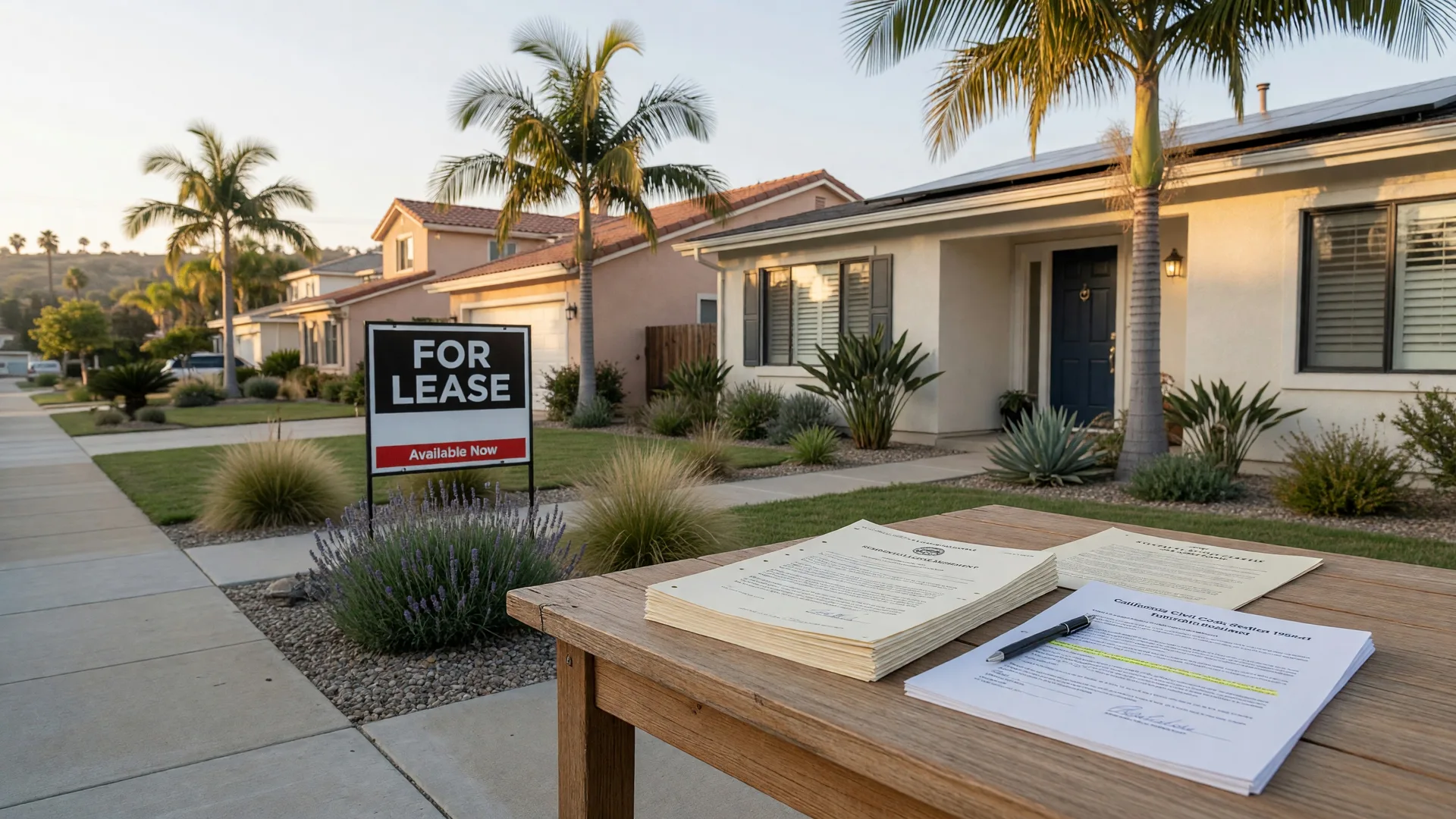
California landlord-tenant laws 2026: a mid-year compliance guide for San Diego investors.
AB 628 now requires working stoves and refrigerators in every rental unit. The AB 1482 rent cap drops to 8.2% on August 1. San Diego is considering a fee ordinance. Here is everything San Diego rental property investors need to know to stay compliant in mid-2026.
AB 628 takes effect — all new California leases must include a working stove and refrigerator as habitable conditions
New AB 1482 rent cap (Aug 2026–Jul 2027) — 5% base plus 3.2% CPI, down from 8.8%
Maximum security deposit under AB 12 — applies to all residential properties, furnished or unfurnished
Deadline for returning security deposits after move-out — must include itemized statement of deductions
California's landlord-tenant regulatory landscape changes every year, and 2026 is no exception. For San Diego investors, three developments demand attention: a new appliance habitability requirement, a lower AB 1482 rent cap, and a proposed City Council fee ordinance.
Assembly Bill 628, effective January 1, 2026, requires all new and renewed California leases to include a working stove and refrigerator as part of the implied warranty of habitability. This is a significant expansion of landlord obligations that affects every rental property in San Diego County. For investors who previously rented units without appliances, the law requires immediate action.
At the same time, the AB 1482 rent cap drops to 8.2% on August 1 — down from 8.8% — as the Consumer Price Index moderates. While the 0.6 percentage point reduction is modest, it comes at a time when San Diego's elevated vacancy rate is already limiting landlords' ability to push rents. The practical constraint in most submarkets will be the market, not the cap.
And the San Diego City Council is considering a proposed ordinance that would cap monthly fees at 5% of rent, ban monthly pet rent, and limit late fees — a development that could reshape how landlords structure their revenue. While the ordinance is still under consideration, the regulatory trend is clear.
This guide covers every major regulatory change affecting San Diego rental property investors in mid-2026: AB 628 appliance requirements, the updated AB 1482 rent cap, AB 12 security deposit rules (still in effect), the proposed fee ordinance, and a comprehensive compliance checklist. Whether you own a single rental or a portfolio spanning the county, knowing these rules is essential to protecting your investment and avoiding costly penalties.
What new California landlord-tenant laws affect San Diego rental properties in 2026?
Four major regulatory developments are shaping the compliance landscape for San Diego rental property investors. Each has specific requirements, deadlines, and financial implications.
AB 628 — Appliance Habitability Requirements
Assembly Bill 628 amends California Civil Code to require that all rental units include a working stove and refrigerator as part of the implied warranty of habitability. For leases entered into or renewed on or after January 1, 2026, landlords must provide and maintain these appliances in good working order.
This is a significant expansion of habitability requirements. Previously, California law did not explicitly require a stove or refrigerator. Landlords who did not include these appliances must now either install them or adjust their lease terms. The cost of a basic stove and refrigerator ranges from $1,200–$2,500 per unit, plus ongoing maintenance obligations.
- Verify all rental units have working stoves and refrigerators
- Include appliance maintenance in lease agreements
- Budget for replacement appliances every 10–15 years
- Document appliance condition with photos at move-in
- Ensure appliances meet current energy efficiency standards
AB 1482 — Rent Cap Adjustment (8.2%)
The California Tenant Protection Act (AB 1482) caps annual rent increases at 5% plus the local Consumer Price Index, or 10% — whichever is lower. Effective August 1, 2026, the cap drops to 8.2% (5% + 3.2% CPI) for the period through July 31, 2027, down from 8.8% (5% + 3.8% CPI).
While the 0.6 percentage point reduction is modest, the practical impact is amplified by San Diego's elevated vacancy rate. In most submarkets, market conditions — not the cap — will be the binding constraint on rent increases. However, for properties with below-market rents, the 8.2% cap still provides room to push rents toward market levels.
- Calculate maximum allowable increase using the new 8.2% cap starting August 1
- Provide 30-90 days written notice depending on increase amount (30 days for under 10%, 90 days for over 10%)
- Verify exemption status — single-family homes owned by individuals (not LLCs) may be exempt
- Include AB 1482 notice in all new lease agreements
- Document base rent for each unit to track cap compliance
AB 12 — Security Deposit Cap
Assembly Bill 12 caps security deposits at one month's rent for all residential properties, regardless of whether the unit is furnished or unfurnished. This replaced the previous limits of two months' rent (unfurnished) and three months' rent (furnished). Military members are also capped at one month's rent.
The reduced deposit cap limits the financial cushion landlords have against damage. With smaller deposits, thorough move-in inspections with photographic documentation are more critical than ever. Landlords must return deposits within 21 calendar days of move-out with an itemized statement of deductions.
- Cap all security deposits at one month's rent — no exceptions
- Conduct detailed move-in inspections with dated photos
- Return deposits within 21 calendar days of move-out
- Provide itemized statements for any deductions with receipts
- Use security deposit software to track deadlines and documentation
San Diego Fee Ordinance (Proposed)
The San Diego City Council is considering a proposed ordinance that would cap monthly recurring fees at 5% of rent, cap late fees at 2% of monthly rent, ban monthly pet rent (while allowing one-time deposits), and prohibit fees for habitability services (trash, water, sewer).
If passed, this ordinance would significantly affect properties that rely on unbundled fees to supplement effective rent — a common strategy under California's rent cap framework. Properties with fee-heavy structures could see effective rent reductions of 5%–10%.
- Review current fee structures and model the impact of proposed restrictions
- Consider incorporating fee revenue into base rent where AB 1482 allows
- Monitor City Council meetings for ordinance status updates
- Prepare alternative lease structures that comply with potential restrictions
- Consult with property management and legal counsel on compliance strategies
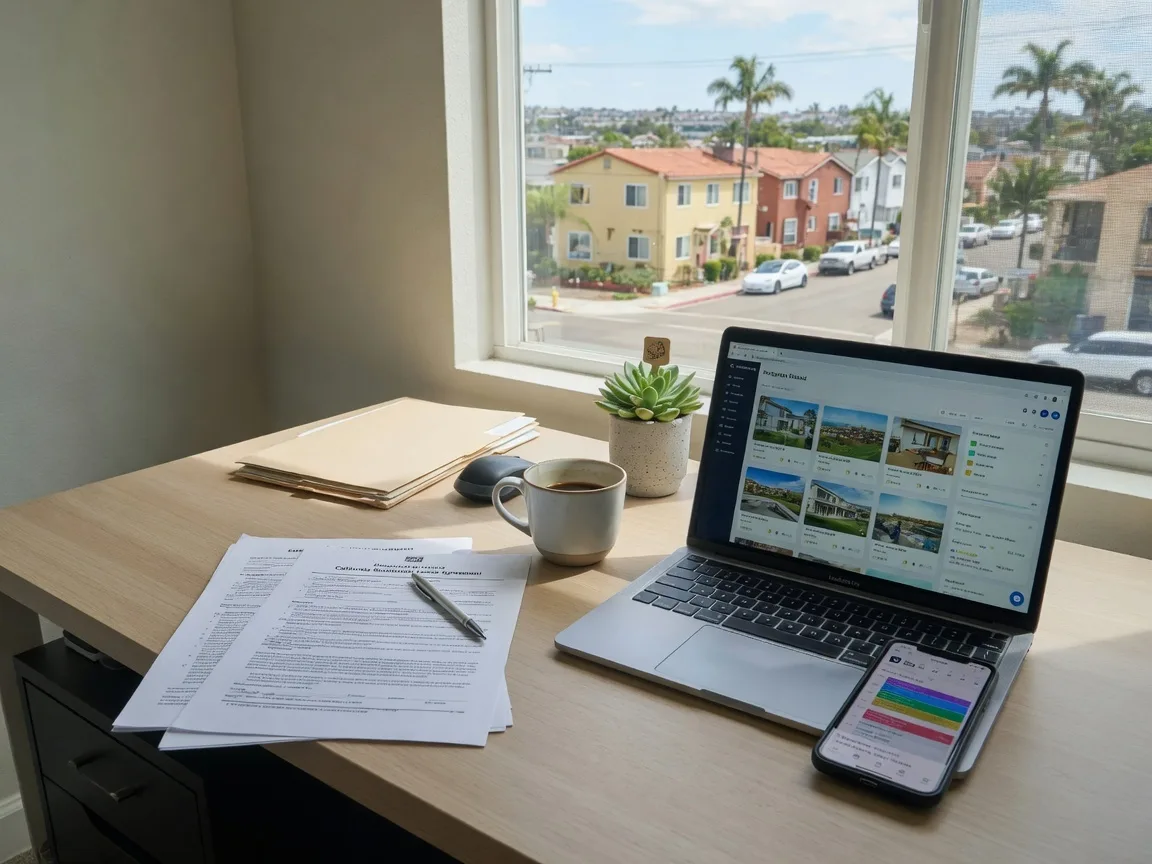
Staying compliant with California's evolving landlord-tenant laws requires organized documentation, proactive planning, and regular review of lease agreements.
Are your San Diego rental properties compliant?
Use this checklist to audit your compliance status. Each item represents a legal requirement (or best practice) for California rental properties. Work through the list systematically and document your compliance for each property.
| Requirement | Status |
|---|---|
| AB 1482 notice included in all leases (or exemption notice provided) | Required |
| Security deposit capped at one month's rent (AB 12) | Required |
| Working stove and refrigerator installed (AB 628) | Required |
| Lead-based paint disclosure (pre-1978 properties) | Required |
| Bed bug disclosure and history | Required |
| Flood and fire hazard zone disclosure | Required |
| Smoke and CO detector compliance | Required |
| Move-in inspection with dated photos | Best Practice |
| Rent increase notice — 30 or 90 days as required | Required |
| Fee structure compliant with potential San Diego ordinance | Recommended |
| Just cause eviction policy documented (AB 1482) | Required |
| Security deposit return within 21 days with itemized statement | Required |
| Fair housing compliance — consistent screening criteria | Required |
| Appliance maintenance schedule documented | Best Practice |
| AB 1482 exemption documentation (if applicable) | Required |
This checklist is a compliance guide, not a substitute for legal advice. California landlord-tenant laws change frequently, and local ordinances may add additional requirements. Consult with a California real estate attorney for a comprehensive compliance review of your specific properties.
What other compliance requirements apply to San Diego rental properties?
Beyond the new 2026 laws, several existing California landlord-tenant requirements remain in effect. Understanding and following these obligations is essential to avoiding disputes, penalties, and legal liability.
Just Cause Eviction Requirements
Under AB 1482, after a tenant has occupied a unit for 12 months, landlords must have just cause to terminate the tenancy. Just cause includes both "at-fault" reasons (nonpayment of rent, lease violations, nuisance) and "no-fault" reasons (owner move-in, planned demolition, withdrawal from rental market). For no-fault evictions, landlords must provide relocation assistance equivalent to one month's rent or waive the last month's rent.
Rent Increase Notice Periods
California law requires specific notice periods depending on the increase amount. For increases of less than 10%, landlords must provide 30 days written notice. For increases of 10% or more, 90 days written notice is required. These notice periods apply regardless of AB 1482 exemption status, so understanding both laws is essential.
Termination Notice Periods
For tenants who have lived in a unit for less than one year, landlords must provide 30 days notice to terminate a month-to-month tenancy. For tenants who have lived in a unit for one year or more, 60 days notice is required. These notice periods apply to both the landlord and the tenant.
Required Disclosures
California requires extensive landlord disclosures in rental agreements: lead-based paint (pre-1978 properties), mold and asbestos (if known), flood and fire hazard zones, sex offender registry, military ordnance locations, bed bug infestation history, and the AB 1482 notice of tenant protections. Failure to provide required disclosures can result in penalties of $100 per violation, up to $2,000 per tenancy.
Habitability Standards
California's implied warranty of habitability requires landlords to maintain rental units in a condition fit for human occupancy. This includes working plumbing, heating, electrical, and gas systems; weatherproofing; pest control; and now (under AB 628) working stoves and refrigerators. Tenants can withhold rent, repair and deduct, or terminate the lease if habitability issues are not addressed.
Fair Housing Compliance
The Fair Employment and Housing Act (FEHA) and federal fair housing laws prohibit discrimination based on race, color, religion, sex, gender, sexual orientation, marital status, national origin, ancestry, familial status, source of income, disability, or genetic information. San Diego landlords must apply screening criteria consistently, accommodate reasonable disability requests, and avoid discriminatory language in lease terms and advertising.
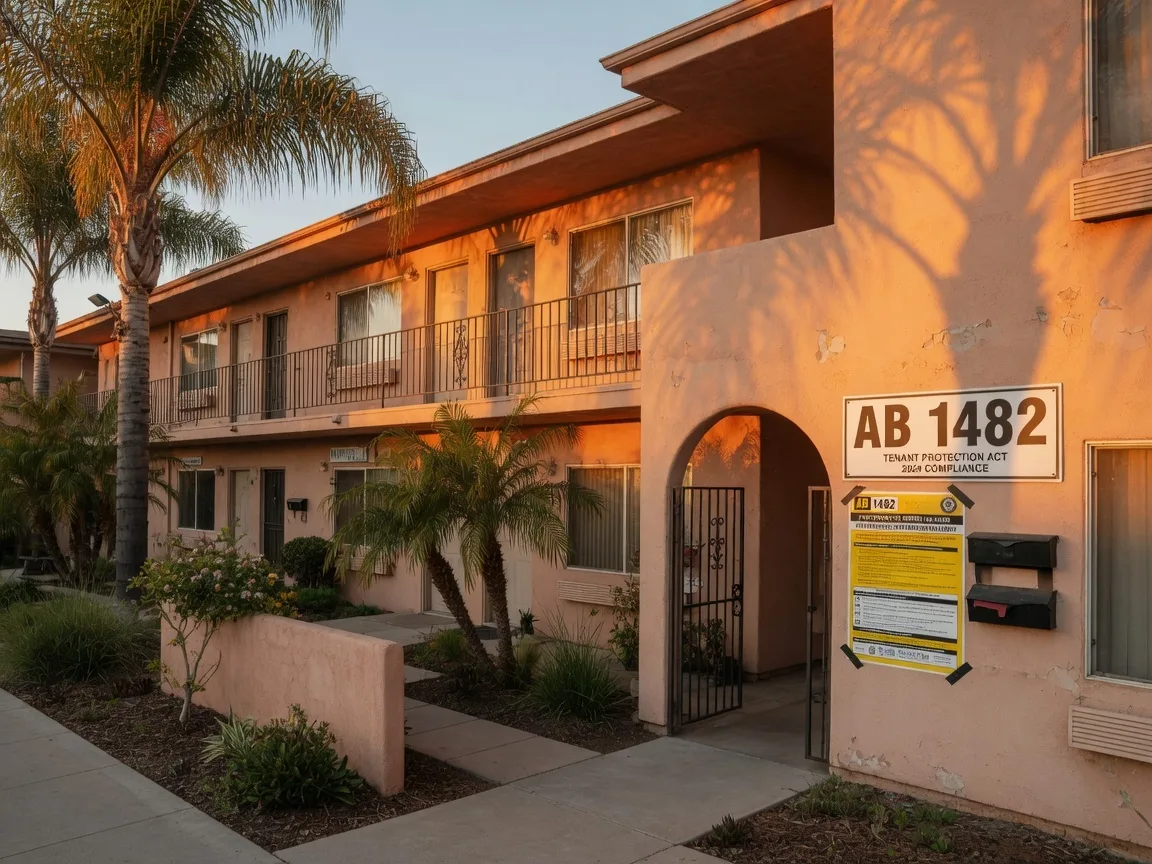
Compliance with California's landlord-tenant laws protects your investment and fosters positive landlord-tenant relationships that reduce turnover and vacancy.
How to plan your rent increases for the new 8.2% cap.
The AB 1482 rent cap drops from 8.8% to 8.2% on August 1, 2026. For most San Diego landlords, this change is modest in percentage terms but significant in context. With countywide apartment vacancy at 6.1% and rents flat to slightly declining in many submarkets, the practical ability to increase rents by 8.2% is limited.
The table below shows how the cap has changed over recent years. The trend is downward — from 9.8% in 2023 to 8.2% in 2026 — reflecting the moderating inflation environment.
Strategic considerations: If you have a property with below-market rent, the 8.2% cap still provides meaningful room to adjust. For properties at or near market rent, the cap is unlikely to be the binding constraint. Focus on tenant retention and minimizing vacancy, which have a larger impact on net operating income than small rent increases in the current market.
Remember that AB 1482 requires 30-90 days written notice depending on the increase amount. Increases of less than 10% require 30 days notice. Since the new cap is 8.2%, all increases under the cap need only 30 days notice — but starting early ensures compliance.
| Period | Cap | CPI Component | Change |
|---|---|---|---|
| Aug 2023 - Jul 2024 | 9.8% | 5% + 4.8% CPI | Peak post-pandemic cap |
| Aug 2024 - Jul 2025 | 9.5% | 5% + 4.5% CPI | -0.3 pp |
| Aug 2025 - Jul 2026 | 8.8% | 5% + 3.8% CPI | -0.7 pp |
| Aug 2026 - Jul 2027 | 8.2% | 5% + 3.2% CPI | -0.6 pp |
CPI data based on the California Consumer Price Index for Urban Wage Earners and Clerical Workers (CPI-W) for the region. The cap is calculated annually by the California Department of Housing and Community Development. The cap applies to rent increases within any 12-month period, not calendar years.
How do I ensure my San Diego rental properties are compliant?
Achieving compliance is a process, not a one-time event. Follow these five steps to bring your portfolio into compliance and maintain it as regulations evolve.
Audit Your Current Lease Portfolio
Review every lease agreement for compliance with current California law. Check that AB 1482 notices are included (or exemption notices are provided), security deposits comply with the one-month cap, all required disclosures are documented, and appliance maintenance obligations are clearly stated. A comprehensive audit identifies gaps before they become legal liabilities.
Install or Verify Required Appliances
Ensure every rental unit has a working stove and refrigerator as required by AB 628. If appliances need to be installed, budget $1,200–$2,500 per unit. Document appliance make, model, and condition with photos. Include appliance maintenance and replacement provisions in your lease agreements.
Update Your Lease Agreements
Work with a California real estate attorney to update your lease template. Ensure it includes current AB 1482 language, the AB 14 implied warranty of habitability clause, appliance maintenance obligations, fee structures that comply with potential San Diego ordinance restrictions, and all required state and local disclosures.
Implement Compliance Tracking Systems
Establish a system for tracking rent increase deadlines, security deposit return dates, lease renewal periods, and inspection schedules. Property management software with California-specific compliance features can automate many of these tasks. For self-managing landlords, create a compliance calendar with all regulatory deadlines.
Consult With Professionals
California's landlord-tenant laws change frequently, and local ordinances add another layer of complexity. Work with a California real estate attorney for lease reviews and compliance questions, a CPA for tax implications of new regulations, and a professional property manager if the regulatory burden becomes overwhelming. The cost of professional advice is minimal compared to the cost of non-compliance.
Frequently asked questions.
What exactly does AB 628 require for San Diego rental properties?
What exactly does AB 628 require for San Diego rental properties?
How does the AB 1482 rent cap change affect my San Diego rental property?
How does the AB 1482 rent cap change affect my San Diego rental property?
What is the maximum security deposit I can charge in California?
What is the maximum security deposit I can charge in California?
Will the San Diego fee ordinance pass, and what should I do to prepare?
Will the San Diego fee ordinance pass, and what should I do to prepare?
What happens if I fail to comply with California's landlord-tenant laws?
What happens if I fail to comply with California's landlord-tenant laws?
How do I handle rent increases for properties exempt from AB 1482?
How do I handle rent increases for properties exempt from AB 1482?
What are the most important documents I need for a California rental property?
What are the most important documents I need for a California rental property?
Does San Diego have its own rent control ordinance?
Does San Diego have its own rent control ordinance?
Let's review your
compliance strategy.
Whether you need a compliance audit, updated lease agreements, or professional property management to navigate California's evolving regulatory landscape — our team can help you protect your investment and stay ahead of the rules.