
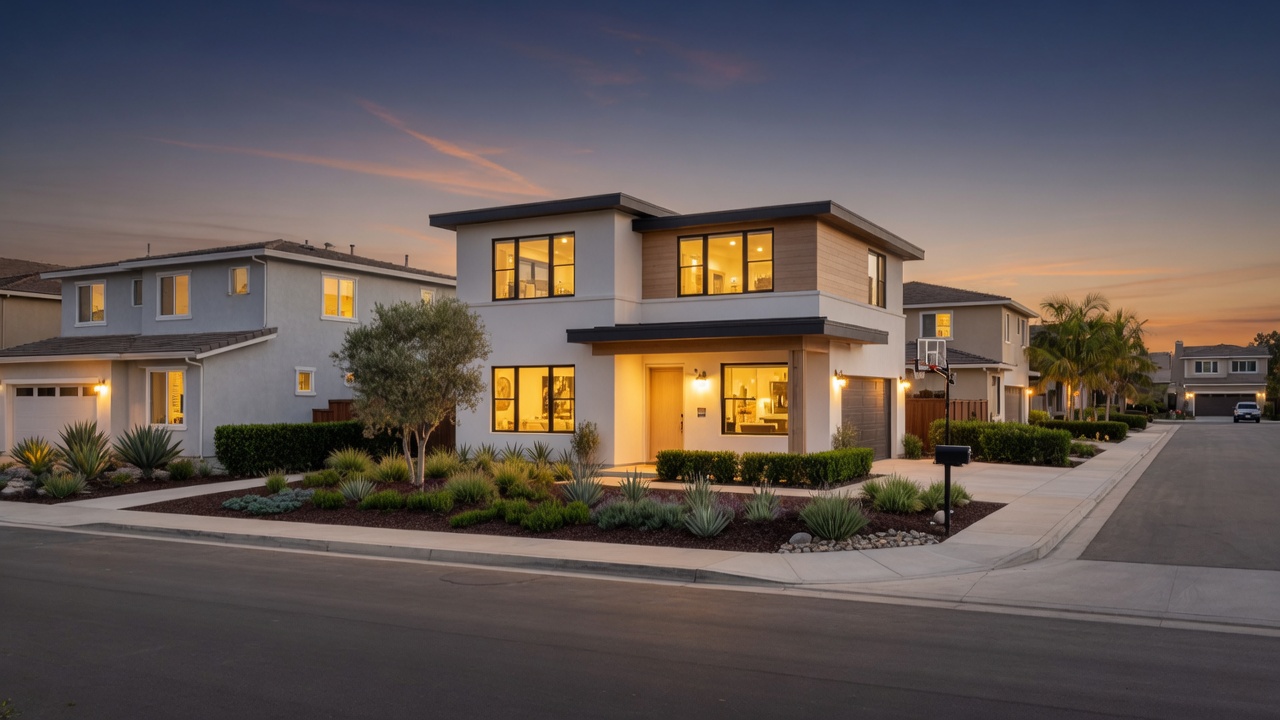
Thinking about your first investment? Here's what to know.
Entering the real estate investment market for the first time is exciting — and demands careful preparation. This section covers the essential considerations, common pitfalls, San Diego neighborhood overview, and practical steps to help you invest with confidence.
What does the San Diego real estate market look like for investors?
San Diego County's housing market is characterized by stability rather than volatility. Median single-family home prices generally range from $950,000 to $1.05 million as of 2026, with moderate projected appreciation of 2%–4% year-over-year.
The rental market has shown signs of softening, with average rents between $2,417 and $2,969 and vacancy rates around 5.4%. This creates opportunity for investors who can identify value-add properties and strong tenant profiles in neighborhoods across the county.
Investment yields (cap rates) typically range from 3% to 6%. Coastal properties in La Jolla, Del Mar, and Carlsbad trend toward the lower end (3.5–4.5%), while inland neighborhoods in Chula Vista, El Cajon, and Vista offer stronger cash flow potential (5–7%).
Structural demand is sustained by three major employment sectors — military, biotech, and tourism — that create consistent housing need regardless of broader economic cycles. This makes San Diego one of the most resilient rental markets in California.
What should first-time investors get right?
What Is Your Investment Strategy?
Before purchasing, determine whether you are investing for cash flow, appreciation, or both. Your strategy drives property type, location, financing, and management approach.
Do You Understand Your Numbers?
Successful investing starts with accurate financial analysis. Calculate cap rate, cash-on-cash return, operating expenses, and debt service coverage before committing to any San Diego property.
Have You Secured Financing?
Investment property financing differs from primary residence lending. Higher down payments (20%–25%), different rate structures, and stricter qualification apply. Get pre-approved before you shop.
Which San Diego Neighborhood Fits Your Goals?
San Diego County spans 40+ distinct markets — from North Park and East Village to Chula Vista, Escondido, and Oceanside. Each neighborhood has different tenant demographics, price points, and rent growth.
How Will You Manage the Property?
Investment properties require active management. Decide early whether you will self-manage or engage a professional team — especially important for out-of-state investors.
Do You Have the Right Professional Team?
The most successful investors work with agents, lenders, property managers, CPAs, and attorneys who specialize in investment real estate. Your team is your competitive advantage.
What mistakes do new investors make in San Diego?
Skipping Due Diligence
Failing to inspect thoroughly, verify rents, review lease agreements, or research neighborhood dynamics. Every property in San Diego needs professional due diligence before purchase.
Overpaying for Appreciation
Basing a purchase entirely on projected appreciation rather than current cash flow. Markets can shift — a deal in La Jolla that works today should still work if values plateau.
Underestimating Expenses
New investors often underestimate vacancy rates (~5.4% in San Diego), maintenance reserves, insurance costs, property taxes (1.1%–1.25%), and management fees. Build in conservative reserves.
Emotional Decision-Making
Investing based on personal taste rather than market data. The best investment property in San Diego is not always the nicest one — it is the one that generates the strongest risk-adjusted return.
Ignoring Tenant Quality
The wrong tenant can cost more in lost rent, legal fees, and property damage than months of vacancy. Thorough screening is non-negotiable in California.
Going It Alone
Trying to do everything yourself without professional guidance. The cost of one mistake — legal, financial, or operational — can exceed years of professional fees.
What due diligence do I need before closing?
Common questions from new investors.
How much money do I need to start investing in San Diego real estate?
How much money do I need to start investing in San Diego real estate?
For a traditional rental, expect 20%–25% down payment plus closing costs. On a $950,000 median-priced home, that's roughly $190,000–$237,500 down, plus $15,000–$30,000 in closing costs and reserves. Funding and equity partnership options can start at $10,000–$100,000 depending on the structure. Always maintain at least 6 months of operating expenses in reserves.
What neighborhoods in San Diego are best for first-time investors?
What neighborhoods in San Diego are best for first-time investors?
For cash flow, look at Chula Vista (strong family-renter demand, 5%–6% cap rates), Escondido (multifamily 5%–6%), El Cajon (lower entry prices), and Oceanside (growing market). For appreciation, consider North Park (~$1.2M median, $2,400–$3,500/month rent) or East Village condos (~$550K median). Inland neighborhoods consistently outperform coastal for cash flow.
Is now a good time to invest in San Diego real estate?
Is now a good time to invest in San Diego real estate?
San Diego's 2026 market offers moderate, steady growth: median prices $950K–$1.05M, appreciation 2%–4%, cap rates 3%–6% (higher inland), and vacancy rates around 5.4%. Rental softening creates opportunity for value-add investors. With interest rates stabilizing, well-structured deals in inland neighborhoods are penciling out well.
What are the biggest mistakes first-time investors make?
What are the biggest mistakes first-time investors make?
The top six: skipping due diligence, overpaying for appreciation rather than current cash flow, underestimating expenses (including San Diego's 1.1%–1.25% property tax), making emotional decisions instead of data-driven ones, ignoring tenant quality, and trying to go it alone without professional guidance.
Can I invest in San Diego real estate from outside California?
Can I invest in San Diego real estate from outside California?
Absolutely. Our team works with out-of-state investors regularly. Through our worldwide network, we can connect you with vetted opportunities, handle property management remotely, and provide ongoing reporting. San Diego's stable market and strong institutional infrastructure make it ideal for remote investors.
Never Miss a Story
Add us as a Preferred Source on Google to see more of our content in AI Mode and AI Overviews.
Add us as a Preferred Source
Your first investment
starts with a conversation.
Our team works with first-time investors every day. We can help you evaluate San Diego opportunities, assemble the right professional team, and build a strategy that aligns with your financial goals and risk tolerance.