
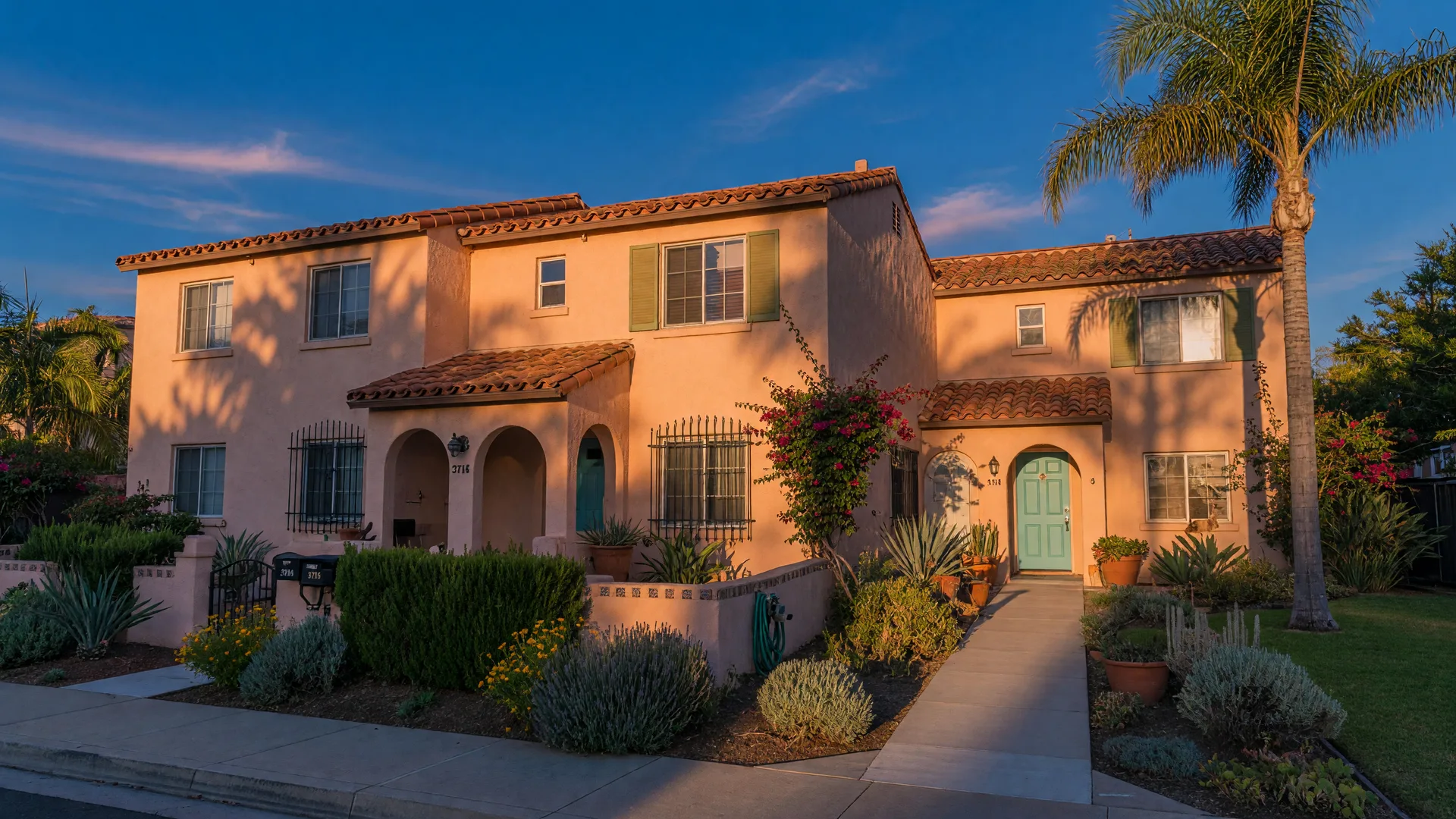
The multi-unit owner's guide to property management in San Diego.
Four decisions decide whether your San Diego multi-unit property runs you, or runs for you: furnished vs. unfurnished, renting affordable units fast, pricing with real comps, and bringing a property manager in before the dust settles.
Owning one rental is a learning curve. Owning several is a business. For San Diego owners with multiple units, every decision compounds: the finishes you choose, the way you fill vacancies, the rent you set, and the team you bring in early.
A single-family rental can run on momentum and a good handyman. A duplex, triplex, or fourplex cannot. The moment you own a second door, your time, your repairs, and your vacancies all scale, and so do your mistakes. A bad pricing call that costs a month of vacancy on one San Diego unit is annoying. The same call across three units is a real dent in the year.
The good news is that the owners who solve this do not work harder. They decide earlier. They pick a furnishing strategy on purpose, they price affordable units to move, they set rent from comparable data instead of guesswork, and they bring professional property management in before the renovation, not after the headaches start.
This guide walks through the four decisions in order. Each one is a lever you can pull this month, whether you are buying your next San Diego multi-unit property, filling a vacancy, or planning a rehab. And each one is exactly the kind of decision a good property manager helps you make before it becomes expensive.
Skip ahead to any section, or read straight through. The goal is the same: a building that runs on systems, not on your evenings.
Furnished or unfurnished? Match the unit to the tenant you're chasing.
Every San Diego multi-unit owner answers this question eventually, and most answer it by default. They furnish because a unit came with furniture, or they strip it because stripping is easier. Neither is a strategy. The right answer starts with the tenant you are trying to rent to, not with what happens to be in the unit.
The furnished unit
Who furnished units attract
Traveling professionals, military relocations, corporate rentals, mid-term stays, and anyone who needs to move in with a suitcase instead of a truck.
The upside
Furnished units typically command higher monthly rent and tolerate shorter, more flexible leases, which is why the furnished vs unfurnished rental question pays to decide deliberately.
The cost of that upside
Higher turnover, more wear and tear, and the expense and hassle of furnishing, maintaining, and refreshing furniture, appliances, and linens, plus storage and liability questions that never touch an unfurnished unit.
The unfurnished unit
Who unfurnished units attract
Long-term local tenants, families, and renters who want their own space and their own belongings in it.
The upside
More stability, longer leases, and fewer moving parts. No furnishing budget, no linen inventory, no furniture-replacement cycle to manage across every door.
The tradeoff
Usually less rent per month than a furnished equivalent, which is the right trade when the tenant stays for years instead of months.
The San Diego answer: it depends on the unit, and that is the point. A downtown or coastal unit near corporate and military demand can justify furnished, because the tenants those locations attract arrive ready to rent a complete home. A unit in a family neighborhood usually performs better unfurnished over the long term, because the renters there stay longer and bring their own lives. Decide deliberately, not by default, and price the unit for the tenant segment the furnishing actually serves.
Get your affordable unit rented, fast.
Affordable units in San Diego are in huge demand. That is a gift, if you price and present them right. Rent comps in this segment sit below the premium market, but so does vacancy risk, because the strongest demand in the county is at the value end of the rental ladder.
Price it to clear
Price the unit where it will move quickly instead of squeezing every last dollar and watching it sit. A vacant unit earns nothing, and in a competitive affordable rental segment, a fair price fills in days.
Make the listing look cared for
Good photos, honest square footage, and a clean walkthrough signal a well-run building. The affordable rental market notices, and it refers friends to buildings that present well.
Make applying fast, simple, and digital
A qualified tenant should be able to say yes the same week. Online applications, same-day verification, and a clear process beat a week of paper forms every time.
Screen thoroughly, but efficiently
A bad tenant costs far more than a couple of extra days of diligence. Screen fast, screen consistently, and never skip the verification steps that protect every other unit in the building.
Let reputation do the marketing
The best marketing for an affordable unit is a good reputation. Current tenants refer friends, and a well-run building quietly builds a waiting list while other owners pay for ads.
The multi-unit multiplier: if you are juggling this across multiple units, speed and consistency are the whole game. One vacant unit is an annoyance. Two vacancies in the same month are a cash-flow event. That is where a property manager earns their keep, running the same fast, repeatable process on every door so no single vacancy becomes an emergency.
Set rents with data, not guesses.
Too many owners set rent from a gut feeling or a single Zillow listing. The right way is data: a clean set of rent comps, updated on a schedule, and read against your own vacancy history.
Comparable rents, not vibes
Same unit type, bedroom count, square footage, location, and condition. Gut feeling and a single Zillow listing are not data, and they are what most owners price from.
Leased, not just listed
What similar units actually leased for, not just what they listed at. Asking prices are opinions; signed leases are evidence.
Vacancy trends
How long units in your area sit between tenants. That number tells you whether you have negotiating room or whether a price cut is the cheapest marketing you can buy.
Seasonality
Your submarket has a rhythm. San Diego demand shifts between neighborhoods and seasons, and a rent review calendar should follow it.
Your unit’s own trajectory
The realistic arc of your condition and amenities. Fresh paint and new flooring justify more; deferred maintenance justifies less, and honest pricing is what keeps vacancy short.
Bring the property manager in before the renovation, not after.
The single most underused advantage of a property manager is the one you get before the work starts. If you are building, adding units, or renovating a San Diego multi-unit property, a manager who knows the local rental market can weigh in while decisions are still cheap to change.
Unit mix the market actually wants
Two beds vs. one bed, attached vs. detached, parking or no parking. A manager who tracks local rent comps can tell you before the walls go up.
Finishes that attract tenants and survive them
Which flooring, appliances, paint, faucets, and landscaping choices resist damage and clean up fast, so your low-maintenance decisions save money every single year after move-in.
What each unit will realistically support in rent
The rent comps for each unit type before you build it, so you size the project to the income it can actually produce.
Practical details owners miss
Access panels, metering, laundry, parking, and storage. The details that make a building dramatically easier to manage cost almost nothing during construction and a fortune to retrofit later.
This guide is brought to you in partnership with
Agne Isidro
California DRE License #01522966
Real estate agent serving San Diego County with approximately 20 years of experience.
Brokerage: Innovate Realty, Inc.,
Phone: (619) 892-2020
Own the income. Let the team run the units.
Multi-unit ownership is a business, and like any business it runs best when you stop doing everything yourself and bring in people who do it every day. The right property manager handles the turnover, the tenant screening, the repairs, the rent data, and the headaches, so you keep the income without the 2 a.m. calls.
In San Diego, that is the difference between owning units and actually enjoying owning them. If you want the headaches taken off your plate, reach out to Hanna's team about property management: call (619) 630-9618 or visit the contact page. You can also learn more about what the team handles on the property management page.