The new Fed era: what the 2026 rate outlook means for San Diego investors.
A new Federal Reserve chair took office in May, and the FOMC has held rates at 3.50% to 3.75% all year. Here is how the leadership transition, the 2026 dot plot, and the three remaining FOMC dates shape investment planning for San Diego real estate.
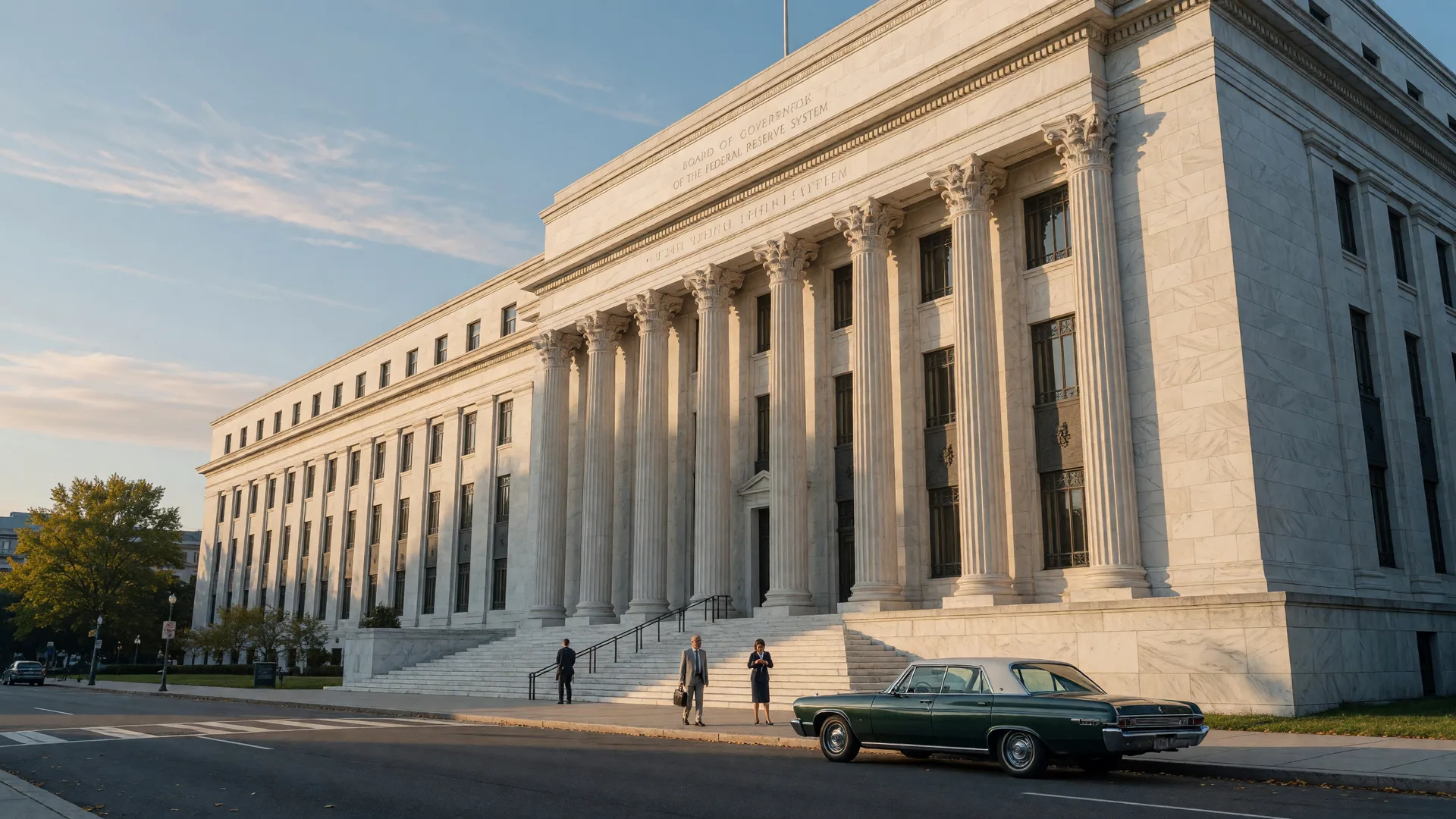
The Federal Reserve turned a leadership corner this spring: the Senate confirmed Kevin Warsh as the new chair in May, succeeding Jerome Powell, and the FOMC has held the federal funds target range at 3.50% to 3.75% at every meeting in 2026. The next FOMC decision lands in about a week, on September 16, followed by October 28 and December 9. With markets pricing no cuts this year, mortgage rates near the high-6% range, and San Diego apartment vacancy near a record, the way investors underwrite deals into 2027 hinges on how the Fed's new era communicates and moves. This guide walks through the timeline, the scenarios, and the strategies for positioning a portfolio today.
The FOMC has kept rates at 3.50% to 3.75% at every 2026 meeting, and the July dot plot signals no cuts for the year. Plan on current-rate underwriting.
Kevin Warsh was confirmed May 13 and sworn in May 22, 2026, beginning a four-year term through May 2030 and setting the tone for the next rate cycle.
September 16, October 28, and December 9 are the remaining 2026 FOMC decisions. Markets price no cut,with limited hike odds.
Most forecasts put the first cut around mid-2027 with a terminal rate near 3% to 3.25%. Mortgage rates should ease gradually, not abruptly.
For San Diego investors,the Fed is the quiet engine behind nearly every deal assumption: mortgage rates, cap-rate pressure, refinance timing, and opportunity windows all trace back to the federal funds path.
The Federal Reserve enters the second half of 2026 under new leadership for the first time in eight years. Jerome Powell's term as chair ended on May 22, 2026, after two four-year terms, and Kevin Warsh was confirmed by a Senate vote of 54 to 45 on May 13 before being sworn in that same week. The transition changes how the central bank communicates the rate path, even while policy itself has stayed remarkably steady.
Steady is the operative word: the FOMC has left the federal funds target range at 3.50% to 3.75% at every meeting this year, including June 16 to 17 and July 28 to 29, the latter in a 9 to 3 vote. The July dot plot carries a median year-end fed funds projection near 3.8%, effectively signaling no cuts for the rest of 2026.
For San Diego, this means mortgage rates stay pinned near the high-6% range into early 2027, compressing cash-on-cash returns on levered deals, and favoring buyers who underwrite conservatively. On the other side of the ledger, secured buyers face less bidding competition than the pandemic years, and sellers have adjusted expectations, creating selective entry points that cash flow at today's debt costs.
The path forward is most likely a slow grind, not a sharp reset: analysts broadly expect the first cut around mid-2027, with a terminal rate near 3% to 3.25%, and mortgage rates easing only gradually below 6%. The three remaining 2026 FOMC dates, starting with September 16, are the milestones worth marking on any investor calendar,because each is a chance for new leadership to change the message on the road ahead.
How the Fed arrived at the current policy stance.
Understanding the new chair, and the meetings already held helps investors read what comes next. Here are the milestones that defined the current moment.
| Date | Milestone |
|---|---|
| February 5, 2018 | Jerome Powell takes office as Federal Reserve chair, beginning two four-year terms that defined the post-2018 rate cycle and the pandemic response. |
| May 13, 2026 | The Senate confirms Kevin Warsh as the next Federal Reserve chair on a54–45 vote, setting up a leadership transition at the central bank. |
| May 22, 2026 | Powell's term as chair ends and Warsh is sworn in for a four-year term running through May 21, 2030. Powell remains on the Board of Governors for the time being. |
| June and July 2026 | Under new leadership, the FOMC holds the target range at 3.50%–3.75% at its June and July meetings. The July dot plot signals no cuts in 2026. |
| September 16, 2026 | The next FOMC decision. Markets currently price no change, with some odds of a quarter-point hike rather than a cut. |
Three scenarios for rates into 2027.
With the July dot plot showing no 2026 cuts, expectations have shifted to the next year. Investors should plan for the base case, and stress-test the alternatives.
Hold through year-end
The September dot plot signals no cuts; mortgage rates stay near 6.5%–6.8% into 2027. Investors underwrite deals at today's rates and plan for gradual improvement, not an immediate refi window.
A delayed 2027 cut
If inflation keeps cooling and growth softens, analysts see the first cut coming mid-2027, with the terminal rate near 3%–3.25%. Mortgage rates could ease toward 6% or slightly below before then.
A small hike in late 2026
Some market pricing implies odds of a 25 basis point hike at the September or October meeting if services inflation reaccelerates. That keeps pressure on bond yields and mortgage rates.
Every FOMC meeting is a chance to recalibrate underwriting assumptions. Tracking the schedule keeps investors ahead of the rate path.
How the Fed pause is reshaping local deal-making.
Mortgage Rates Stay Elevated, So Underwrite at Today's Rates
With the Fed on hold and the 30-year fixed near 6.7%, the buy-and-and-hold math hinges on current-rate underwriting. Properties that pencil out at 6.7% without assuming a quick refi are the deals that hold together. DSCR and conforming financing at 20%–25% down remain the workhorse tools.
Selective Entry Points in a Softening Rental Market
County apartment vacancy near a record 6.2% and rents softening means cap-rate buying requires patience. Meanwhile detached single-family homes keep appreciating 5% year-over-year, with sellers accepting realistic offers, creating selective opportunities for well-capitalized buyers.
Lock in Fixed-Rate Financing and Lengthen Rate Locks
Until the Fed signals a pivot, cash flow is more important than carry. Longer rate locks(at 30–60 days or more)reduce execution risk between contract and closing, and fixed-rate structures protect the returns you underwrote.
Prepare for the Refinance Wave That Follows a Pivot
When the Fed eventually cuts(toward mid-2027 in most forecasts), mortgage rates should drift lower, reopening cash-out refinance and restructuring windows. Build clean financials, stabilized occupancy, and current appraisals now so you are ready to execute when the window opens.

San Diego's diversified economy keeps rental demand intact while investors wait for the rate cycle to turn.
Four moves that work while the Fed waits.
Underwrite Now, Not Wait-and-See
The most expensive mistake during a Fed pause is waiting for a cut before acting. Deals that work at today's 6.7% mortgage rates often keep working when rates fall, while financing costs compress. Run the numbers at today's rates and ask whether the deal works if rates stay flat through 2027.
Build a Refinance-Ready File for 2027
When cuts finally come, the window is short and lenders books fill fast. Keep rent rolls, expenses, and improvement records clean, stabilize occupancy, and schedule fresh appraisals so you can refi or restructure the moment the rate path turns.
Lean Into Cash-Flow Geographies
In a high-rate hold, cash flow is the shock absorber. Workforce housing in inland submarkets with higher cap rates, and detached rentals in supply-constrained neighborhoods continue to offer the most rate-resilient returns for San Diego investors.
Match Debt Maturity to the Rate Cycle
If a loan matures in 2027–2028, refinance early or extend now, because rates are unlikely to be materially lower until after the first cut. Avoid short-term bridge loans with aggressive exit assumptions tied to a rate drop that has not been scheduled.
What could go wrong in the months ahead?
Persistence of High-for-Longer Rates
If core inflation stalls, cuts could slip into 2028, extending the current carry cost and compressing returns on levered deals. Stress-test against flat rates for atleast another 18 months.
Rate-Hike Tail Risk
Market pricing leaves room for a hike at the September or October meeting if inflation reaccelerates. A hike would push bond yields up and mortgage rates toward 7%, cooling buyer demand again.
Record Multifamily Vacancy
Near-record vacancy of about 6.2% means multifamily operators face leasing competition and possible concessions, pressuring net operating income until new supply is absorbed through 2027.
Tightening in Other Credit Channels
Banks have been cautious with commercial real estate lending as rates persist, so smaller investors should line up financing early and compare lender appetite before making offers.
Frequently asked questions.
Has the Federal Reserve cut rates in 2026?
Has the Federal Reserve cut rates in 2026?
Who is Kevin Warsh and why does the Fed leadership change matter to investors?
Who is Kevin Warsh and why does the Fed leadership change matter to investors?
When could mortgage rates come down in San Diego?
When could mortgage rates come down in San Diego?
How should San Diego investors position themselves during a Fed pause?
How should San Diego investors position themselves during a Fed pause?
Does the Fed chair change the 2027 outlook for housing?
Does the Fed chair change the 2027 outlook for housing?
Build a portfolio that works
at today's rates.
Whether you are evaluating a property, refinancing ahead of a rate cut, or planning an acquisition strategy for 2027, our team can stress-test the numbers with current-rate underwriting, and local market expertise.