

San Diego land development code 2026: 134 amendments every investor must know.
On May 11, 2026, the San Diego City Council unanimously approved 134 Land Development Code amendments that fundamentally reshape the rules for ADU development, parking, penalties, and transit-oriented housing. Here is what every investor needs to know.
103 citywide and 31 downtown-specific changes approved unanimously by the City Council.
ADU owner-occupancy requirement eliminated. Build on any property you own, even if you don't live there.
Penalties increased from $100–$1,000 to $10,000 per day per violation. Compliance is now critical.
Complete Communities program now allows for-sale homes near transit stations, unlocking new development.
On May 11, 2026, the San Diego City Council voted 7-0 to approve the largest single batch of Land Development Code amendments in recent memory. The 134 changes touch nearly every aspect of development, from backyard ADUs to downtown skyscrapers.
For real estate investors, three changes stand out above all others: the elimination of the ADU owner-occupancy requirement, the complete removal of most parking minimums, and a 10x–100x increase in potential civil penalties for code violations. Each has direct implications for investment strategy, project economics, and risk management.
The amendments represent the culmination of years of housing policy work at both the city and state level. The city council had delayed the vote multiple times as various interest groups negotiated changes, but the final unanimous approval signals broad consensus on the direction of San Diego's development policy.
Beyond the marquee changes, the amendments include provisions affecting transit-oriented development through the Complete Communities program, downtown-specific incentives for rooftop gardens and C Street corridor projects, streamlined coastal zone permitting, and targeted zoning adjustments in neighborhoods like City Heights.
This guide breaks down every material change for real estate investors, provides actionable analysis on what each change means for your portfolio, and identifies the strategic opportunities and risks created by this significant regulatory overhaul. Whether you own one property or manage a portfolio across San Diego County, these changes affect your business.
The regulatory roadmap.
These amendments did not happen in a vacuum. They follow a multi-year sequence of state and local actions that have progressively reshaped San Diego's development landscape.
City of San Diego adopts AB 1033 framework, allowing ADU condo sales
San Diego County Board of Supervisors unanimously approves AB 1033 ordinance for unincorporated areas
AB 1033 takes effect in unincorporated San Diego County
San Diego City Council unanimously votes 7-0 to approve 134 Land Development Code amendments
Amendments take effect; city begins implementation and staff training
Full implementation with updated permit forms, building codes, and planning processes
The 8 most important changes for investors.
While the 134 amendments cover dozens of topics, these eight changes have the most direct impact on real estate investment decisions in San Diego.
ADU Owner-Occupancy Requirement Eliminated
HighThe new code eliminates the owner-occupancy requirement for ADUs, removing a key barrier that prevented investors from building ADUs on non-owner-occupied properties. This opens the door for pure investment ADU development without the owner living on-site.
Parking Minimums Removed
HighMost parking minimums have been eliminated across residential and mixed-use zones, reducing construction costs by $30,000–$60,000 per parking space that is no longer required. Particularly impactful for infill and transit-oriented developments.
$10,000 Daily Penalties for Code Violations
CriticalMaximum civil penalties have been increased from $100–$1,000 up to $10,000 per day per violation, adjusted annually for CPI. Applies to abandoned construction sites, vacant structures, unpermitted work, and land use violations.
Complete Communities Housing Solutions
HighNew rules now allow for-sale homes near transit stations under the Complete Communities program, expanding ownership opportunities in transit-priority zones. Previously limited to rental housing, this opens new development pathways.
Streamlined Coastal Zone Permitting
MediumCoastal Development Permit review timelines have been reduced, with 60-day processing targets for Pacific Beach and La Jolla properties. AB 462 deadlines apply citywide, meaning most ADU permits must be approved or denied within 60 days.
Moving/Storage Facility Prohibition
LowNew moving and storage facilities are prohibited in City Heights, reflecting a city strategy to reserve commercial space for neighborhood-serving retail and services rather than industrial uses.
Wireless Antenna Farms Streamlined
LowWireless telecommunications facility approvals have been streamlined, with final approvals now possible without Planning Commission hearings if no appeals are filed. Relevant for property owners leasing rooftop space.
Small Apartment Incentive Rollback
MediumAn earlier incentive designed to encourage small apartment construction has been rolled back, reflecting concerns about its effectiveness and unintended consequences on neighborhood character.

With the elimination of the owner-occupancy requirement and parking minimums, ADU development economics have improved substantially for San Diego investors.
What changed downtown?
Of the 134 amendments, 31 apply specifically to the downtown community plan area. These changes focus on urban activation, large-scale development, and neighborhood character.
Rooftop Garden & C Street Incentives
New developer incentives for projects incorporating rooftop gardens and developments along the C Street corridor aim to activate downtown's urban core and improve the pedestrian experience.
Farmers Market Rule Loosening
Loosened farmers market regulations downtown allow more flexibility in location and operation, supporting neighborhood activation and access to fresh food.
Large-Scale Project Provisions
New provisions allow larger-scale downtown projects with streamlined review processes, signaling the city's intent to accelerate high-density development in the urban core.
Cannabis Leaf Imagery Ban
Cannabis outlets are banned from using leaf imagery in storefront signage and marketing, affecting branding strategies for dispensary-adjacent retail spaces.
Five strategic implications for investors.
Beyond the regulatory details, these amendments create specific strategic opportunities and risks for San Diego real estate investors. Here is how to position your portfolio.
ADU Development Just Got More Profitable
The elimination of owner-occupancy requirements means investors can now build ADUs on properties they do not live in. Combined with removed parking minimums ($30K–$60K savings per space), ADU economics have improved substantially. An investor can now acquire a single-family property in City Heights or Chula Vista, add a detached ADU for $200K–$300K, generate $1,800–$2,400/month in rent, and sell the ADU separately under AB 1033 if the property qualifies.
Compliance Costs Just Went Up Dramatically
With fines escalating from $100–$1,000 to $10,000 per day per violation, the financial risk of noncompliance has multiplied by 10–100x. Investors must ensure all permits are in order, construction sites are properly managed, and properties remain compliant with zoning and building codes. A single unpermitted conversion discovered by code enforcement could now generate fines exceeding the property's annual cash flow.
Transit Zones Are the New Hot Spots
The Complete Communities expansion allowing for-sale homes near transit stations creates new development opportunities in transit-priority areas. Properties within walking distance of trolley stations, bus rapid transit lines, and planned transit corridors in Mission Valley, Kearny Mesa, and along the Blue Line extension should see increased development interest and land value appreciation.
Downtown Urban Core Gets a Boost
The downtown-specific changes targeting C Street development, rooftop gardens, and large-scale projects signal the city's commitment to activating the urban core. Investors with downtown properties or those considering downtown acquisitions should evaluate the new incentive structures and streamlined approval pathways.
AB 1033 Creates a New Exit Strategy
While approved separately from the 134 amendments, the AB 1033 ordinance adopted by San Diego County (effective April 4, 2026) allows detached ADUs to be subdivided and sold as individual condominium units. Combined with the new ADU-friendly LDC amendments, this creates a powerful three-option strategy: rent the ADU for cash flow, sell it separately for a lump-sum return, or hold both for maximum appreciation.
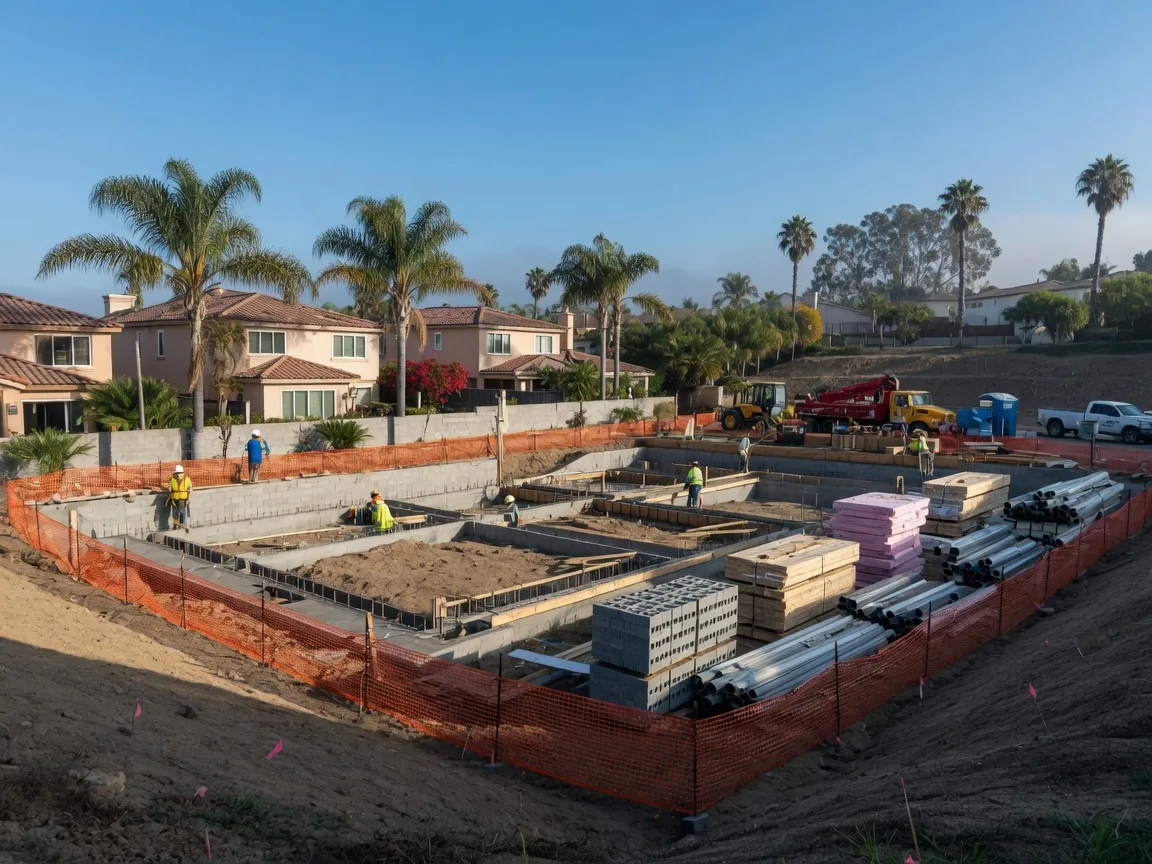
With streamlined permitting and new incentives, the development pipeline in San Diego is expected to accelerate through 2027.
What risks should investors monitor after the LDC changes?
Penalty Exposure
The new $10,000/day fine structure creates existential risk for unpermitted or noncompliant properties. A single ADU built without permits could generate $300,000+ in fines per month if discovered. Conduct a compliance audit on every property in your portfolio immediately.
AB 1033 Follow-Up Rules
San Diego County has indicated it may introduce owner-occupancy requirements and tenant priority rules for AB 1033 ADU condominium sales. These would limit the exit strategy for investors who purchase ADU condos and could affect valuations.
Implementation Timeline
Full implementation of the 134 amendments may take 6–12 months as the city updates building codes, permit forms, and planning processes. During this transition period, there may be uncertainty about which rules apply and how applications will be processed.
City vs. County Jurisdictional Differences
The city and county of San Diego have adopted different versions of AB 1033 and are on separate implementation timelines. Investors with properties in both jurisdictions need to track two sets of rules. Unincorporated county areas (Alpine, Jamul, Valley Center, etc.) follow county rules, which may diverge from city rules over time.
Market Readjustment
The removal of parking minimums and streamlining of ADU development could increase housing supply in certain submarkets, potentially moderating rent growth and property appreciation in the medium term. Investors underwriting new ADU projects should use conservative rent projections and factor in increased competition as more units come online.
Neighborhood Opposition
While the amendments have been approved, neighborhood groups may pursue legal challenges or ballot initiatives to overturn specific provisions. The parking minimum removal, in particular, has generated community concerns about street congestion and on-street parking competition.
Frequently asked questions.
What is the most important change for real estate investors in the May 2026 LDC amendments?
What is the most important change for real estate investors in the May 2026 LDC amendments?
How do the new $10,000 daily penalties affect my investment property?
How do the new $10,000 daily penalties affect my investment property?
Will eliminating parking minimums actually reduce construction costs?
Will eliminating parking minimums actually reduce construction costs?
What is the Complete Communities program and how does it affect me?
What is the Complete Communities program and how does it affect me?
How do these changes affect downtown San Diego differently?
How do these changes affect downtown San Diego differently?
How do these amendments interact with AB 1033 for ADU condo sales?
How do these amendments interact with AB 1033 for ADU condo sales?
What are the biggest risks investors should watch after these changes?
What are the biggest risks investors should watch after these changes?
Navigate San Diego's new regulatory landscape with confidence.
The May 2026 LDC amendments create both opportunities and compliance risks. Whether you are evaluating a new ADU project, auditing your portfolio for compliance, or exploring transit-zone development opportunities, our team can help you navigate the new rules.