
San Diego voters reject Measure A: what the vacant home tax defeat means for investors.
On June 2, 2026, San Diego voters rejected Measure A, the proposed "Non-Primary Homes Tax," by a 56.5% to 43.9% margin. This comprehensive analysis examines what the measure proposed, why it failed, and what the outcome means for real estate investors in San Diego County.
Margin of 12.6 percentage points in the June 2, 2026 primary election
Initial $8,000 rising to $10,000/year, plus $4,000–$5,000 corporate surcharge
Concentrated in coastal neighborhoods like La Jolla, Pacific Beach, and Downtown
Avoided annual cost for investors holding multiple vacant investment properties
San Diego's June 2026 primary election delivered a decisive outcome for real estate investors: Measure A, the proposed tax on vacant second homes and investment properties, was rejected by a margin of 12.6 percentage points.
For investors holding properties in San Diego County, the rejection represents a significant policy win. Had Measure A passed, owners of residential properties not claimed as a primary residence that remained vacant for 183 days or more per year would have faced an initial annual tax of $8,000, rising to $10,000 by 2028. Corporate-owned vacant properties would have been hit with an additional $4,000 surcharge on top of that.
The measure was championed by Councilmember Sean Elo-Rivera and supported by affordable housing advocates who argued it would encourage absentee owners to either rent or sell vacant homes. But it faced stiff opposition from property rights advocates, the California Apartment Association, and a well-funded "No on Measure A" campaign that raised over $1.3 million — more than four times the supporters' budget.
The defeat preserves the status quo for San Diego's investment market. Investors can continue holding properties during renovation periods, between tenants, or while evaluating highest-and-best-use options without an additional tax penalty. This flexibility is particularly valuable in a market where rents have flattened and vacancy has risen to 5.4%–5.7% — the highest since 2009.
However, the 43.5% support the measure received suggests the concept has a political base. Supporters may return with a revised, narrower measure in a future election cycle. For now, though, the rejection removes a major policy uncertainty that was hanging over San Diego's investment market — and that clarity alone makes San Diego more attractive relative to cities with active vacancy taxes.
What exactly was Measure A and who would it have affected?
Properties Targeted
Residential properties not claimed as a primary residence that remained vacant for 183 days or more per calendar year. This included second homes, investor-owned vacant properties, and corporate-owned homes held off the rental market.
Tax Structure
Initial annual tax of $8,000 per vacant property in 2027, rising to $10,000 in 2028 and increasing annually with inflation. Corporate-owned vacant properties would have faced an additional $4,000 surcharge per property.
Revenue Allocation
Revenue would have been directed to San Diego's general fund to pay for public safety, libraries, parks, and infrastructure. The measure did not require a specific percentage set-aside for affordable housing construction.
Coastal Concentration
Approximately 45% of the potentially affected ~5,100 properties were concentrated in coastal and affluent neighborhoods: La Jolla, Pacific Beach, Downtown, Mission Beach, Ocean Beach, Point Loma, Little Italy, and East Village.
Real-world impact example: An investor holding three vacant properties in La Jolla, Pacific Beach, and Downtown would have faced approximately $24,000 in annual vacancy taxes in 2027, rising to $30,000 by 2028. If those properties were held through a corporate entity, the total would have reached $36,000–$45,000 per year including the corporate surcharge. The vacancy tax alone would have represented roughly 1.1% of property value annually, requiring approximately 3.4% annual appreciation just to break even on holding costs — above the 2%–4% appreciation forecast for San Diego County in 2026.
Why did Measure A fail at the ballot box?
Property Rights Concerns
Opponents argued the measure infringed on property rights by creating a new government bureaucracy to investigate how residents use their homes. The prospect of city officials determining whether a home was "occupied enough" to avoid the tax raised constitutional concerns.
Broad Opposition Coalition
The "No on Measure A" campaign significantly outspent supporters, raising over $1.3 million in opposition spending — more than four times what the pro-A coalition raised. The California Apartment Association warned it would take "immediate action" to legally challenge the tax.
Coastal Neighborhood Voter Rejection
Coastal neighborhoods that would have borne approximately 45% of the tax burden voted heavily against the measure. This geographic concentration of the tax base created a motivated opposition bloc in high-turnout precincts.
Broader Anti-Tax Sentiment
The rejection follows a pattern of California voters rejecting vacancy taxes. A similar measure in South Lake Tahoe was rejected in 2024, and San Francisco's comparable tax was struck down by courts. Voters appear skeptical of targeted property taxes absent clear housing production outcomes.
Vote breakdown: 56.5% opposed vs. 43.9% in favor (with 0.4% undervotes). The 12.6-percentage-point margin was wider than pre-election polling had suggested. Coastal neighborhoods that would have shouldered the highest tax burden — La Jolla, Pacific Beach, Downtown, Mission Beach, Ocean Beach, Point Loma, Little Italy, and East Village — voted against the measure by the widest margins. These eight neighborhoods together account for approximately 45% of the ~5,100 properties the city estimated would have been subject to the tax.
What does the Measure A rejection mean for real estate investors?
The defeat of Measure A has direct, practical implications for anyone holding or considering investment property in San Diego County. Here is what changes and what stays the same.
No Holding Cost Penalty
Investors face no additional holding costs for vacant periods between tenants or during renovations. Had Measure A passed, the vacancy tax alone would have represented roughly 1.1% of property value annually — requiring approximately 3.4% annual appreciation just to break even on holding costs.
Second Home Viability Preserved
Investors who maintain second homes or vacation properties in San Diego can continue doing so without an $8,000–$10,000 annual penalty. This is particularly significant for La Jolla, Pacific Beach, and Mission Beach property owners who made up a disproportionate share of potentially affected properties.
Multi-Property Portfolio Protection
An investor holding three vacant properties avoided approximately $24,000–$30,000 per year in potential taxes. Corporate owners of three vacant properties avoided $36,000–$45,000 per year including the corporate surcharge.
Renovation Flexibility Preserved
Investors can acquire properties and hold them during extended renovation periods without tracking occupancy days or facing vacancy tax liability. This preserves the value-add acquisition strategy that depends on being able to hold a property through a 6–12 month renovation cycle.
Bottom line for investors: The rejection removes a potential $8,000–$14,000 per property annual cost that was hanging over San Diego's investment market. This clarity alone makes underwriting more predictable and reduces the risk premium investors must assign to San Diego properties relative to other California markets. For investors who had paused acquisition plans pending the outcome of Measure A, the path forward is now clear.

Measure A appeared on the June 2, 2026 primary election ballot after the San Diego City Council voted 8-1 to advance it in March 2026.
How do broader market dynamics affect the vacancy conversation?
The vacancy tax debate did not occur in a vacuum. San Diego's market is already self-correcting through supply and demand dynamics that make prolonged vacancy unattractive for most investors.
Rising Vacancy Rates
San Diego's residential vacancy rate reached 5.4%–5.7% in 2026 — the highest since 2009. This was driven by over 6,200 new units delivered in 2025 and 4,000 more projected for 2026, not by investors deliberately holding properties vacant. Market forces, not speculation, are the primary driver of current vacancy levels.
Flat Rental Market
Rents have stabilized at approximately $2,417–$2,520 per month across the county. The combination of new supply and flat rents means the market is already self-correcting — additional tax penalties would have been redundant with market dynamics already discouraging vacancy.
Interest Rate Environment
The 30-year fixed mortgage rate averaged 6.36% in May 2026, down 45 basis points from a year earlier. Rates briefly dipped below 6% in February 2026, triggering a 109% year-over-year surge in refinance applications. Lower rates are already encouraging transaction activity and reducing the "lock-in effect" that keeps properties off the market.
Affordability Constraints
57.6% of median household income in San Diego now goes to housing costs, and only 18% of residents can afford median-priced homes. These structural affordability constraints are a more significant factor in housing access than investor vacancy behavior.
Key insight: The most effective check on investor vacancy is not a tax but market economics. With San Diego's average monthly rent at $2,417–$2,520, a property vacant for three months represents $7,250–$7,560 in lost rental income — roughly equivalent to one year of the proposed Measure A tax. For most investors, the financial loss from vacancy already exceeds what the tax would have cost, making the market's own incentives a more powerful driver of occupancy than any government penalty.
How should investors adjust their strategy after Measure A's defeat?
With policy uncertainty resolved, savvy investors can now plan with greater confidence.
Capitalize on Certainty
The rejection removes a major policy uncertainty that was hanging over San Diego's investment market. Investors can now underwrite acquisitions and hold periods without modeling a potential $8,000–$10,000 annual vacancy penalty. This clarity alone makes San Diego more attractive relative to cities with active vacancy taxes.
Target Value-Add Renovations
With no vacancy penalty clock ticking, investors can confidently acquire properties requiring extended renovation timelines. The 6–12 month value-add window is now viable without carrying additional tax liability. Kearny Mesa, City Heights, and National City offer the best value-add opportunities.
Maintain Strategic Vacancy Flexibility
The ability to hold a property vacant during market transitions, between tenants, or while evaluating highest-and-best-use options is preserved. This flexibility is particularly valuable in a market where rents are flat and vacancy is elevated — landlords can wait for qualified tenants rather than accepting below-market offers.
Monitor for Future Ballot Measures
While Measure A failed, the 43.5% support it received suggests the concept has a political base. Supporters may return with a revised, narrower measure in a future election cycle — potentially targeting only corporate-owned vacant properties or including specific affordable housing funding commitments. Investors should remain engaged with local policy discussions.

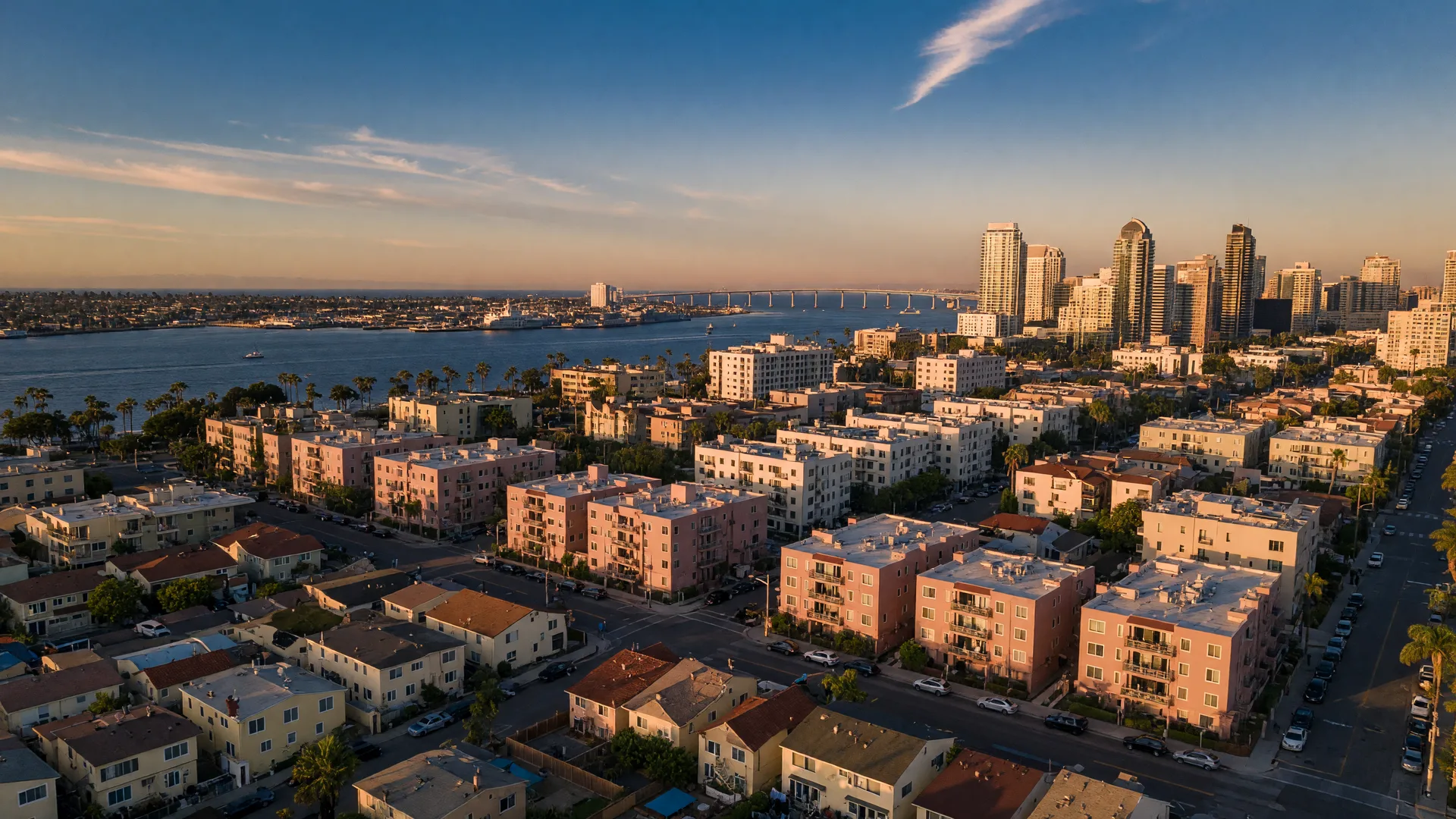
San Diego's residential neighborhoods — from coastal La Jolla to inland City Heights — present diverse investment opportunities in the post-Measure A landscape.
Frequently asked questions.
What was Measure A exactly?
What was Measure A exactly?
Why did Measure A fail?
Why did Measure A fail?
Does the Measure A rejection mean investors can leave properties vacant indefinitely?
Does the Measure A rejection mean investors can leave properties vacant indefinitely?
What is the current vacancy rate in San Diego, and why is it elevated?
What is the current vacancy rate in San Diego, and why is it elevated?
Could a similar measure appear on a future San Diego ballot?
Could a similar measure appear on a future San Diego ballot?
How does Measure A's rejection compare to similar measures in other California cities?
How does Measure A's rejection compare to similar measures in other California cities?
How many properties in San Diego would have been affected by Measure A?
How many properties in San Diego would have been affected by Measure A?
What other policy risks should San Diego investors watch in 2026 and beyond?
What other policy risks should San Diego investors watch in 2026 and beyond?
How does the Measure A outcome affect San Diego's housing affordability crisis?
How does the Measure A outcome affect San Diego's housing affordability crisis?
Navigate San Diego's market
with confidence.
Whether you are evaluating a specific property, reviewing your portfolio strategy in light of policy changes, or exploring new investment opportunities in San Diego County — our team has the local market expertise to help you make informed decisions.