San Diego Opportunity Zone investment guide — 47 tracts & OZ 2.0 benefits.
How to invest capital gains in San Diego County's 47 designated Opportunity Zone tracts under the permanent OZ 2.0 framework — tax deferral, basis step-up, and 100% tax-free appreciation after 10 years.
Designated Opportunity Zone tracts across San Diego County — one of the largest concentrations in California
Tracts within the City of San Diego alone, spanning downtown, Southeastern San Diego, the Midway District, and more
Hold period required for 100% capital gains exclusion on Qualified Opportunity Fund investments — a permanent feature under OZ 2.0
Capital gains exclusion on QOF investments held at least 10 years — fully tax-free appreciation on the invested gain
Opportunity Zones offer one of the most powerful tax-advantaged investment structures available to real estate investors — and San Diego County, with 47 designated tracts, is one of California's strongest Opportunity Zone markets.
The Opportunity Zone program, established by the Tax Cuts and Jobs Act of 2017 and recently made permanent under the One Big Beautiful Bill Act (OBBBA) of 2026, allows investors to reinvest capital gains into designated low-income communities and receive substantial federal tax benefits. The OZ 2.0 framework enshrines the program as a permanent feature of the tax code with enhanced benefits, expanded reporting, and stronger anti-abuse protections.
For San Diego real estate investors, the program opens a direct path to tax-advantaged investment in some of the county's most promising redevelopment corridors — from East Village and Barrio Logan in the urban core to downtown El Cajon, National City's Highland Avenue corridor, and emerging Opportunity Zones in Chula Vista, Vista, and Escondido.
This guide provides a comprehensive overview of the San Diego County Opportunity Zone landscape: the 47 designated tracts across six cities, the complete OZ 2.0 tax benefit structure under the 2026 OBBBA rules, neighborhood-by-neighborhood investment profiles, Qualified Opportunity Fund strategies, and a detailed compliance checklist for investors navigating the program.
Whether you are sitting on capital gains from a real estate sale, stock portfolio, or business exit, the Opportunity Zone program offers a structured way to defer taxes, reduce taxable gain through basis step-up, and achieve completely tax-free appreciation on investments held for 10 years or more. With the OZ 2.0 framework now permanent, the planning horizon for these investments is longer and more predictable than ever before.
What changed under the One Big Beautiful Bill Act of 2026?
The One Big Beautiful Bill Act (OBBBA), signed into law in 2026, made the Opportunity Zone program a permanent fixture of the federal tax code under the OZ 2.0 framework. Prior to OBBBA, the program was scheduled to sunset, with the last QOF certification date and the last opportunity to make new QOF investments limited to December 31, 2026 under the original program design. The uncertainty around the program's future created hesitation among investors and fund managers.
OZ 2.0 eliminates that uncertainty entirely. The program is now permanent, with the following key changes:
Permanent Program Status
OZ designations no longer expire. New QOFs can be formed indefinitely, and existing QOFs have no sunset deadline for their investment period. This opens unlimited investment windows for future capital gains.
Rolling 5-Year Deferral
Each new QOF investment resets the deferral clock. Gains invested after December 31, 2026 benefit from a rolling 5-year deferral window that resets with each new investment, providing ongoing tax deferral flexibility.
Enhanced Reporting
New fund-level reporting requires QOFs to disclose data on investments, jobs created, wages paid, and community outcomes. This transparency helps investors select funds with genuine community impact.
Anti-Abuse Rules
New guardrails prevent fund managers from designating QOF investments in tracts that are already substantially gentrified without providing demonstrable community benefit. This ensures the program fulfills its original affordable-housing and community-development mission.
What tax benefits do Opportunity Zone investments offer?
The OZ program delivers three distinct tax advantages that compound over time. Together, they create one of the most favorable tax treatment structures available in the U.S. tax code for long-term investors.
Rolling Capital Gains Deferral
Capital gains realized from the sale of any asset (real estate, stocks, business) can be invested in a Qualified Opportunity Fund. The original gain is deferred until the earlier of (a) December 31 of the fifth year after the QOF investment date or (b) the date the QOF investment is sold or exchanged. Under OZ 2.0 (the One Big Beautiful Bill Act), gains invested after December 31, 2026 benefit from a rolling 5-year deferral structure that resets with each new QOF investment.
Basis Step-Up on Original Gain
For non-rural QOF investments, the basis of the original deferred gain is increased by 10% after 5 years — meaning only 90% of the original gain is ever taxed. For QOFs in rural Opportunity Zones, the step-up is 30% after 5 years. This is a permanent benefit under OZ 2.0 and applies to investments made after December 31, 2026.
100% Exclusion on QOF Appreciation
Any additional capital gains generated within the QOF are permanently excluded from federal taxation if the investment is held for at least 10 years. This is the most valuable benefit: the tax-free compounding of investment returns within the fund. Under OZ 2.0, this 10-year exclusion feature is enshrined as a permanent provision of the tax code.
Extended Investment Window
Capital gains realized in 2026 can be reinvested into a QOF until September 10, 2027 — providing a significant planning window for investors. The 180-day reinvestment period applies to the sale date of the asset generating the gain. Investors can also use a 60-day accelerated deadline if preferred. The OZ 2.0 rules provide additional flexibility for installment sales and phased dispositions.
Invest gain into QOF.
Gain deferred from tax.
10% step-up on original gain.
Only 90% of gain ever taxed.
(30% step-up for rural QOFs)
100% exclusion on all QOF appreciation.
Tax-free growth.
Permanent benefit.
Where are the 47 Opportunity Zone tracts in San Diego County?
San Diego County's 47 Opportunity Zone tracts are distributed across six cities, with the largest concentration in the City of San Diego. Each city's tracts offer different investment profiles suited to different strategies and capital requirements.
| City | Tracts | Key Areas & Investment Notes |
|---|---|---|
| San Diego | 36 | East Village, Southeastern San Diego, Barrio Logan, Midway District, City Heights, Southcrest, Mountain View, Otay Mesa, and more |
| El Cajon | 5 | Downtown El Cajon, Fletcher Hills area, East Main Street corridor — strong multifamily and redevelopment plays |
| Chula Vista | 3 | West Chula Vista, Southwestern Chula Vista near the bay — residential and mixed-use investor opportunities |
| National City | 2 | Highland Avenue corridor and central National City — infill redevelopment and rental demand |
| Vista | 1 | South Vista area near the Civic Center and transit — emerging opportunity for commercial and residential |
| Escondido | 1 | Downtown Escondido area near Grand Avenue — revitalization and transit-oriented development potential |
Full tract boundaries: The exact census tract boundaries for all 47 Opportunity Zones are available through the California Department of Finance's OZ portal and the City of San Diego's Economic Development Department. Tracts were designated by the Governor in 2018 based on low-income community criteria and have been certified by the U.S. Treasury. The OZ 2.0 framework maintains all existing tract designations and does not add new ones — investors work with the same 47 tracts that were originally designated.
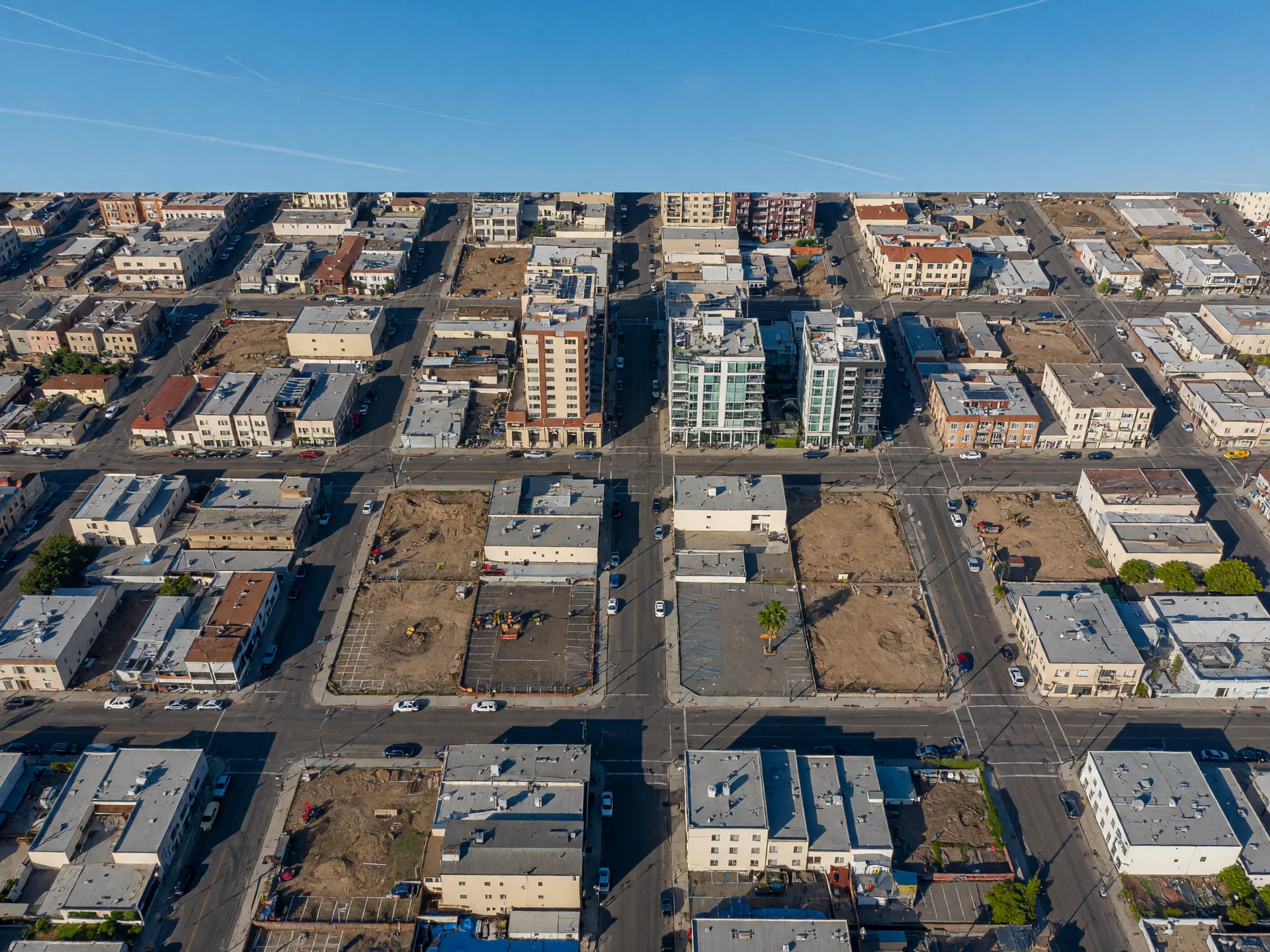
San Diego's downtown and surrounding neighborhoods contain 36 of the county's 47 Opportunity Zone tracts, offering diverse investment profiles from ground-up development to value-add rehabilitation.
How can investors participate in San Diego's Opportunity Zones?
There are four primary ways to invest in San Diego's Opportunity Zones, ranging from direct hands-on development to fully passive fund investment. Each approach suits different investor profiles, capital amounts, and risk tolerances.
Direct Property Development in OZ Tracts
Acquire and develop real estate directly within a designated Opportunity Zone using QOF capital. Eligible projects include multifamily residential, mixed-use commercial, hospitality, industrial, and infrastructure improvements. The QOF must invest at least 90% of its assets in qualified OZ property. In San Diego, East Village, Barrio Logan, and the Midway District have seen substantial QOF-backed development activity since the program launched.
A mixed-use development in Barrio Logan with ground-floor commercial and 20+ residential units above. QOF capital covers acquisition and construction. After 10 years, the appreciated gain is entirely tax-free.
QOF Investment Funds (Passive Strategy)
Pool capital with other investors through professionally managed Qualified Opportunity Funds that invest across multiple OZ properties or businesses. This approach provides diversification, professional management, and lower minimum investment thresholds. Investors receive K-1 allocations reflecting their share of the fund's income and gains. Several established QOFs focus on San Diego County OZ tracts.
An investor puts $500,000 of capital gains from a stock portfolio sale into a San Diego-focused QOF targeting East Village apartment development. Professional management handles all due diligence and compliance.
1031 Exchange to QOF Rollover
Combine a 1031 exchange with an OZ investment for multi-step tax planning. Sell an investment property, use a 1031 exchange to defer that gain into a replacement property, then after a hold period, sell the replacement property and roll the new gain into a QOF. This stacking strategy maximizes both depreciation benefits (from the 1031 property) and long-term tax-free growth (from the QOF).
A San Diego investor sells a rental property in North Park, 1031-exchanges into a multifamily property in El Cajon (an OZ tract), holds for 5 years, then sells and rolls the gain into a QOF for 10+ years of tax-free compounding.
OZ Business Investment (Active Strategy)
Invest in or start a Qualified Opportunity Zone Business (QOZB) within a designated tract. Eligible businesses include any trade or business where at least 50% of gross income is derived from active conduct within the OZ. Prohibited businesses include private or commercial golf courses, country clubs, massage parlors, hot tub facilities, suntan facilities, racetracks, and gambling establishments. This strategy suits entrepreneurs and operators.
A property management company expands into an Opportunity Zone tract, opening an office and hiring 10+ local employees. The QOF investment in the business qualifies for OZ tax benefits.
Which San Diego neighborhoods offer the strongest OZ investment opportunities?
Each Opportunity Zone tract has a different investment profile. Understanding the local dynamics — development activity, cap rates, pricing, and community priorities — helps match investment strategy with the right neighborhood.
East Village / Downtown San Diego
4.0%–5.5% Price Range
New development: $600–$800/sq ft
The center of OZ-driven development in San Diego. Multiple large-scale multifamily and mixed-use projects have been completed or are underway — including high-rise residential towers, adaptive reuse of historic commercial buildings, and ground-up construction on formerly vacant parcels. Quartyard and surrounding blocks represent a concentrated OZ development zone. Investors can participate through direct development, QOF funds, or acquiring existing assets that qualify under the substantial improvement test (doubling the adjusted basis of the property within 30 months).
Barrio Logan / Sherman Heights
5.0%–6.5% Price Range
Multifamily: $300–$450/sq ft
Historically underserved neighborhoods adjacent to downtown that have seen growing investor interest since OZ designation. Barrio Logan's proximity to the San Diego-Coronado Bridge, the Port of San Diego, and downtown employment centers makes it one of the most attractive OZ tracts for industrial conversion, mixed-use, and workforce housing investments. Sherman Heights offers 1900s-era housing stock suitable for rehabilitation and densification.
Southeastern San Diego / Encanto
5.5%–7.0% Price Range
Single-family: $500K–$700K
A large cluster of contiguous OZ tracts in southeastern San Diego, including the Encanto neighborhood corridor. This area offers the most affordable land prices in the city for OZ-qualifying development and has seen steady investment in single-family redevelopment and small-scale multifamily. The area is also a focus for the City's Complete Communities initiative, which provides density bonuses and streamlined permitting for qualifying projects.
Midway District / Sports Arena Area
4.5%–6.0% Price Range
Land: $200–$400/sq ft
The Midway District is undergoing a major transformation driven by the planned redevelopment of the Sports Arena site into a mixed-use hub. OZ tracts in this area offer development plays tied to the broader Midway Rising redevelopment plan as well as independent infill projects. The area's proximity to Mission Bay, the airport, and freeway access makes it one of the most promising OZ redevelopment zones in San Diego.
El Cajon Downtown Corridor
5.5%–7.0% Price Range
Multifamily: $250–$350/sq ft
El Cajon's 5 OZ tracts concentrate around downtown and the East Main Street corridor. The city has invested heavily in streetscape improvements, new public amenities, and business attraction. OZ investors can benefit from El Cajon's more affordable land prices compared to central San Diego while tapping into strong rental demand driven by the area's diverse population and access to SDSU's satellite campus. The city has established an OZ investment portal to connect investors with site opportunities.
National City / Highland Avenue
6.0%–7.5% Price Range
Multifamily: $200–$350/sq ft
National City's OZ tracts along the Highland Avenue corridor offer infill redevelopment and value-add investment opportunities at some of the most affordable entry points in the county. The city has proactively identified shovel-ready sites for OZ development, including several city-owned parcels available for private investment through request-for-proposal processes. National City's location between downtown San Diego and the Otay Mesa border crossing gives it logistics and transportation advantages.
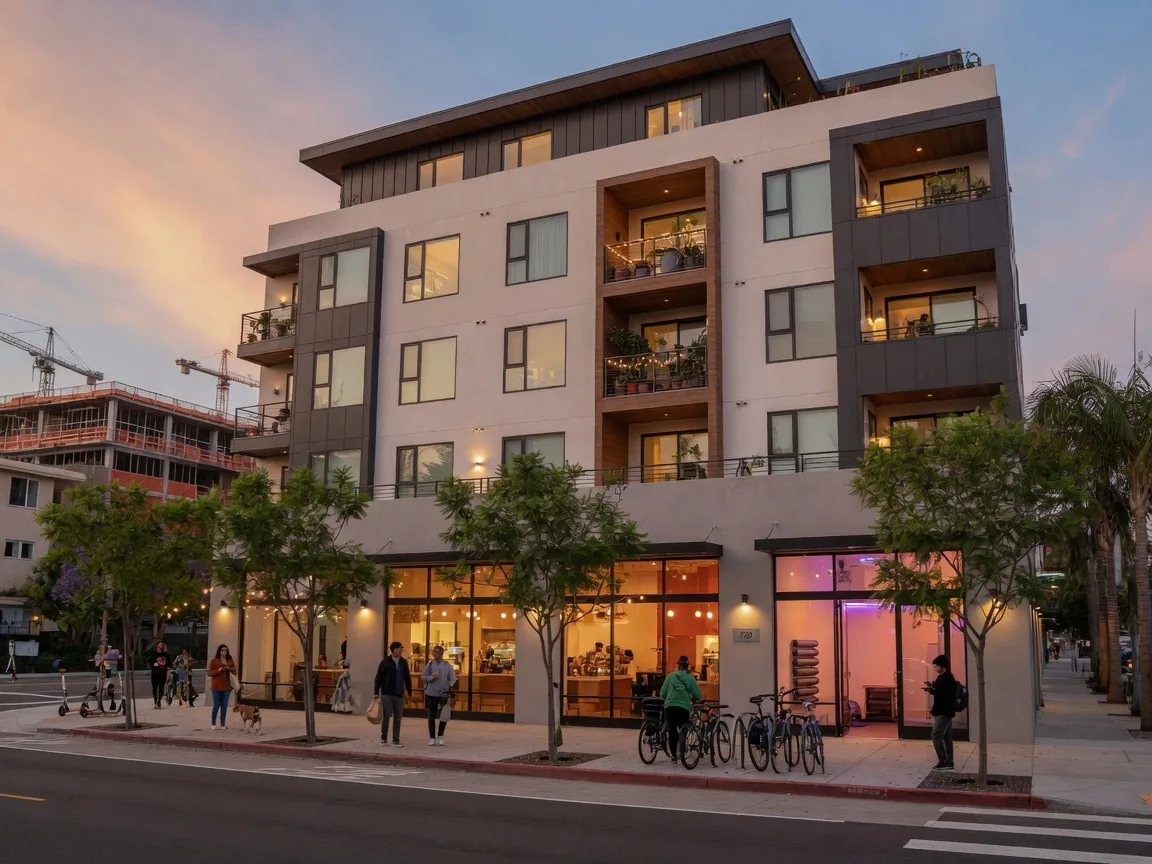
East Village and the surrounding downtown OZ tracts have attracted the most QOF-backed development in San Diego County, with high-rise residential, adaptive reuse, and mixed-use projects.
What compliance requirements do OZ investors need to track?
The OZ 2.0 framework introduced enhanced reporting and anti-abuse rules. Investors and fund managers must maintain diligent compliance to preserve tax benefits.
How do I invest in San Diego Opportunity Zones?
Identify Your Capital Gain
Identify a realized capital gain from any asset sale — real estate, stock, business, or other appreciated asset. The gain must be reinvested within 180 days of realization (or by September 10, 2027 for gains realized in 2026). Work with your CPA to determine the exact amount of eligible gain and the reinvestment deadline.
Select a Qualified Opportunity Fund
Research and select a QOF that invests in San Diego County Opportunity Zone projects. Evaluate the fund manager's track record, focus areas (multifamily vs commercial vs business), fee structure, minimum investment, and target returns. Our team maintains a network of vetted QOF managers investing in San Diego OZ tracts.
Execute the QOF Investment
Contribute your capital gain proceeds to the QOF within the 180-day reinvestment window. The fund manager will issue a K-1 annually reflecting your share of income, gains, deductions, and credits. Make sure the QOF certifies its OZ status with the IRS on Form 8996 and maintains the 90% asset test.
Hold for 5+ Years (Basis Step-Up)
Hold the QOF investment for at least 5 years to receive the 10% basis step-up on your original deferred gain (30% for rural QOFs). Continue monitoring the fund's investments, property performance, and ongoing IRS compliance. The deferred gain is reported on Form 8997.
Hold for 10+ Years (Full Exclusion)
Hold the QOF investment for at least 10 years to qualify for the permanent 100% exclusion of all QOF appreciation from federal capital gains tax. This is the program's most powerful benefit — tax-free compounding of investment returns within the fund. After 10 years, you can elect to step up the QOF investment's basis to its fair market value on the election date, eliminating any taxable gain when you ultimately sell.
Important deadline for 2026 gains: Capital gains realized in calendar year 2026 can be reinvested into a Qualified Opportunity Fund until September 10, 2027 (the 180-day reinvestment deadline from the date of gain realization). If you are holding gains from a 2026 transaction, the extended deadline gives you until late 2027 to complete your QOF investment. There is no deadline for gains realized after 2026 under the new permanent OZ 2.0 rules — the program's rolling deferral structure provides ongoing investment windows.
Frequently asked questions.
What exactly is an Opportunity Zone and how does it work?
What exactly is an Opportunity Zone and how does it work?
How many Opportunity Zones are in San Diego County?
How many Opportunity Zones are in San Diego County?
What tax benefits does OZ 2.0 provide under the 2026 rules?
What tax benefits does OZ 2.0 provide under the 2026 rules?
Can I invest in Opportunity Zones if I sold real estate or stocks?
Can I invest in Opportunity Zones if I sold real estate or stocks?
What is the minimum hold period for OZ tax benefits?
What is the minimum hold period for OZ tax benefits?
How do I find Qualified Opportunity Funds investing in San Diego?
How do I find Qualified Opportunity Funds investing in San Diego?
What types of projects qualify as OZ investments in San Diego?
What types of projects qualify as OZ investments in San Diego?
Are there risks to OZ investing I should know about?
Are there risks to OZ investing I should know about?
Whether you have capital gains to invest or are evaluating
San Diego's Opportunity Zone
landscape for the first time.
Our team works with San Diego's Opportunity Zone ecosystem — including QOF managers, developers, and tax advisors — and can help you evaluate opportunities that match your capital, timeline, and investment goals. We also connect property owners with investors seeking OZ-qualifying assets.