
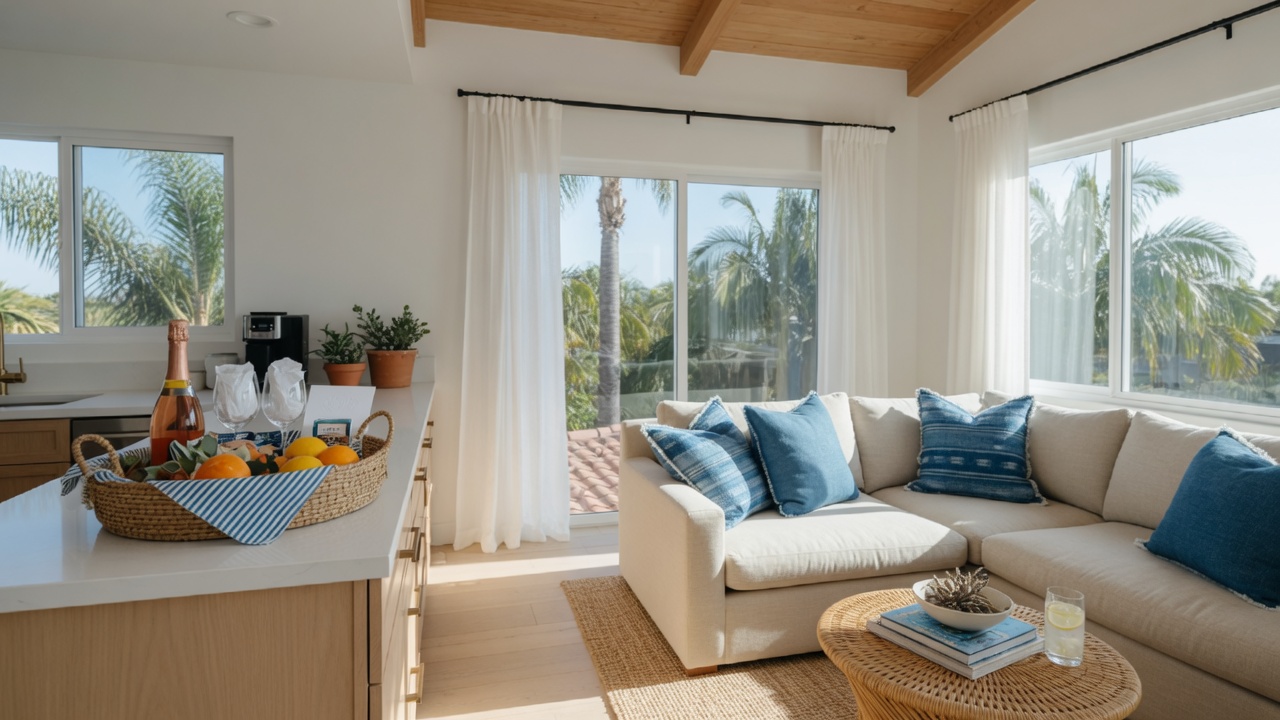
San Diego short-term rental regulations & investment opportunities.
A comprehensive guide to San Diego's STRO licensing system, SB 346 enforcement changes, tax obligations, neighborhood revenue benchmarks, and how investors can navigate the city's evolving regulatory landscape in 2026.
This article was originally published June 2025 and last updated July 8, 2026. We have refreshed it with August 14, 2026 data covering the Measure C TOT rate increase (effective May 1), Measure A's rejection by voters on June 2, the latest Tier 3 license count now at ~829 remaining (down from ~964), over 16,500 illegal listings removed from platforms, and updated AirDNA market data showing a $336 average daily rate and 61% occupancy across approximately 15,964 active listings.
of ~5,400 total cap (down from ~964 in early 2026)
STRO licenses issued citywide across all four tiers
effective Jan 1, 2026; 16,500+ illegal listings removed
San Diego's short-term rental market has entered a new phase of regulatory maturity in 2026. With California's SB 346 platform data-sharing law now in effect and the city securing its first seven-figure enforcement judgment, the landscape for investors has shifted meaningfully since this guide was first published.
The City of San Diego regulates all stays of fewer than 30 consecutive nights under the Short-Term Residential Occupancy (STRO) Ordinance. Every host — whether renting a single room or an entire property — must obtain a city-issued STRO license and comply with the Good Neighbor Policy.
The four-tier licensing framework remains unchanged in structure, but the practical landscape continues to tighten. Tier 3 licenses are approaching the ~5,400 cap with roughly 829 remaining as of mid-August 2026. Tier 4 (Mission Beach) is fully capped and closed. Enforcement has shifted from complaint-driven to automated, with over 16,500 illegal listings removed from platforms since the program began.
For investors, these changes create both risk and opportunity. On the risk side, unlicensed operation is now nearly impossible to sustain — SB 346 eliminated the data gap that previously allowed anonymous STR listings to operate without a license. On the opportunity side, the scarcity of available licenses has increased the value of existing ones, and the city's active enforcement is reducing illegal competition for compliant operators.
This updated guide reflects the 2026 regulatory environment, current revenue benchmarks, and the enforcement landscape that now defines San Diego's short-term rental market.
What are San Diego's four short-term rental license tiers?
Part-Time / Limited
Short-term stays of fewer than 30 nights with a cap of 20 nights per year.
Designed for occasional hosts who rent a room or property for a limited number of nights annually. No cap on the number of licenses issued.
Home-Sharing / Primary Residence
Renting rooms or your primary residence on a short-term basis with no annual night limit.
The host must occupy the property as their primary residence for at least 6 months per year. This tier allows unlimited short-term rental nights but requires the owner to live on-site.
Whole-Home — Non-Primary Residence
Entire property listed as a short-term rental when the owner does not live on-site. This is the primary tier for investor-owned vacation rentals.
Capped at approximately 5,400 total permits (~1% of housing stock). As of August 2026, roughly 829 Tier 3 licenses remain available before the cap is reached (down from ~964 in early 2026). A total of 8,438 STRO licenses have been issued across all tiers citywide. New applications after the cap will face a waitlist.
Whole-Home — Mission Beach
Whole-home short-term rental specifically within the Mission Beach community.
Mission Beach reached its cap of approximately 1,080 licenses. The waitlist is frozen and new applications require a lottery. Existing operators are grandfathered, but no new Tier 4 licenses are being issued.
Critical update for 2026: Tier 3 licenses are approaching the cap with roughly 829 remaining out of ~5,400 total as of August 2026 (down from ~964 in early 2026). A total of 8,438 STRO licenses have been issued citywide across all four tiers. Tier 4 (Mission Beach) is fully capped and closed — the waitlist is frozen and new applications require a lottery. Investors must verify current license availability before purchasing a property with STR income assumptions. Under SB 346, platforms now share host data with the city, making unlicensed operation virtually impossible to sustain.
What taxes and fees apply to short-term rental hosts in San Diego?
Transient Occupancy Tax
The TOT uses a tiered system under Measure C: 11.75%, 12.75%, or 13.75% depending on your property's zone. This tax is collected from guests on top of the nightly rate and remitted monthly to the city. Combined with potential Tourism Marketing District assessments, total tax obligations typically range from 13.75% to 15.75%.
STRO License Fees
Non-refundable license fees: $226 (Tier 1), $317 (Tier 2), and $1,170 (Tiers 3 and 4). Licenses are valid for two years and require an active TOT Certificate and a paid Rental Unit Business Tax (RUBT) account as prerequisites.
Platform Tax Collection
Many platforms (Airbnb, VRBO) now automatically collect and remit TOT on behalf of hosts in San Diego. Verify your platform's tax collection settings to ensure compliance and avoid double-paying or under-remitting.
How much do short-term rentals earn in San Diego neighborhoods?
Revenue varies significantly by neighborhood, property size, and management quality. Citywide average annual gross revenue is approximately $47,000–$58,000 in 2026. The data below represents typical ranges for well-managed, professionally furnished properties.
| Neighborhood | Avg. Daily Rate | Occupancy | Est. Annual Revenue |
|---|---|---|---|
| La Jolla | $388–$733 | 60%–68% | $88,000–$171,000+ |
| Mission Beach | $388–$420 | 68%–73% | $72,000–$102,000 |
| Pacific Beach | $260–$380 | 62%–70% | $55,000–$80,000 |
| Gaslamp Quarter | $300–$450 | 58%–66% | $50,000–$75,000 |
| Carlsbad | $350–$410 | 58%–64% | $42,000–$75,000 |
| Encinitas | $280–$400 | 58%–66% | $50,000–$80,000 |
| Downtown / East Village | $200–$310 | 55%–63% | $40,000–$60,000 |
Data compiled from AirDNA, AirROI, Rabbu, and industry sources as of mid-August 2026. Citywide AirDNA benchmarks as of August 2026: ~15,964 active listings, $336 average daily rate, 61% occupancy. Actual performance varies by property condition, management quality, and market conditions. Citywide median host earns approximately $4,574/month. Top 10% of properties exceed $13,000/month.
Citywide average annual gross revenue
Citywide occupancy range across seasons
Citywide avg. daily rate (AirDNA, Aug 2026)
Active listing supply growth (YoY)
What are the advantages and risks of investing in San Diego short-term rentals in 2026?
Higher Revenue Potential
Short-term rentals in San Diego generate 40%–100% more annual revenue than traditional long-term leases. Citywide average annual revenue reached $57,000–$58,000 in 2026, with top-performing La Jolla properties exceeding $170,000 per year.
Dynamic Pricing & Seasonal Peaks
San Diego's year-round coastal tourism creates strong summer peaks (July occupancy reaches 65%+) and a secondary spring bump. Dynamic pricing allows operators to capitalize on peak seasons — monthly revenue in July can exceed $10,000 — while adjusting for slower periods.
Mid-Term Rental Flexibility
Properties rented for 30+ consecutive nights are exempt from STRO requirements. The hybrid short/mid-term model — serving travel nurses, corporate housing, and remote workers during off-season — reduces regulatory burden while maintaining year-round occupancy.
Portfolio Diversification
STR income is driven by tourism, conventions, and travel demand — a different revenue stream from long-term residential leases, providing portfolio diversification. San Diego's tourism economy generated roughly $14.4 billion in visitor spending in 2026.
Regulatory Complexity & Enforcement
San Diego's STRO ordinance is one of the most detailed in California. New state law SB 346 now requires platforms like Airbnb and VRBO to share host data with the city — closing the enforcement gap that previously allowed unlicensed operators to fly under the radar.
Tier 3 & Tier 4 License Scarcity
Tier 3 licenses are approaching the ~5,400 cap with roughly 829 remaining as of August 2026 (down from ~964 in early 2026). A total of 8,438 STRO licenses have been issued citywide across all four tiers. Tier 4 (Mission Beach) is fully capped with zero new licenses available. Investors must verify current license availability before purchasing a property.
Higher Operating Costs
STR management requires more hands-on work: cleaning, guest communication, maintenance, dynamic pricing, and platform management. Professional management fees typically run 20%–30% of gross revenue — but top managers outperform self-managed properties by 15%–25%.
Seasonality & Revenue Concentration
Revenue is heavily concentrated in summer months. Citywide monthly revenue swings from ~$2,700 in January to $6,500–$10,000 in July — a spread of nearly $4,000–$7,300. Investors must budget for cash flow variability across the year.
What has changed in San Diego's STR enforcement?
2026 marks a turning point in how San Diego enforces short-term rental regulations. The combination of California's SB 346 platform data-sharing law and aggressive city enforcement has fundamentally changed the risk calculus for unlicensed operators — and created a more level playing field for compliant investors.
SB 346 Platform Data Sharing
Effective January 1, 2026, California Senate Bill 346 requires short-term rental platforms (Airbnb, VRBO, Booking.com) to share host names, listing data, and booking information with local governments. San Diego now cross-references platform listings against its licensing database automatically — eliminating the previous enforcement blind spot.
$1,000-per-Day Fines
Operating a short-term rental without a valid STRO license carries fines starting at $1,000 per day of violation. Repeat violations escalate to permanent disqualification from future licensing. The Building and Land Use Enforcement (BLUE) team actively pursues complaints and platform-reported violations.
$1.25 Million Judgment (June 2026)
The City Attorney secured a $1.25 million judgment against a six-property illegal STR operation spanning North Park, Normal Heights, City Heights, and Barrio Logan. The operators were fined $100,000 immediately, banned from operating STRs until 2028, and ordered to cancel all bookings and remove listings.
Platform Removal Obligations
Platforms are legally required to remove listings that lack a valid STRO number. Listings without proper documentation are flagged and delisted as part of the automated data-sharing framework — making it increasingly difficult to operate unlicensed rentals.
16,500+ Illegal Listings Removed
Since the STRO program launched, over 16,500 unlicensed listings have been removed from platforms like Airbnb and VRBO. The city now uses automated cross-referencing between platform data and its licensing database to identify and flag non-compliant listings. This aggressive enforcement has significantly reduced illegal competition for licensed operators.
What this means for compliant investors: The crackdown on illegal operators is reducing competition and reinforcing the value of properly licensed properties. If you hold a valid STRO license and follow the Good Neighbor Policy, the enforcement environment works in your favor — illegal listings are being removed from platforms and unlicensed operators face escalating consequences.
How do I set up a compliant short-term rental in San Diego?
Verify License Availability
Check with the San Diego City Treasurer's office for current Tier 3 availability. As of August 2026, roughly 829 licenses remain before the ~5,400 cap is reached (down from ~964 in early 2026). Tier 4 (Mission Beach) is fully capped with 8,438 STRO licenses issued citywide — do not assume license availability for Mission Beach properties.
Obtain Your STRO License
Apply through the San Diego City Treasurer's office. Select the correct tier based on your property type and intended use. Processing takes 4–8 weeks. Licenses are valid for two years and require an active TOT Certificate and paid Rental Unit Business Tax account.
Register for TOT
Register with the city to collect and remit the Transient Occupancy Tax (11.75%–13.75% depending on zone). You must collect TOT from every guest and file returns monthly.
Post Your License & Implement Compliance
Display your STRO license number in all advertisements and physically at the property. Provide every guest with written copies of noise, parking, and trash rules. Designate a local emergency contact available 24/7 who can respond within one hour.
Maintain Ongoing Compliance
Monitor noise levels, occupancy limits, parking, and trash. Respond to neighbor concerns within one hour. Maintain records of all guest stays and complaints for at least three years. Expect platform data-sharing audits under SB 346 — Airbnb and VRBO now report host data to the city automatically.
What is the Good Neighbor Policy?
San Diego's Good Neighbor Policy is a set of operating requirements that every short-term rental host must follow. It is designed to protect residential communities from the disruption that can accompany transient guests.
Hosts must post their STRO license number prominently in all online listings and physically at the property. Every guest must receive a written copy of community guidelines covering noise restrictions, trash disposal, and parking rules.
The most critical requirement is the 24/7 local contact rule. Every STR property must designate a local representative who can respond to neighbor complaints within one hour at any time of day or night.
Non-compliance with the Good Neighbor Policy can result in fines starting at $1,000 per day, license suspension, or revocation. The June 2026 $1.25 million judgment against illegal operators demonstrates the city's willingness to pursue significant penalties. Investors should build compliance into their operating plan from day one.
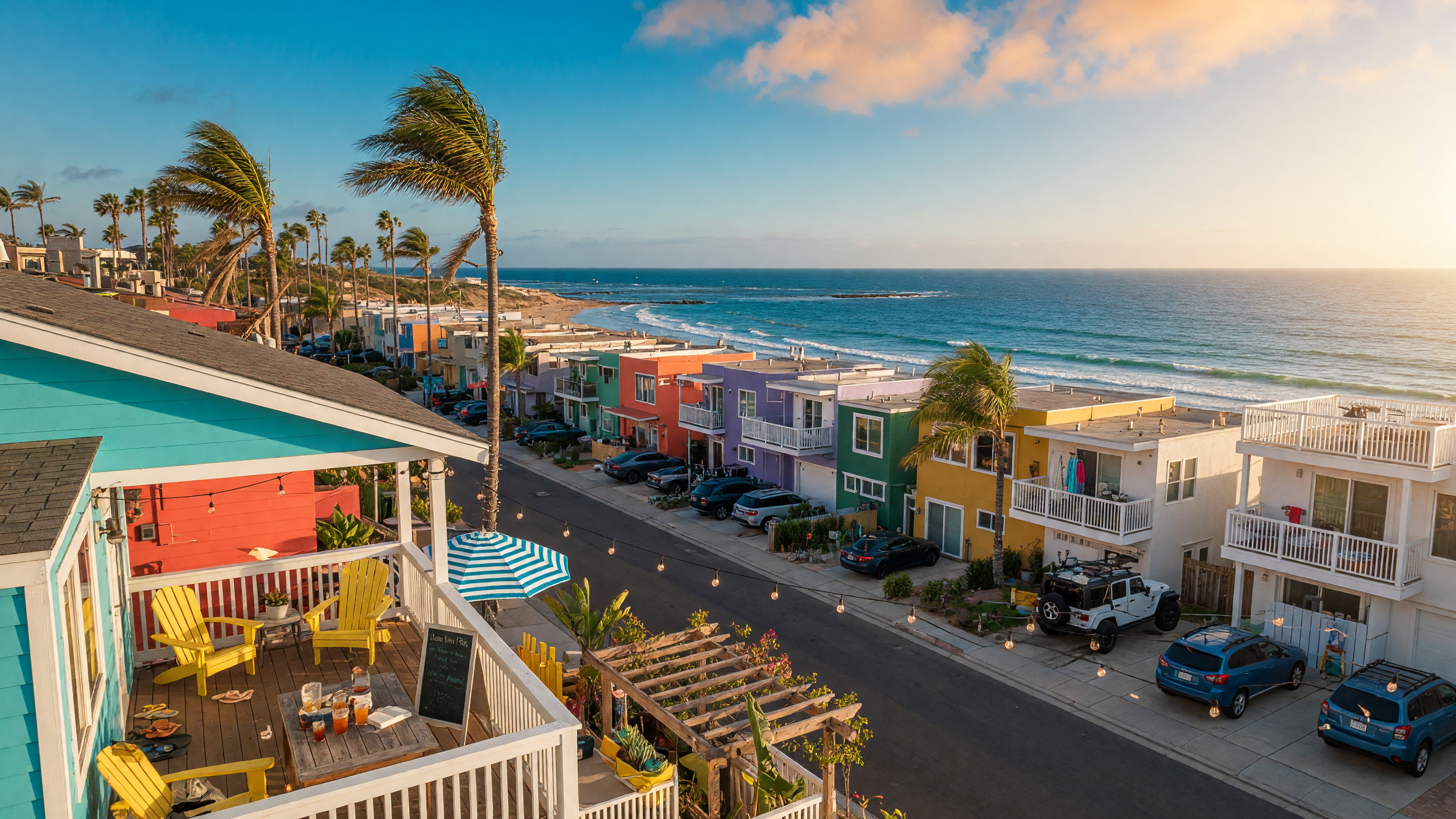
Professional furnishing and coastal design are key to maximizing nightly rates in San Diego's competitive short-term rental market.
What strategies do savvy investors use in San Diego's STR market?
Hybrid Short/Mid-Term Model
Rent 30+ nights to mid-term tenants (corporate housing, travel nurses, remote workers) during slow seasons — January through March when monthly revenue dips to ~$2,700 — then switch to short-term during peak summer months when revenue can exceed $10,000/month. Mid-term stays of 30+ nights are entirely exempt from STRO requirements. See our mid-term & furnished rentals guide for the 30-night rule, rate benchmarks, and compliance checklist.
License Value as an Asset
With Tier 3 licenses approaching the cap and Tier 4 fully closed, an existing STRO license adds tangible value to an investment property. Properties with active licenses command premium pricing in both rental income and resale value. The license itself becomes a tradeable asset in a supply-constrained market.
Professional Management
The complexity of STR operations — dynamic pricing, 24/7 guest communication, turnover cleaning, compliance tracking, and neighbor relations — makes professional management essential for most investors. With active listing supply up 16.4% in the past year, professional managers consistently outperform self-managed properties by 15%–25% in revenue.
Multi-Property Portfolio
Investors with multiple properties can diversify across neighborhoods — pairing high-ADR La Jolla properties ($388–$733/night) with high-occupancy Mission Beach or Pacific Beach units. A mix of Tier 2 (home-sharing) and Tier 3 (investor) licenses can optimize portfolio-level returns while managing regulatory risk.
Frequently asked questions.
How many Tier 3 licenses are still available in San Diego in 2026?
How many Tier 3 licenses are still available in San Diego in 2026?
What is California SB 346 and how does it affect San Diego short-term rentals?
What is California SB 346 and how does it affect San Diego short-term rentals?
Can I still get a Tier 4 license for Mission Beach?
Can I still get a Tier 4 license for Mission Beach?
How much can a short-term rental earn in San Diego in 2026?
How much can a short-term rental earn in San Diego in 2026?
What is the Transient Occupancy Tax (TOT) rate for short-term rentals in San Diego?
What is the Transient Occupancy Tax (TOT) rate for short-term rentals in San Diego?
What is the Good Neighbor Policy and how do I comply?
What is the Good Neighbor Policy and how do I comply?
Can I convert my short-term rental to a mid-term rental to avoid STRO requirements?
Can I convert my short-term rental to a mid-term rental to avoid STRO requirements?
What happens if I operate a short-term rental without a license in 2026?
What happens if I operate a short-term rental without a license in 2026?
What San Diego neighborhoods are most profitable for short-term rentals?
What San Diego neighborhoods are most profitable for short-term rentals?
Was Measure A (the vacant home tax) passed in San Diego?
Was Measure A (the vacant home tax) passed in San Diego?
How many illegal short-term rental listings have been removed in San Diego?
How many illegal short-term rental listings have been removed in San Diego?
Navigate San Diego's
STR market with confidence.
Whether you are evaluating a specific property, exploring license availability, comparing STR income against other strategies, or navigating the new SB 346 compliance landscape — our team can help you make data-driven decisions.