
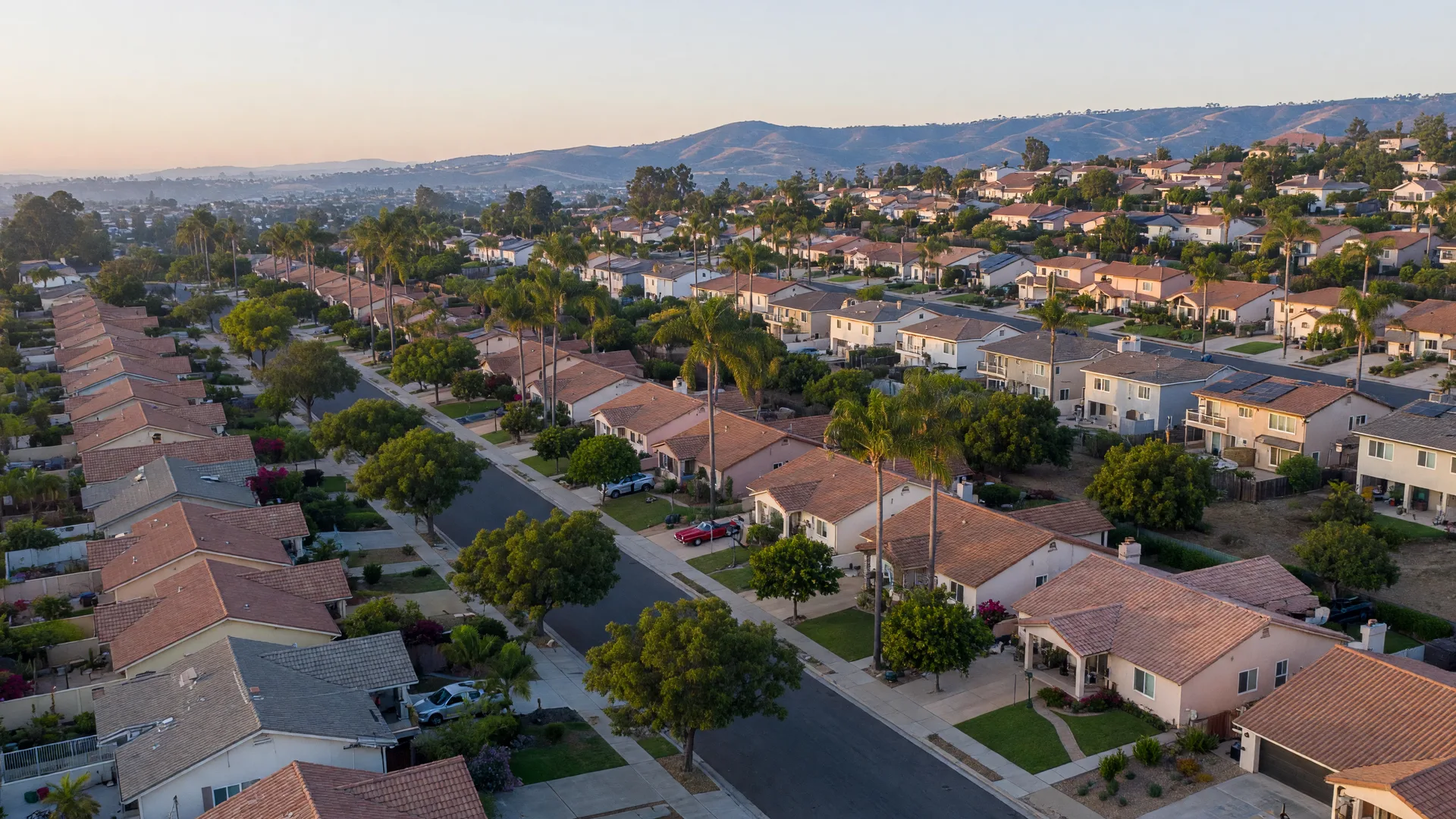
First-time investor tips & San Diego market insights.
A practical, data-driven guide to making your first real estate investment in San Diego — from financing and budgeting to neighborhood selection and the mistakes to avoid.
Typical total cash needed for a first conventional investment purchase at the county median.
Target cap rate for first-time investors in San Diego's inland cash-flow neighborhoods.
Minimum operating reserve every investor should maintain — non-negotiable in California.
FHA owner-occupied down payment for house-hacking a 2–4 unit property — the most capital-efficient entry point.
Entering real estate investing for the first time is one of the most significant financial decisions you will make. In San Diego — where median home prices exceed $950,000 and rental demand is structurally strong — getting the fundamentals right from day one is the difference between building wealth and learning expensive lessons.
This guide is designed specifically for first-time investors evaluating the San Diego market in 2026. It covers the numbers you need to understand, the financing paths available to you, how to pick the right neighborhood, and the most common mistakes that cost new investors thousands of dollars.
The San Diego market offers genuine advantages for patient investors: moderate 2%–4% annual appreciation, stable rental demand anchored by military, biotech, and tourism employment, and chronic housing undersupply that supports long-term values. But these structural strengths do not eliminate the need for careful analysis — they make it even more important.
Whether you are considering your first single-family rental, evaluating a duplex for house-hacking, or exploring multifamily for the first time, the principles in this guide apply. Focus on the numbers, build the right team, protect your downside, and let the fundamentals of San Diego's market work in your favor.
The most successful first-time investors share one trait: they treat investing as a business from the very first deal. That means running conservative financial projections, securing appropriate financing, conducting thorough due diligence, and maintaining adequate reserves. Everything else follows from those foundations.
What does the San Diego market look like in 2026?
These are the core metrics every first-time investor should understand before writing an offer. San Diego's market has stabilized after the volatility of 2021–2024, creating a more predictable — but still competitive — environment for new investors.
San Diego County-wide median as of mid-2026, steady year-over-year
Moderate, sustainable growth above inflation — healthy for long-term investors
Rental vacancy has stabilized after 2024–2025 construction-driven supply increases
Citywide range across property types and neighborhoods in 2026
Residential Mortgage Rate
Approximately 6.5%–7.2% for conventional investment loans. Rates have stabilized after the 2022–2024 increases, and well-structured deals are penciling out at current levels.
Property Tax Rate
1.1%–1.25% of assessed value, fixed at purchase under California's Proposition 13. On an $800,000 property, expect $8,800–$10,000 annually — a significant line item in your operating budget.
Cap Rate Range
3%–6.5% depending on neighborhood and property type. First-time investors should target 5%–6% in inland submarkets where cash flow is achievable with conventional financing.
What financing options are available for first-time investors?
Your financing strategy shapes everything — which properties you can afford, how much cash flow you generate, and how much risk you carry. San Diego offers multiple paths to your first investment, each with distinct tradeoffs.
Conventional Residential Loan
1–4 unit properties; most straightforward path for first-time investors
FHA Loan (Owner-Occupied)
House-hacking a duplex, triplex, or fourplex — live in one unit, rent the others
DSCR Loan
Investors who want to qualify based on property cash flow, not personal income
Portfolio / Local Bank Loan
Investors with multiple properties; relationship-based underwriting
Hard Money / Bridge Loan
Short-term value-add acquisitions needing quick close and renovation capital
Seller Financing
Creative deals where sellers carry the note — flexible terms, lower closing costs
Pro tip for first-time investors: House-hacking with an FHA loan on a duplex or fourplex is the most capital-efficient entry into San Diego real estate investing. You live in one unit with only 3.5% down, collect rent from the others, and convert to a full rental after 12 months — building equity and portfolio experience simultaneously.
How much cash do I need for my first San Diego investment?
Understanding your total cash requirement — not just the down payment — prevents surprises and ensures you have adequate reserves from day one. Here is a realistic budget for a conventional purchase at the county's median price point.
This budget assumes a conventional investment loan at 20% down on an $800,000 property — slightly below the county median, reflecting typical entry points in inland neighborhoods like Chula Vista, El Cajon, or City Heights. FHA house-hacking significantly reduces the down payment and cash needed. Partnerships and funding structures can further reduce individual capital requirements — explore funding options.
Which San Diego neighborhoods fit a first-time investor's goals?
San Diego is not one market — it's dozens of distinct micro-markets. Your neighborhood choice determines your tenant profile, cap rate, appreciation potential, and management complexity. Here is a tiered guide organized by investment strategy.
Cash Flow Focus
— Higher cap rates, lower entry points, strong rental demand from working families| Neighborhood | Median Price | Cap Rate | Rent Range | Notes |
|---|---|---|---|---|
| Chula Vista | $700K–$850K | 5%–6% | $2,200–$3,000/mo | Strong family-renter demand; Bayfront project driving long-term value |
| El Cajon | $650K–$800K | 5.5%–6.5% | $2,100–$2,800/mo | Below-median entry; healthcare and education employment anchors |
| National City | $550K–$700K | 6%–7% | $1,800–$2,500/mo | Lowest entry point in county; transit-oriented development planned |
| Vista | $700K–$850K | 5%–6% | $2,200–$2,900/mo | Growing North County market; diverse tenant base |
Balanced Strategy
— Mix of appreciation and moderate cash flow; established neighborhoods with upside| Neighborhood | Median Price | Cap Rate | Rent Range | Notes |
|---|---|---|---|---|
| City Heights | $650K–$800K | 5%–6.3% | $2,000–$2,800/mo | Highest cap rates in the city; El Cajon Blvd corridor redevelopment |
| Kearny Mesa / Clairemont | $750K–$900K | 4.5%–5.5% | $2,400–$3,200/mo | Limited new construction; central location advantage; value-add stock |
| Escondido | $700K–$850K | 5%–6% | $2,200–$2,900/mo | Multifamily 5%–6%; inland North County hub with transit access |
| Oceanside | $800K–$950K | 4.5%–5.5% | $2,500–$3,400/mo | North County expansion; military and tourism dual demand anchors |
Appreciation & Premium
— Stronger appreciation potential; higher entry, premium rents, longer hold horizon| Neighborhood | Median Price | Cap Rate | Rent Range | Notes |
|---|---|---|---|---|
| North Park | $1.0M–$1.3M | 3.5%–4.5% | $2,400–$3,500/mo | ADU-driven value creation; premium rents with low vacancy |
| Mission Valley | $700K–$900K | 4%–5% | $2,500–$3,500/mo | Riverwalk redevelopment and SDSU expansion driving long-term value |
| Carlsbad | $1.0M–$1.4M | 3.5%–4.5% | $2,800–$4,000/mo | Coastal demand; strong schools; constrained supply |
For a deeper dive into specific neighborhoods, see our Neighborhood Investment Spotlights article with individual neighborhood profiles and investment analysis.
What are the biggest mistakes first-time investors make in San Diego?
Buying Without Running the Numbers
New investors often fall in love with a property before calculating cap rate, cash-on-cash return, and debt service coverage. In San Diego's high-price market, a property that doesn't pencil out at purchase will not improve over time. Run the pro forma conservatively — assume 5.4% vacancy, 1.1%–1.25% property tax, and 8%–10% for maintenance and management.
Underestimating Total Operating Costs
The mortgage is just the beginning. San Diego insurance premiums have increased 20%–40% in recent years. Property taxes at 1.1%–1.25% of purchase price can exceed $10,000 annually on a median-priced home. Add maintenance, management fees (8%–12% of gross rent), and reserves for capital expenditures. Most new investors underestimate total costs by 15%–25%.
Ignoring California Tenant Laws
California has some of the most tenant-protective laws in the nation. AB 1482 caps rent increases at 5% plus CPI or 10% (whichever is lower). Eviction procedures require specific legal grounds and can take months. Understanding your obligations as a landlord — before you have tenants — prevents costly legal exposure.
Skipping Professional Due Diligence
Every property in San Diego needs thorough inspections: general, roof, plumbing, electrical, foundation, and pest. Older buildings in City Heights, Kearny Mesa, and National City can carry deferred maintenance costs of $20,000–$60,000. Skipping or skimping on inspections is the single most expensive mistake new investors make.
Overleveraging at Peak Rates
Stretching to maximum loan-to-value at current interest rates (6.5%–7.5%) leaves no margin for error. A vacancy, unexpected repair, or rate adjustment can turn a positive cash flow property into a monthly drain. Build in at least 6 months of operating reserves and stress-test your numbers at higher vacancy and rate scenarios.
Going It Alone
Trying to self-manage, self-finance, and self-evaluate without professional guidance is the most common path to expensive learning experiences. One legal mistake in California eviction proceedings or one missed disclosure can cost more than years of professional fees. Build your team before you need them.
What due diligence do I need before making an offer?
What California landlord laws should every first-time investor understand?
California's regulatory environment is more complex than most states. Understanding these key laws before you have tenants protects you from costly legal exposure.
AB 1482 — Rent Cap
Annual rent increases are capped at 5% plus local CPI or 10%, whichever is lower. Single-family homes owned by individuals (not corporations) are exempt. Properties newer than 15 years are also exempt. Applies to most post-1978 multi-unit buildings.
Just-Cause Eviction
California requires legal grounds for eviction after the first year of tenancy. Permissible causes include nonpayment, lease violations, owner move-in, and Ellis Act withdrawal. The process is procedural and can take 2–6 months. Consult an attorney.
Security Deposit Cap
As of July 2024, security deposits are capped at one month's rent regardless of whether the unit is furnished. Return deposits within 21 days of move-out with an itemized statement of any deductions.
Required Disclosures
California mandates disclosures for lead-based paint (pre-1978), mold, asbestos, military ordnance proximity, flood zones, sex offender registry, and more. Missing required disclosures can invalidate your lease and expose you to liability.
Habitability Standards
California's implied warranty of habitability requires landlords to maintain rental units in a condition fit for human habitation — including working plumbing, heating, electrical, weatherproofing, and structural integrity. Tenants can withhold rent or "repair and deduct" for serious violations.
Proposition 13
Your property tax is based on the purchase price, not the current market value, and can only increase by 2% annually. This is a significant long-term advantage for buy-and-hold investors — your tax burden is locked in at purchase.
Frequently asked questions.
How much money do I actually need to start investing in San Diego?
How much money do I actually need to start investing in San Diego?
Should I buy as an investor or owner-occupy first?
Should I buy as an investor or owner-occupy first?
Which San Diego neighborhoods are best for first-time investors in 2026?
Which San Diego neighborhoods are best for first-time investors in 2026?
What cap rate should I target for my first San Diego investment?
What cap rate should I target for my first San Diego investment?
What are California's key landlord laws I need to know?
What are California's key landlord laws I need to know?
Is it better to buy a turnkey rental or a value-add property?
Is it better to buy a turnkey rental or a value-add property?
Your first investment
starts with a conversation.
Our team works with first-time investors every day. We can help you evaluate specific properties, run the numbers, assemble the right professional team, and build a strategy that matches your goals and budget.