
This is the third edition in our neighborhood spotlight series, focused on coastal and South Bay markets: Encinitas, Carlsbad, Del Mar, La Jolla, Pacific Beach, and Coronado, with fresh data on Point Loma and Imperial Beach. The first edition covered central and South Bay markets including City Heights, Chula Vista, El Cajon, North Park, and National City. The second edition covered North County and East County markets including Oceanside, Escondido, Vista, San Marcos, La Mesa, and Santee. Together the three guides span the county's full range of investment corridors.
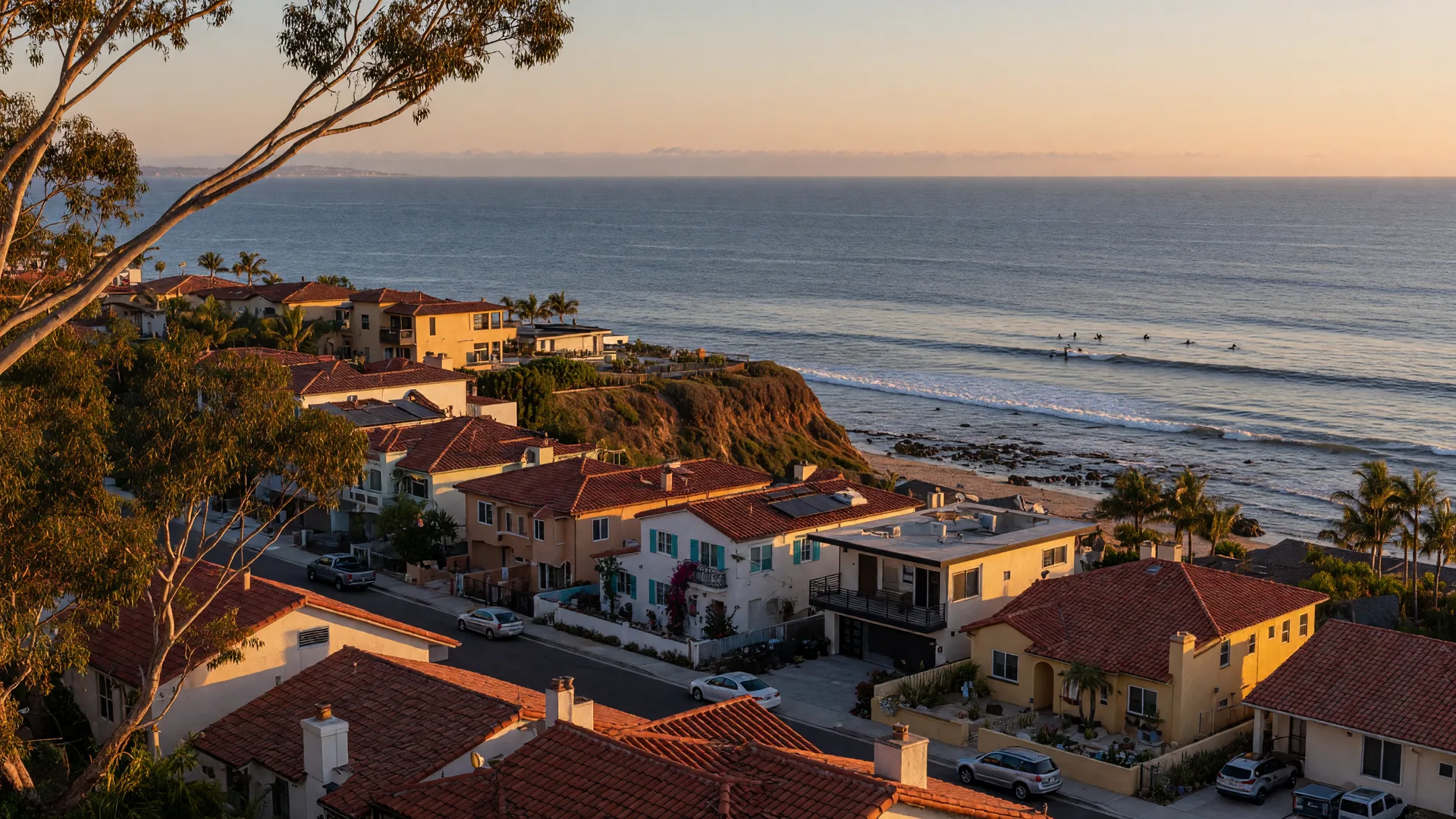
Coastal & South Bay investment spotlights.
A data-driven guide to the coastal and South Bay markets where San Diego's premium rents, scarcest supply, and longest appreciation arcs meet: Encinitas, Carlsbad, Del Mar, La Jolla, Pacific Beach, and Coronado.
Directional cap rates across the six coastal markets, far below the inland 5.0%–6.0% band: this guide is an equity and rent-stability thesis.
Zillow typical home values across the six spotlight markets, roughly $300K to $2M above the county's $1.09M detached median.
Del Mar typical home values are up 21% year over year, the strongest move in the group, while Pacific Beach condos near $895K anchor the accessible end of the coast.
San Diego's coastal strip behaves like a different asset class from the inland markets: typical values of $1.38M–$3.01M, cap rates of 2.5%–4.5%, and some of the deepest premium rents in the country.
Typical home values in the six markets of this guide run from about $1.38M in Pacific Beach to $3.01M in Del Mar, roughly $300K to $2M above the county's $1.09M detached median. Directional cap rates of 2.5%–4.5% tell you what the thesis is: scarcity, premium rents, and long-run appreciation rather than immediate cash flow.
Rents tell the same story from the other side. Pacific Beach condos near $895K rent around $3,800 per month, La Jolla 3-bedroom homes push $14,000, and Coronado's median whole-home rent sits near $7,500. The county's deepest premium rental pool lives in these coastal ZIP codes, which is why occupancy holds when inland vacancy rises.
Supply is the structural difference. The California Coastal Commission, city zoning, and natural geography (canyons, bluffs, an island) cap what can be built, so every unit here is scarce. The employment base, UCSD and the Torrey Pines biotech corridor, Carlsbad's life-sciences cluster, and Naval Base Coronado, puts San Diego's highest-income tenants within minutes of the beach.
The 2026 picture is not uniform: Del Mar typical values are up 21% year over year and La Jolla is up 5.3%, while Carlsbad typical values are down 6.2% and Point Loma median sales are down 11.9%. Markets moving at different speeds create entry windows, especially in Pacific Beach condos and correction-pocket Point Loma, for investors who know which is which.
San Diego investment market snapshot.
Zillow typical home values across the six spotlight markets, roughly $300K to $2M above the county’s $1.09M detached median.
Coastal premium markets trade below San Diego’s 4.25%–6.25% small-multifamily range; income is secondary to equity growth and rent stability.
From Pacific Beach condos near $3,800 per month to La Jolla 3-bedroom homes near $14,000: the county’s widest premium rental spread.
Del Mar’s citywide cap of 129 permits, Encinitas’ ~443 active permits at the 2.5% cap, and the ~900 San Diego citywide Tier 3 licenses still available.
What the data shows right now.
Neighborhood-level metrics shifted sharply across the coastal submarkets through 2026. Here are the key numbers shaping investment decisions this fall.
Typical home value near $3.01M per Zillow, the strongest year-over-year move of any market in this guide, alongside a ~$4.7M Redfin median sale.
Typical value near $1.48M while Redfin median sales rose 3.6% to ~$1.6M: a buyer-friendly gap between ask-driven values and real sale prices.
Redfin’s Point Loma median sale near $1.47M over the last three months, down 11.9% year over year: the clearest coastal buyer’s window in the county.
The condo median (San Diego Regional Data, February 2026) is the most accessible coastal entry point in this guide, versus a ~$2.33M single-family median.
Zillow typical value near $816K (down 1.1% YoY) with a $852K Redfin median sale (up 3.3% YoY) and Zumper median rents near $2,797: the affordable South Bay beach entry.
Data compiled from Zillow, Redfin, Zumper, Rentometer, San Diego Regional Data, Homes.com, municipal codes, and team analysis. All figures reflect October 2026 conditions unless otherwise noted. Individual properties vary based on location, condition, and market dynamics.
Understanding appreciation zones vs. income-supported coastal entries.
Del Mar, La Jolla, Coronado & Encinitas
Typical values from $1.94M to $3.01M, directional cap rates of 2.5%–4.0%, and rents at the top of the county range. These are equity-growth and treasury-style holds, often 1031 destinations or legacy assets.
Pacific Beach, Carlsbad & Imperial Beach
Condos near $895K, duplexes, and Coastal-Zone STR-eligible homes where rent still does meaningful work. Carlsbad's typical-value correction of 6.2% is the buyer's window.
Six coastal & South Bay markets worth watching.
Each market profiled below represents a distinct investment thesis. Choose based on your capital, risk tolerance, and whether you prioritize long-term appreciation, premium long-term rents, or a permit-capped short-term rental strategy.
Encinitas
North County Coastal Scarcity with a Capped STR Market
- Typical home value near $1.94M per Zillow (June 2026), up 4.0% year over year, with Redfin median sales around $2.2M
- Coastal scarcity: the Leucadia, Cardiff-by-the-Sea, and Encinitas village neighborhoods limit new supply and keep premium rents sticky
- Average rents across all property types near $6,981 per month per Zillow (mid-2026), with 4-bedroom single-family homes around $7,500
- Short-term rental permits are capped at 2.5% of eligible units (~443 active, mostly in the Coastal Zone), with a three-night minimum and 10% Transient Occupancy Tax
- AB 462 streamlined coastal ADU permitting adds value-add options on larger coastal lots
- Entry pricing near $2M keeps gross yields among the lowest in the county; underwrite appreciation and equity growth, not cash flow
- New whole-home STR licenses are scarce: the 2.5% cap is effectively binding in most coastal neighborhoods, so permit-backed homes trade at a premium
- Coastal insurance and maintenance carry costs are higher than in inland markets
Encinitas is a scarcity-and-appreciation market. The realistic play is long-term holds of single-family rentals near the villages, funded with meaningful equity, where rents of $5,400–$7,500 per month and low turnover support the mortgage. If short-term rental income is part of the thesis, you buy a home with an existing permit rather than a new license: the 2.5% citywide cap (about 443 active permits) means supply is fixed, and permitted properties are valued accordingly.
Carlsbad
Biotech Employment Hub with a Post-Correction Entry Window
- Typical home value near $1.48M per Zillow (down 6.2% YoY) while Redfin median sales run ~$1.6M (up 3.6% YoY): a split that favors buyers negotiating against listing prices
- The Carlsbad life-sciences cluster, anchored by Thermo Fisher and the legacy Life Technologies campus, concentrates six-figure jobs near the coast
- Master-planned communities in La Costa, Aviara, and west Carlsbad offer newer inventory with lower deferred maintenance
- Citywide rents average near $4,288 per month per Zillow, with single-family listings from $5,500 to $7,500
- Short-term vacation rentals are permitted only in the Coastal Zone and the La Costa Resort master plan area, a defined and buyable STR niche
- Typical values corrected roughly 6% over the past year; negotiate against ask prices and verify comps yourself
- HOA-heavy communities compress net yield and can restrict rentals; read the HOA and CC&Rs before underwriting
- School-quality premiums concentrate value; location selection matters more here than in most North County markets
Carlsbad is the coastal value opportunity in this group because typical values pulled back while sale prices kept rising. Target single-family rentals in walkable Coastal-Zone neighborhoods and small condos near the biotech corridor, where employment-anchored demand holds occupancy. The Coastal-Zone STR allowance (with a 24/7 local contact who can respond within 45 minutes) supports hybrid long-term and short-term strategies on permit-eligible properties.
Del Mar
Legacy Luxury with a Fairgrounds Overhang
- Typical home value near $3.01M per Zillow, up 21% year over year, with Redfin median sales near $4.7M
- Bluff, ocean-view, and Village properties sell to a global buyer pool, and luxury whole-home rents hold near $9,000–$10,500 per month
- The Fairgrounds 2050 master plan (launched April 2025) could add mixed-use and housing density to the 324-acre campus over the next decade
- A citywide cap of 129 short-term rental permits (about 5% of dwelling units) protects grandfathered permit holders; the waitlist is effectively closed
- Del Mar Village, the racetrack season, and direct beach access anchor a resort-amenity lifestyle that keeps tenancy stable
- Entry prices of $3M–$4.7M make this a legacy or 1031-replacement asset, not a cash-flow property
- STRs require a primary-residence permit with the owner living there at least half the year; non-hosted rentals are not permitted
- If the fairgrounds affordable-housing negotiations fail by November 2026, the city may be required to upzone bluff-side properties, a zoning shift with both opportunity and risk in specific pockets
- Bluff erosion and coastal insurance require engineering and carrier review before purchase
Del Mar is a long-hold equity market for investors with capital to park. The realistic approach is acquiring a primary residence in the Village or on the bluffs and harvesting premium long-term or grandfathered STR income while the asset appreciates. Track the fairgrounds housing negotiation and the Fairgrounds 2050 process closely: both are multi-year stories that will move value in specific Del Mar pockets before they change the county headline.
La Jolla
UCSD, Biotech and the County's Deepest Premium Rents
- Typical home value near $2.45M per Zillow (July 2026), up 5.3% year over year, with Redfin median sales around $2.3M–$2.35M
- UCSD, Scripps Research, Salk, and the Torrey Pines biotech corridor create San Diego’s highest-income employment base, minutes from the Village
- Median rents near $9,600 per month per Zumper (April 2026), with 3-bedroom homes pushing $14,000: the deepest premium rental pool in the county
- Whole-home STRs run under the citywide Tier 3 cap (1% of housing units), and fewer than ~900 Tier 3 licenses remain citywide, a shrinking and valuable pool
- Coastal commission controls and canyon and coast topography keep new supply nearly static, protecting long-run value
- Entry pricing compresses cash flow to near zero; the thesis is appreciation of a scarce coastal asset
- Tier 3 STR license scarcity means permit-backed properties command premiums, and new licenses only release as others lapse
- Bluff, landslide, and older-coastal-stock maintenance issues need site-specific review in several pockets
La Jolla is the county’s premier hold-forever market: legacy family wealth, biotech executives, and international luxury buyers keep demand structurally high. Investors who want exposure without buying a $2.45M home alone should consider condo or small-unit entry near the Village, syndication with other capital, or a license-backed STR property run through the city’s shrinking Tier 3 pool. Underwrite appreciation, not cash flow.
Pacific Beach
San Diego's Densest Rental Market, in a Buyer's Window
- Typical home value near $1.38M per Zillow (down 1.5% YoY) while Redfin median sales run ~$1.5M (up 5.0% YoY): a negotiation window in the county’s highest-demand beach market
- The accessible entry is condos: the Pacific Beach condo median sits near $895K (San Diego Regional Data, February 2026) versus a ~$2.33M single-family median
- The densest rental marketplace in San Diego: 2-bedroom, 2-bath condos list around $3,800 per month and upgraded coastal homes exceed $5,000
- Duplex and multi-unit stock supports house-hack and owner-occupied structures in a transitory renter base
- STR income is available under the citywide Tier 3 license cap with a licensed, Good Neighbor-compliant operator
- A young, transitory renter base drives higher turnover and more management intensity than family markets
- Parking, noise, and party-use issues are deal-level concerns on some blocks; inspect on weekends before you commit
- Verify STRO licensing and the Tier 3 cap (~900 citywide licenses left) before underwriting any STR income
Pacific Beach is where coastal San Diego meets investor math. Condos near $895K deliver rent-to-price ratios that inland markets match but coastal markets rarely offer, and multi-unit properties close to the beach support house-hack entry. For cash-flow-minded buyers who want the coast, PB condos and duplexes, managed carefully, are the strongest candidate in this guide.
Coronado
Island Scarcity with Navy-Anchored Tenancy
- Typical home value near $2.59M per Zillow, up 4.8% year over year, with Redfin median sales near $3.0M (up 9.1% YoY)
- Naval Base Coronado, including the Naval Amphibious Base community, anchors a high-income military-adjacent tenant base with BAH-backed rent
- Median whole-home rents near $7,500 per month (Homes.com and Zillow, August 2026), with 3-bedroom homes around $10,000 (Rentometer): one of the strongest rental markets in the U.S.
- Short-term rentals under 26 nights are effectively prohibited in residential zones (Municipal Code Ch. 86.78), which shields long-term family tenants from STR competition
- Island zoning and coastal constraints make supply nearly fixed: the classic scarcity dynamic
- Entry prices near $2.6M–$3.0M make Coronado a long-hold equity asset
- No vacation-rental business under 26 nights: this is a long-term rental and appreciation play
- Military PCS cycles create seasonal vacancy windows; some landlords plan around summer and holiday rotations
- Low-lying coastal blocks require flood-zone and sea-level review
Coronado is the purest scarcity play in this guide. Because transient occupancy under 26 nights is prohibited in residential zones, the market is dominated by long-term tenants with premium, BAH-backed payment strength. Investors buy for the permanent rental income and the island’s structural supply ceiling, and they underwrite a long hold rather than a flip.
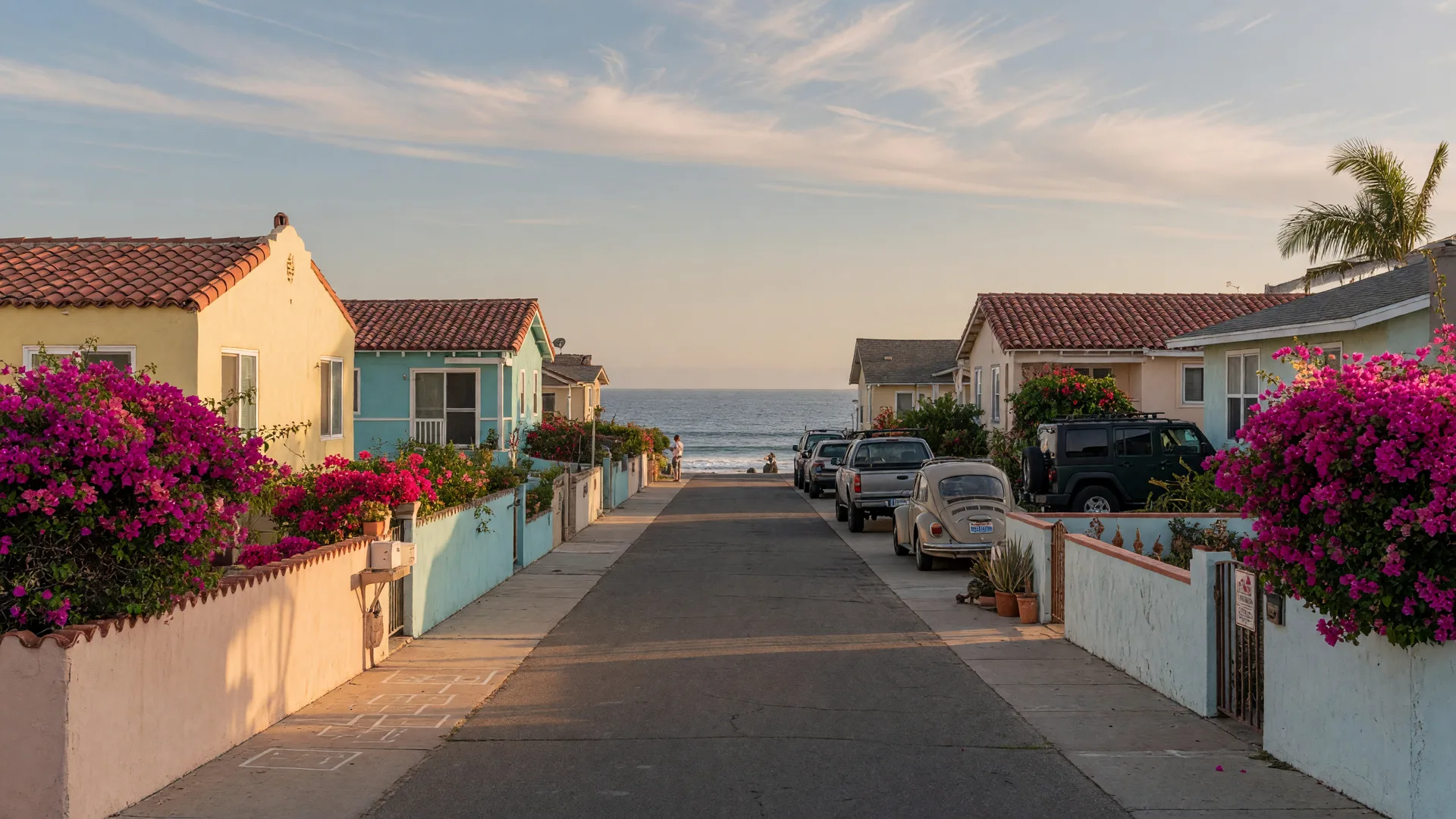
Coastal submarkets combine the county's scarcest supply with its deepest premium rental pool.
How ADUs supercharge coastal investment returns.
California's ADU reforms, including SB 1211 and AB 462 for coastal areas, have made accessory dwelling units one of the most powerful value-add tools available to coastal San Diego owners. Here's how to evaluate and execute an ADU strategy in these markets.
Why ADUs matter for investors
An ADU transforms a single-family coastal property into a dual-income asset. In markets where whole-home rents already run $7,500–$15,000 per month, a well-located ADU commands the top of the county's rental range, often enough to cover a meaningful share of the mortgage on the primary home.
Beyond cash flow, ADUs increase property values by an estimated 20%–30%. A $1.5M coastal property with a permitted ADU can be worth $1.8M–$1.95M upon completion, creating equity that exceeds construction cost in most cases.
California's SB 1211 allows multifamily properties to add up to eight detached ADUs and eliminates parking replacement requirements for most ADU types. AB 462 streamlined coastal ADU permitting, and AB 2533 legalized pre-2020 unpermitted units. One catch specific to the coast: cities like Encinitas prohibit new ADUs from short-term rental use, so underwrite coastal ADUs as long-term premium rentals, not STR income.
Building an ADU: Step by step
Assess Your Property
Evaluate lot size, setbacks, and coastal constraints. California's SB 1211 allows up to 8 detached ADUs on multifamily properties and removes parking replacement requirements for most ADU types. In the Coastal Zone, confirm the parcel's coastal development permit status before you budget.
Secure Financing
The San Diego Housing Commission's ADU Finance Program provides up to $250,000 for qualifying homeowners. Additional options include HELOCs, construction loans, and cash-out refinancing. Many investors use the ADU's projected rental income to qualify for favorable terms.
Design & Permit
Work with a designer experienced in Coastal Zone ADU permitting. State streamlining, including AB 462 for coastal ADUs, shortens the process, but the California Coastal Commission retains jurisdiction in the Coastal Zone, so budget extra review time. Expect 3–6 months for design and permitting where no coastal development permit is required, and longer where one is.
Build & Lease
Construction timelines for detached ADUs typically run 6–12 months. In coastal San Diego a well-located ADU commands market-leading rents. Note that cities like Encinitas prohibit new ADUs from short-term rental use, so underwrite coastal ADUs as long-term premium rentals rather than STR income.
How do you evaluate a coastal or South Bay investment market?
Coastal underwriting looks different from inland underwriting. Use these six factors to evaluate any beach-side San Diego neighborhood before you invest.
Rent-to-Price Ratio
Coastal rent-to-price ratios rarely clear the monthly 0.7%-of-price threshold that defines cash-flow markets; they typically run 0.2%–0.4% at today’s values. The income exceptions are Pacific Beach condos, ADUs on larger coastal lots, and permit-backed STR properties.
Employment Anchors
UCSD, the Torrey Pines biotech corridor, the Carlsbad life-sciences cluster, and Naval Base Coronado anchor premium tenancy. Properties near these employers hold occupancy through market cycles.
Supply Constraints
The California Coastal Commission, local zoning, and natural geography (canyons, bluffs, an island) cap new buildable supply. Constrained supply is the single biggest reason coastal values compound over decades.
Short-Term Rental Regulation
Every jurisdiction has its own STR rules: permit caps in Del Mar and Encinitas, Coastal-Zone-only allowances in Carlsbad, the 26-night rule in Coronado, and the citywide Tier 3 cap in Pacific Beach and La Jolla. Read the ordinance before you buy.
Coastal Risk & Insurance
Bluff erosion, sea-level rise, and flood zones need engineering review, and California’s insurance market raises carrying costs. Underwrite insurance availability and renewal history on every coastal deal.
Neighborhood Trajectory
Watch the Fairgrounds 2050 plan, Village revitalization, transit and bikeway projects, and STR policy votes. Policy changes move coastal values faster than rent changes do.
Frequently asked questions.
Can I buy a coastal property and run it as a short-term rental?
It depends entirely on jurisdiction. Del Mar caps permits at 129 citywide and requires a primary residence; Encinitas caps non-hosted permits at 2.5% of eligible units (about 443 active) with a three-night minimum and 10% Transient Occupancy Tax; Carlsbad allows STRs only in the Coastal Zone and the La Costa Resort master plan area; Coronado prohibits rentals under 26 nights in residential zones; and in San Diego city markets like Pacific Beach and La Jolla, whole-home STRs need a Tier 3 license under a 1% citywide cap with fewer than ~900 licenses left. Verify the specific license before you underwrite any STR income.
Are coastal San Diego markets cash-flow positive?
Not at today’s prices: directional cap rates run 2.5%–4.5%, well below the 5.0%–6.0% available in Escondido, Vista, or Santee. Coastal investing is an equity and rent-stability thesis. The income exceptions are Pacific Beach condos near $895K, permit-backed STR properties, ADUs on larger coastal lots, and house-hack structures in Pacific Beach.
Which coastal market is the most affordable entry?
Pacific Beach condos near an $895K median are the most accessible in this guide. Imperial Beach, at a ~$816K typical value and ~$852K median sale, is the affordable South Bay beach alternative, and Point Loma’s ~$1.47M median sale, down 11.9% year over year, is the correction window worth negotiating.
How does the Del Mar Fairgrounds redevelopment affect nearby values?
The Fairgrounds 2050 master plan is a multi-year process with no near-term price effect. The nearer-term variable is the affordable-housing negotiation: if the city and fairgrounds cannot reach a site-and-lease deal by November 2026, Del Mar may be required to upzone bluff-side properties for multiunit housing, a concrete change to specific neighborhoods. Follow both processes, but do not underwrite either into a price today.
Do coastal properties make sense for first-time or smaller investors?
Rarely as direct single-family purchases. The realistic routes are condos in Pacific Beach, house hacking a duplex closer to the beach, ADU value-add on an owner-occupied coastal lot, or passive participation through syndication and private capital, which our team can help you evaluate.
How does the countywide market compare to these coastal submarkets?
The county’s $1.09M detached median sits roughly $300K below the most affordable market in this guide (Pacific Beach typical value near $1.38M). Coastal markets behave like a different asset class: fewer units trade, buyers are more equity-heavy, and rents are sticky at the top of the market. Investors should treat them as a complement to cash-flow portfolios, not a substitute.
Let's find your
coastal property.
Whether you're evaluating a Pacific Beach condo, a Carlsbad Coastal-Zone rental, a permit-capped STR opportunity, or a 1031 exchange into Del Mar or La Jolla, our team knows how these coastal submarkets price and trade. We can help you identify properties that match your strategy.