

The Fed raised rates in September 2026. Here is what it changes for San Diego investors.
The FOMC delivered its first hike since 2023 on September 16, sending mortgage rates to 6.95% and the 10-year Treasury above 5%. A data-sourced look at the decision, the new rate path, and how San Diego underwriting should adapt.
Eight days ago the Federal Reserve did something it had not done since July 2023: it raised rates. The September 16 FOMC decision moved the federal funds target range to 3.75% to 4.00% in a unanimous 12 to 0 vote, and the September dot plot signals at least one more quarter-point hike before year-end. Mortgage rates jumped from 6.76% to 6.95% in the week after the decision, the 10-year Treasury yield pushed above 5% for the first time since 2007, and markets now price a more restrictive Fed well into 2027. For San Diego investors, this reverses the central assumption of the fall outlook published just a day before the decision: plan for higher financing costs, not gradual easing, at least through year-end.
Size of the September 16 hike, moving the federal funds target range to 3.75% to 4.00% in a unanimous 12 to 0 vote. The first increase since July 2023.
Average 30-year fixed mortgage rate for the week ending September 17 per Freddie Mac, up 19 basis points from 6.76% the prior week and the highest level in nearly two years.
The 10-year Treasury yield on September 23, its highest level since July 2007, after the bond market priced a more hawkish Fed into 2027.
Remaining 2026 FOMC decision dates: October 28 and December 9. The September dot plot signals at least one more quarter-point hike before year-end.
The Fed's September 16 hike ends a three-year hold and flips the base case for San Diego deal-making: finance at today's higher costs, stress-test another hike, and let cash flow, not appreciation, carry the position.
The Federal Reserve raised its benchmark rate by 25 basis points on September 16, 2026, moving the federal funds target range to 3.75% to 4.00% in a 12 to 0 vote. It was the first hike since July 2023, and it came from the new leadership appointed this spring. Chair Kevin Warsh told the press conference that "the plain fact is that inflation is too high, and has been for too long," and that the committee was not confident inflation trends had "meaningfully improved," framing the hike as a push for a "timelier" retreat in inflation.
Our earlier guide, The New Fed Era: Rate Outlook for San Diego Investors, published September 8, laid out three scenarios: a hold through year-end as the base case, a delayed 2027 cut as plausible, and a small hike in late 2026 as the tail risk. The September 16 decision arrived at the tail risk. The dot plot now shows the year-end 2026 fed funds rate near 4.1% to 4.4%, with most participants projecting at least one more quarter-point hike and a gradual drift toward a longer-run level around 4% in 2027.
The market reaction was immediate. Freddie Mac's survey put the 30-year fixed mortgage rate at 6.95% for the week ending September 17, up 19 basis points from 6.76% the prior week and the highest level in nearly two years; the MBA survey showed about 6.97%. The 15-year fixed rose from 6.09% to 6.26%. The 10-year Treasury yield, already near 5% in the days before the decision, pushed decisively above it, reaching 5.104% on September 23, its highest level since July 2007.
For San Diego, the practical effect is a more expensive cost of capital layered on top of an already price-sensitive market. The county median sale price was $961,781 in August per Redfin, up 5.7% year over year, but SDAR leaders report buyers pushing back on "too much, too fast" pricing. Rate-locked sellers have even less reason to list, keeping inventory tight in affordable submarkets while higher-priced tiers absorb the demand hit. This guide walks through what the decision means across each corner of the market, and how the underwriting playbook should change between now and the two remaining 2026 FOMC dates.
Two weeks that rewrote the rate path.
From a 6.76% mortgage rate to a 5.10% 10-year yield in less than two weeks, here is how the September decision unfolded and what comes next.
| Date | What Happened |
|---|---|
| September 10, 2026 | Freddie Mac reports the 30-year fixed mortgage rate at 6.76%, with the 15-year at 6.09%. Markets brace for a possible Fed move days later. |
| September 14, 2026 | The 10-year Treasury yield touches 5% for the first time since 2007, a signal that bond investors expect policy to stay restrictive. |
| September 16, 2026 | The FOMC votes 12 to 0 to raise the federal funds target range by 25 basis points to 3.75% to 4.00%, the first hike since July 2023. Chair Kevin Warsh says inflation "is too high, and has been for too long." |
| September 17, 2026 | The 30-year fixed mortgage rate jumps to 6.95% in the Freddie Mac survey, the highest reading in nearly two years. The MBA survey shows about 6.97%. |
| September 23, 2026 | The 10-year Treasury yield reaches 5.104%, its highest since July 2007, as markets price continuing hikes into 2027. |
| October 28 & December 9, 2026 | The two remaining FOMC decision dates this year. The September dot plot projects a year-end fed funds rate near 4.1% to 4.4%. |
Why the Fed moved, and what the dot plot says next.
The case for the hike, in the committee's own words, is that inflation has not retreated fast enough. Warsh said the committee was not confident that inflation trends had "meaningfully improved" and framed the increase as an attempt to secure a "timelier" retreat in price growth. On the question of political pressure, he added "we stay in our lane," a direct statement on Fed independence.
The September dot plot is the operative document for investors. The median year-end 2026 projection sits near 4.1% to 4.4%, which implies at least one more 25 basis point hike at either the October 28 or December 9 meeting. The longer-run projection drifts toward about 4%, meaning the market should stop pricing a return to the sub-4% era and plan for a normalized, higher-for-longer range.
The bond market has already front-run the message. A 10-year Treasury yield at 5.104% is a level unseen since July 2007, and it is the direct driver of the mortgage-rate jump. Because 30-year fixed mortgages track long-term Treasury yields rather than the fed funds rate, even a pause at the remaining meetings would not mechanically lower mortgage rates; the yield curve must come down first.
Federal funds target range after September 16
Median year-end 2026 dot plot projection
Unanimous vote, the first hike since July 2023
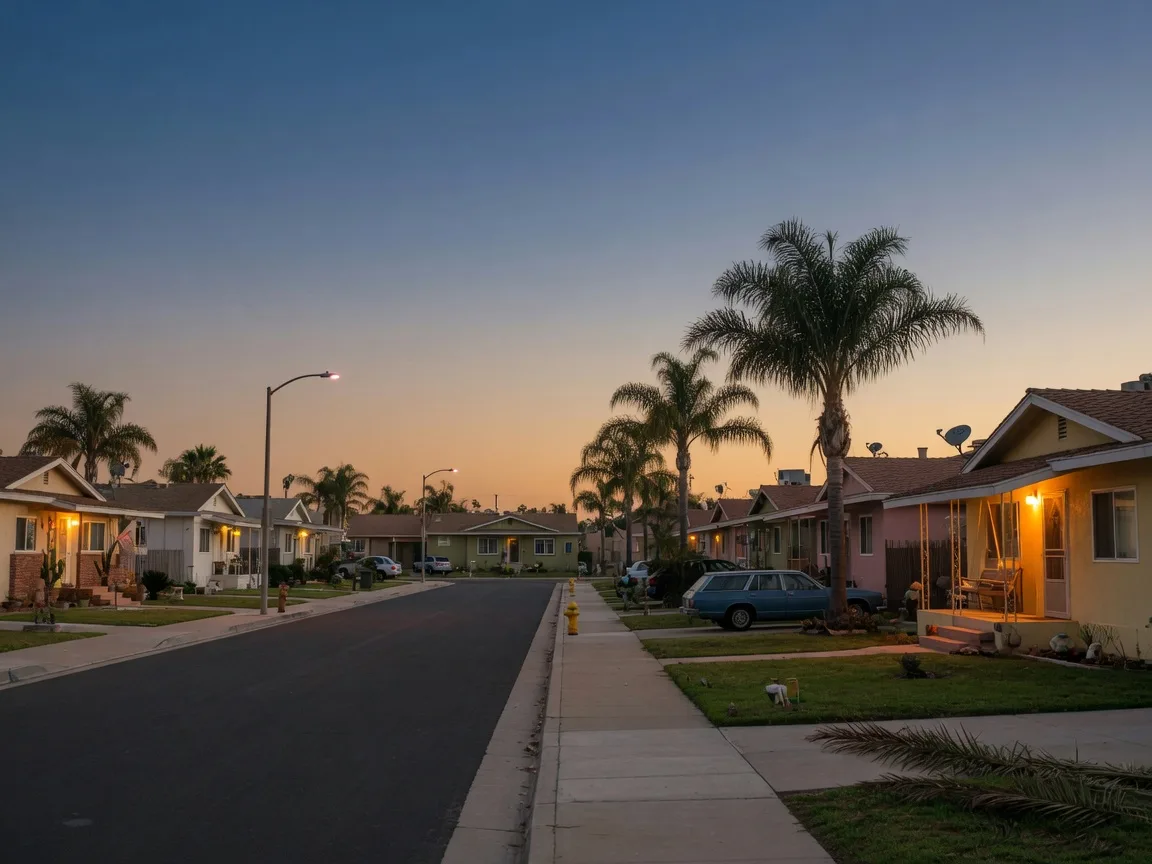
Higher financing costs hit every San Diego transaction, but cash-flowing workforce housing stays the most resilient corner of the market.
What near-7% money changes for local buyers and sellers.
Buyers Face a Higher Purchase-Price Ceiling
A 30-year fixed rate near 6.95% takes roughly $19 off the monthly payment math for every $10,000 of loan amount compared with 6.76%, before principal and interest. Purchase power compresses further, and offers are getting more price-sensitive. Cash and high-equity buyers keep the strongest negotiating position.
Rate-Locked Sellers Stay on the Sidelines
The hike reinforces the lock-in effect: owners holding pandemic-era sub-4% mortgages have even less reason to list. Expect continued tight supply in many submarkets, with rises in inventory concentrated in the most expensive tiers where owners are more motivated to move.
Multifamily Cap Rates Face Upward Pressure
Higher long-term yields push the risk-free benchmark up, and buyers of apartments underwrite to higher going-in caps. With countywide vacancy at 5.5% and Class A softest near 6.4%, the most exposed sellers are in new high-end supply, while workforce Class B and C assets near 3.3% vacancy hold up far better.
Financing Costs Rise Across the Board
DSCR and other non-QM loans track the same bond market that pushed mortgages to 6.95%. Expect quoted DSCR rates to move above the ranges quoted in early September, longer rate-lock windows to cost more, and bridge lenders to tighten terms on speculative exits.
Four adjustments for a hiking cycle, not an easing one.
The fall outlook published September 15 assumed a hold. These strategies replace that assumption with the reality of the September 16 decision, and they apply through the October and December meetings.
Underwrite at 7%+, Not 6.75%
The hike is priced into the market. Run every deal at a 7% or higher mortgage rate and stress-test what the property does if rates touch 7.25%. This is the single most important adjustment: deals bought at today's financing costs still work when rates ease, while deals built on a hoped-for refi are the first to break.
Extend Rate Locks and Plan for Carry
With two more decision dates this year and a dot plot signaling another hike, 30 to 45 day locks may expire before closing. Pay for longer locks where possible and carry reserves sized for at least six months of debt service at current rates.
Favor Cash-Flow Geographies Over Yield Chasing
Compression is over for now. Workforce housing in inland submarkets with higher cap rates, and recovery housing and other specialty residential uses with structured 12 to 36 month leases, generate the income that absorbs financing cost. Occupancy strength beats headline rent growth in this phase.
Build a Refinance-Ready File for the Next Window
The hike extends the cycle, it does not end it. If inflation cools through 2027, the first cuts would reopen refi and restructuring windows. Keep rent rolls, expenses, and improvement records clean, stabilize occupancy, and schedule fresh appraisals when the bond market turns.
Related reading: for financing structure guidance, see DSCR & Non-QM Loans for San Diego Investors and Funding & Lending Options for San Diego Investors. For the multifamily backdrop, see San Diego Multifamily in 2026.
What could go wrong in the months ahead?
Another Hike Before Year-End
The dot plot points to a year-end fed funds rate near 4.1% to 4.4%, implying at least one more quarter-point increase. A second hike at the October 28 or December 9 meeting would push mortgage rates toward or past 7% and further compress buyer demand.
The Bond Market Overshoots
The 10-year yield above 5% is a warning that markets may front-run more policy tightening. If yields keep climbing, 30-year mortgages could approach 7.25% before the Fed signals a pause.
Affordability Reaches a Breaking Point for Buyers
SDAR leaders report buyers concluding that prices rose "too much, too fast" and pushing back. If the combination of near-7% rates and record medians chokes demand, expect longer days on market and price reductions, especially in higher-priced coastal tiers.
Leverage Stress in Multifamily and Short-Term Debt
Floating-rate and bridge debt on multifamily resets is the most exposed corner of the market. Class A vacancy near 6.4% plus higher refinance costs can squeeze net operating income and force distressed sales at the margin.
Frequently asked questions.
Did the Federal Reserve actually raise rates in September 2026?
Did the Federal Reserve actually raise rates in September 2026?
What did the September dot plot signal for the rest of 2026?
What did the September dot plot signal for the rest of 2026?
What happened to mortgage rates after the hike?
What happened to mortgage rates after the hike?
Should San Diego investors change their underwriting after the hike?
Should San Diego investors change their underwriting after the hike?
What does the hike mean for San Diego home prices?
What does the hike mean for San Diego home prices?
What are the next dates investors should watch?
What are the next dates investors should watch?
Underwrite at 7% and let cash flow carry the deal.
Whether you are evaluating a purchase, refinancing before the next FOMC date, or planning an exit, our team can re-run the numbers at current financing costs and stress-test your portfolio for the October and December decisions.