
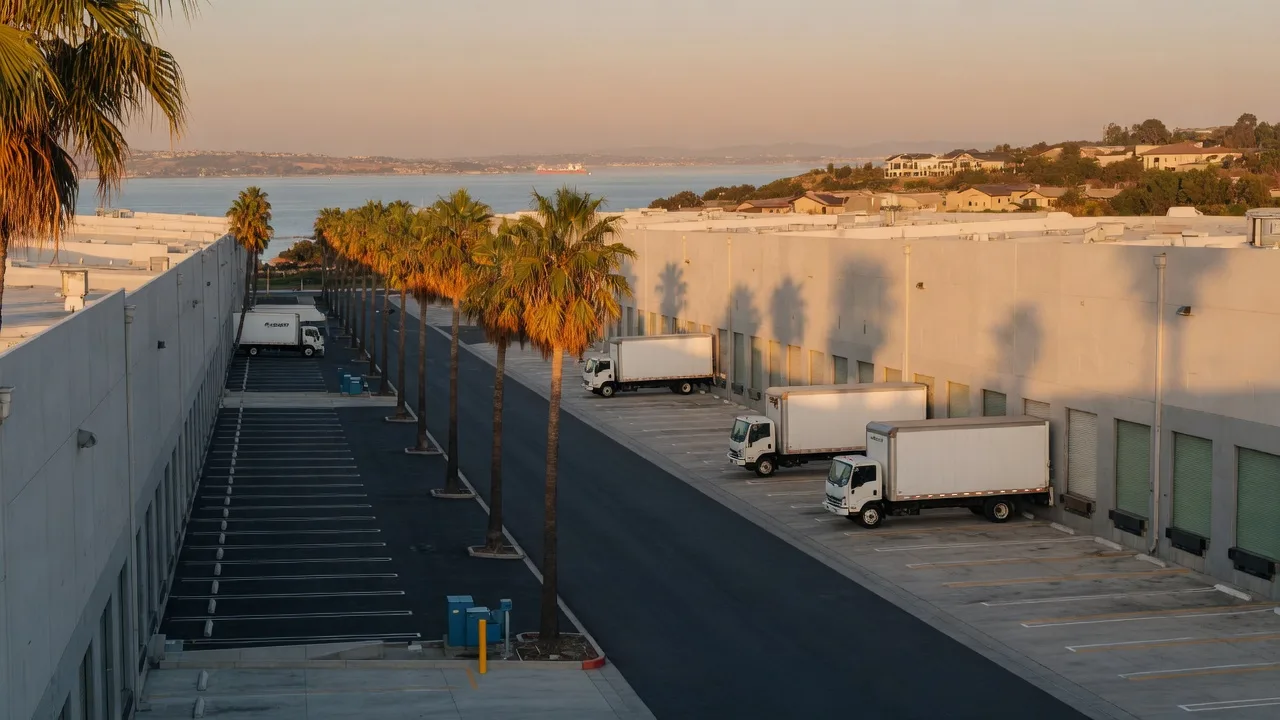
Industrial and self-storage: the commercial niches San Diego investors are rediscovering.
San Diego industrial vacancy is near 7% but absorbing again for the first time in three years, and self-storage caps run 5.0% to 6.0%. A data-sourced guide to two commercial asset classes that add real cash flow to a residential-heavy portfolio.
Twelve days after the Federal Reserve raised rates for the first time since 2023, mortgage rates sit near 6.95%, the 10-year Treasury is above 5%, and San Diego multifamily vacancy is at 5.5% with 11,800 units still under construction. Investors hunting cash flow are looking past apartments and single-family rentals at the county's commercial niches. The data supports the look: industrial posted its first positive net absorption quarter in about three years (1.27 million square feet in Q1 2026, led by a new Amazon build-to-suit in Otay Mesa), asking rents are down only 3.7% from record highs after a multi-year correction, and self-storage cap rates hold at 5.0% to 6.0% with rents off their 2022 peak but stabilizing. Neither sector is flashy, and both are underpriced in most investor conversations.
Industrial vacancy in Q1 2026 per Colliers, down 8 basis points quarter over quarter and the first sign of stabilization after availability roughly tripled from 2.9% in Q2 2022. Voit puts vacancy at 7.29% with availability at 10.1%.
Positive net absorption in Q1 2026 per Colliers, the first positive quarter for San Diego industrial in about three years, led largely by a new Amazon build-to-suit in Otay Mesa.
Average industrial asking rent per square foot per month, NNN, per Colliers for Q1 2026, down 3.7% year over year from record highs. Kidder Mathews reports about $1.46, with landlords still offering concessions.
Typical San Diego self-storage cap rate range for stabilized facilities, at the low end of national Class A (5.0%–5.5%) and Class B (5.5%–6.5%) bands, reflecting the market's strong fundamentals and scarce land.
While apartments absorb San Diego's supply wave, industrial and self-storage offer institutional-grade income at retail entry points: 5% to 6% going-in caps, minimal operating headcount, and none of the residential rent cap exposure.
San Diego's industrial market spent three years giving back the pandemic boom. Availability, which sat at 2.9% in the second quarter of 2022, reached about 10.1% by early 2026 per Voit, with vacancy near 7% per Colliers and 7.3% per Voit. Asking rents fell from record highs; average sale prices dropped from $347/SF to $307/SF over the year that ended in Q1 2026 per Kidder Mathews, and cap rates widened to the low-to-mid 6% range. That is the correction investors usually want to buy after, and the absorption data says it is turning: Q1 2026 was the first positive net absorption quarter in about three years, roughly 1.27 million square feet, most of it a new Amazon build-to-suit in Otay Mesa, and leasing rose 3% quarter over quarter.
The long-term drivers that built San Diego industrial are unchanged. The county's economy runs on logistics through the Otay Mesa border corridor, defense and aerospace work, life sciences, and a massive consumer base with nowhere to expand but up. Entitlements take years and land is scarce, so the existing building stock carries an embedded barrier to entry: competitors cannot quickly build their way past you. The tenant-favorable leasing market of 2025 and early 2026 is precisely the window when buildings buy well, before the next absorption cycle pushes rents back up.
Self-storage is the quieter half of the pair. San Diego County holds about 81 facilities and 11,555 units, roughly 6.76 million square feet, or about 4.2 square feet of storage per capita, below many peer metros according to StorageCafe. Only about 1.4% of inventory came online in 2025, yet the under-construction pipeline posted one of the sharpest month-over-month increases among the top 30 metros in 2026, even as the national construction pipeline shrinks toward a forecast 15% year-over-year drop in 2026 deliveries. A standard 10x10 unit averages $177 a month, down about 1.7% from a year earlier, with street rates for small units bottoming around 2025 and edging up since.
For an investor in 2026, the appeal is structural. High housing costs mean smaller homes, more renters, and more remote workers with things to store. Land costs and California's entitlement timelines make ground-up development slow and expensive, which protects operators with existing sites. National self-storage cap rates average about 5.8%, with Class A at 5.0% to 5.5% and Class B at 5.5% to 6.5%, and San Diego expectations sit at roughly 5.0% to 6.0% for stabilized facilities. This guide covers how the industrial reset unfolded, how to read the storage opportunity, and the due diligence that separates a real deal from a broker's story.
Three years of correction, one quarter of turn.
Availability nearly tripled from the 2022 peak, prices reset by more than 10%, and then absorption turned positive. Here is the scoreboard, with sources, and what it means for buyers and sellers.
| Metric | Reading | What It Means |
|---|---|---|
| Vacancy rate | 7.07% (Colliers) / 7.29% (Voit) | Q1 2026. Down 8 bps quarter over quarter per Colliers; availability runs about 10.1% per Voit, up from 2.9% in Q2 2022. |
| Asking rent | $1.57/SF/mo NNN (Colliers) | About $1.46 per Kidder Mathews. Both about 3.7% below a year earlier after rents pulled back from all-time highs. |
| Sale price | $307/SF (Kidder) | Q1 2026, down from $342/SF in Q4 2025 and $347/SF a year earlier. About $260M traded across 54 transactions. |
| Average cap rate | ~6.2% | Matthews reported an average industrial cap rate near 6.2% in its Q2 2025 San Diego report, with average sale prices near $324/SF. |
| Net absorption | +1.27M SF | Positive in Q1 2026 for the first time in about three years, led by a new Amazon build-to-suit in Otay Mesa. |
| Leasing activity | +3% QoQ | Q1 2026 leasing rose 3% quarter over quarter but stayed about 19.5% below last year. Brokers call it a tenant's market with demand improving through 2026. |
Where to look first: the Otay Mesa and South Bay corridor is the county's distribution heart, anchored by the border crossings and the new Amazon build-to-suit that drove Q1 absorption. Inland flex and warehouse districts that serve local business and defense contractors are the other active pocket. Run every acquisition against submarket comps, not the countywide number, because vacancy and rent run far apart by location.
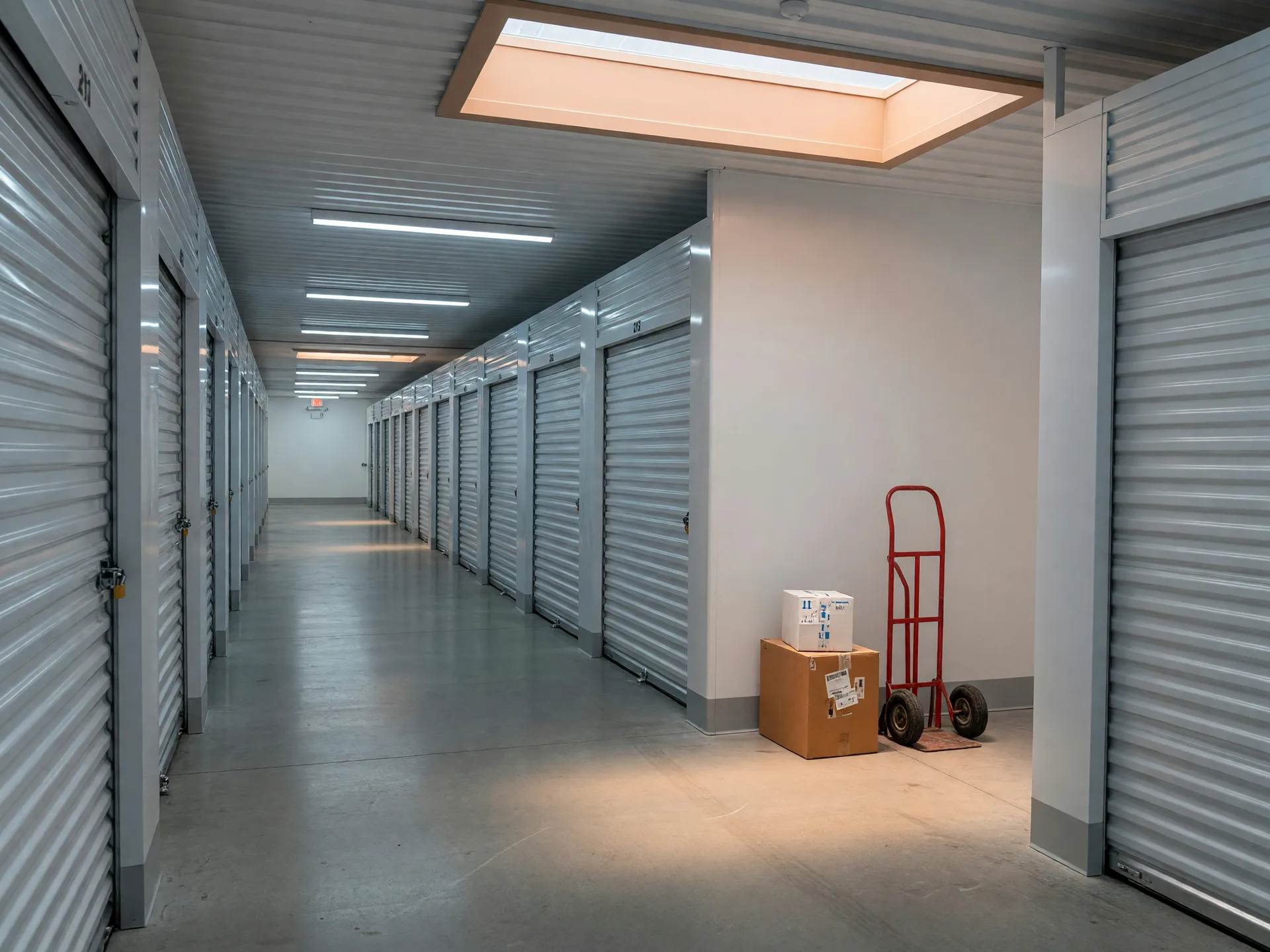
A stabilized self-storage facility runs with minimal staff and delivers cap rates in the 5% to 6% range in San Diego.
A cash-flow asset with a built-in barrier to entry.
Rendering of the driver: ground-up development is nearly impossible in California, so existing facilities hold pricing power once supply stabilizes.
Self-storage facilities in San Diego County, holding roughly 11,555 units and about 6.76 million square feet, per StorageCafe. That is about 4.2 square feet of storage per capita, below many peer metros.
Average monthly rent for a standard 10x10 unit in San Diego in 2026, down about 1.7% year over year after pandemic-era pricing normalized. Small-unit street rates bottomed around 2025 and have inched up since.
Share of San Diego inventory added in 2025, roughly 91,460 square feet. The under-construction pipeline posted one of the sharpest month-over-month increases among the top 30 metros in 2026, even as the national pipeline shrinks.
National Class A self-storage cap rate range, with Class B at 5.5%–6.5% and the U.S. average near 5.8% over the six quarters through 2025. San Diego expectations sit at roughly 5.0%–6.0%.
The storage thesis in San Diego rests on two facts: people need space, and nobody can build it quickly. Household sizes are small because homes are expensive, renters move often, and remote and hybrid workers keep household goods between residences. StorageCafe counts about 4.2 square feet of storage per capita in San Diego, below many peers, while entitlements and land costs keep new supply expensive and slow. The result is a market where a well-run facility can hold occupancy in the 90s and raise street rates as the 2025 rental trough fades.
The investment playbooks mirror the property type's simplicity. A stabilized acquisition at a 5% to 6% cap rate produces current income with almost no operating staff, and third-party operators can run the facility remotely with automated gate and billing systems. Value-add buyers look for under-rented units, conversion of non-climate-controlled to climate-controlled space where the premium justifies it, and better merchandising of premium unit sizes. Development and expansion plays carry the highest ceiling but the longest timeline, precisely because entitlements are slow: the buyers who win that game bring land already zoned and permitted, or they acquire a facility with excess land and expand it.
The one caution flag is the pipeline. San Diego posted one of the sharpest month-over-month increases in under-construction storage space among the top 30 metros in 2026, per CRE Daily and Multi-Housing News. New supply will compete for renters through 2027, and most of the early-2026 rent pressure came from construction on the way. The counterweight: national deliveries are forecast to fall about 15% in 2026 to roughly 12 million square feet, so the state and national construction machine is slowing even as San Diego's local pipeline spikes. Buy the stabilized income, underwrite slow growth, and let the development cycle work for you.
San Diego stabilized self-storage cap rate expectations
Average 10x10 unit rent in 2026, down 1.7% year over year
Storage per capita, below many peer metros
Four reasons residential-heavy investors add commercial on the side.
Diversification Away From the Apartment Supply Wave
Multifamily vacancy sits at 5.5% countywide with 11,800 units under construction. Industrial and self-storage tap different demand drivers: logistics, e-commerce, defense, and biotech for industrial; small homes, high rents, and a mobile workforce for storage. Owning both smooths the portfolio when one sector softens.
No Residential Rent Cap Rules
AB 1482's annual rent cap applies to residential tenancies, not to industrial leases or self-storage agreements. Industrial and storage income is negotiated at lease or rate level, which gives owners more flexibility to reprice when market conditions improve, within the limits of their commercial lease terms.
1031 Replacement Options With Real Cash Flow
For investors exiting apartments into the supply wave, or rolling out of a primary or smaller residential asset, stabilized industrial and storage properties are active 1031 replacement candidates. Their income streams and cap rates in the 5%–6% range compare favorably with the deals the multifamily reset is producing.
Shorter, Simpler Operations
A self-storage facility runs with minimal staffing: gate access, a manager or two, and automated billing. Industrial warehouses lease to one or a handful of business tenants. Both have far fewer touchpoints per dollar of rent than single-family rentals or recovery housing, which keeps management overhead low.
Related reading: for the residential backdrop these sectors complement, see San Diego Multifamily in 2026 and Multifamily & Commercial Investment Opportunities. For financing structures in the current rate environment, see DSCR & Non-QM Loans and Funding & Lending Options.
Six checks before you sign on an industrial or storage deal.
Require Twelve Months of Source Documents
Pull trailing twelve-month rent rolls, occupancy by unit type (for storage), lease abstracts (for industrial), delinquency reports, and operating statements. Verify the numbers against tax records and utility bills rather than accepting the broker's stabilization story at face value.
Stress-Test the Rate and Rent Base
Storage street rates have been declining from 2022 peaks, and industrial asking rents are down about 3.7% year over year with concessions common. Underwrite net effective rents, not asking rates, and model what occupancy and revenue do in a longer soft stretch.
Scrutinize Land and Entitlement Status
California entitlements take years and land costs are high, which protects existing operators but also means redevelopment value is rarely near-term. Confirm zoning, use permits, stormwater compliance, and any conditions attached to the site before pricing in expansion or conversion.
Run Environmental and Structural Reports
Industrial sites can carry legacy soil or groundwater issues, and the Phase I environmental site assessment is non-negotiable in acquisition due diligence. For storage, check roof condition, doors, cameras, and climate control units, since capital repairs hit net operating income directly.
Compare Submarket Comps, Not Countywide Medians
San Diego industrial and storage markets differ sharply by submarket. A countywide vacancy figure hides the difference between an Otay Mesa distribution building and an inland flex property. Build comps from similar age, size, and location before setting your bid.
Confirm the Financing Math at Today's Rates
After the September Fed hike, mortgage rates sit near 6.95% and DSCR and commercial quotes have moved up with the bond market. Model the deal at current financing costs, with reserves sized for at least six months of debt service, and confirm the loan-to-value and amortization the lender will actually underwrite.
What could go wrong in these deals?
Vacancy Still Near Cycle Highs
Even with the first positive absorption quarter in years, industrial vacancy near 7% and availability near 10% leave San Diego firmly in tenant-favorable territory. Concessions and free rent periods can erode the headline cap rate on a deal.
Prices Have Reset and May Not Be Done
Average industrial sale prices fell from $347/SF to $307/SF in a year. If interest rates stay near 7% through the October and December FOMC dates, buyers will keep pushing for higher going-in caps and the price reset can continue at the margin.
San Diego's Storage Pipeline Is Building
San Diego posted one of the sharpest month-over-month increases in under-construction storage supply among the top 30 metros in 2026. That new supply competes for the same renters and can keep street-rate growth subdued until it leases up.
Sharper Submarket Risk Than Residential
A single large industrial tenant or a freight-dependent corridor can swing a building's income quickly, and storage performance depends on local household formation. Concentration risk per deal is higher than a 40-door apartment building, so sizing and mix matter.
Frequently asked questions.
Is San Diego industrial real estate a buyer's market or a tenant's market right now?
Is San Diego industrial real estate a buyer's market or a tenant's market right now?
What are typical cap rates for these assets in San Diego?
What are typical cap rates for these assets in San Diego?
Are industrial rents rising or falling in San Diego?
Are industrial rents rising or falling in San Diego?
Is San Diego overbuilt on self-storage?
Is San Diego overbuilt on self-storage?
How do industrial and self-storage fit alongside multifamily and recovery housing?
How do industrial and self-storage fit alongside multifamily and recovery housing?
What changed for financing after the September 2026 Fed hike?
What changed for financing after the September 2026 Fed hike?
Add industrial and storage to your 2026 playbook.
Whether you are evaluating a stabilized facility, comparing submarket comps, or structuring an exchange into commercial, our team can run the numbers at today's financing costs and stress-test the deal through the October and December FOMC dates.