
This is the fifth edition in our neighborhood spotlight series, focused on the South Bay and border corridor: Chula Vista, National City, San Ysidro, Bonita, and the Otay Mesa logistics corridor. The first edition covered City Heights, Chula Vista, El Cajon, North Park, and National City. The second edition covered North County and East County markets. The third edition covered the coastal and South Bay markets, and the fourth edition profiled the central urban core. Together the five guides span every investment corridor in the county, from roughly 2.5% coastal caps to 6.3% urban and border cash flow.
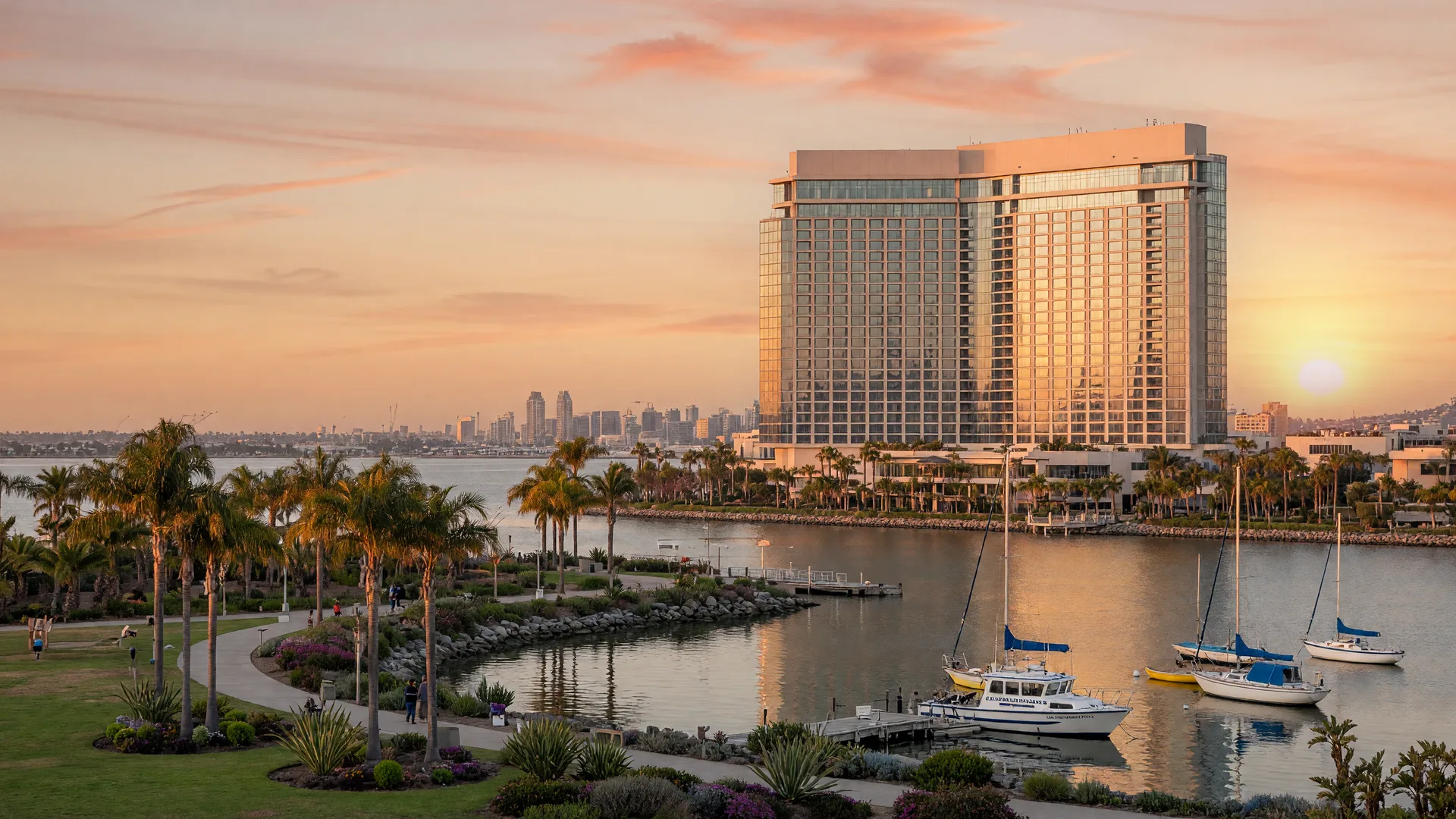
South Bay & border corridor investment spotlights.
The value and cash-flow corner of San Diego County: Chula Vista, National City, San Ysidro, Bonita, and the Otay Mesa logistics corridor, where entry prices run $300K to $450K below the county median and the largest border infrastructure project in a generation is under construction.
National City typical entry, the lowest in the metro, with 6.0%–7.0% directional cap rates and the county's strongest rent-to-price ratios.
San Ysidro 92173 sale median, up about 4% year over year, among the cheapest single-family entries in San Diego County.
Otay Mesa East Port of Entry under construction, opening late 2027 to early 2028 and anchoring the corridor's long-horizon demand story.
The South Bay border corridor is San Diego's value corner: entries from $625K to $800K, directional caps from 4% to 7%, and a structural demand story tied to the busiest land border in the Western Hemisphere.
With the 30-year fixed around 7.28% and county multifamily vacancy at a record 6.2%, the border corridor behaves like a separate market from the rest of San Diego. National City typical values near $625K, San Ysidro sale medians near $650K, and Chula Vista's roughly $800K citywide median sit $300K to $450K below the county's $1.09M detached median, and directional cap rates run from 4% to 7%.
Rents tell the story that prices do not. New Chula Vista multifamily commands $2,100 to $3,200 per month, Otay Ranch single-family rents run near $4,200, San Ysidro averages near $2,700, and National City holds $1,800 to $2,500 on attached and small multifamily product. The corridor's rental demand is anchored by trade, logistics, and border employment, not by discretionary lifestyle moves.
The infrastructure story is the differentiator. The roughly $1.3 billion Otay Mesa East Port of Entry is under construction with opening expected late 2027 to early 2028, the Siempre Viva Bridge and a new SR-11 segment opened in August 2025, and Otay Business Park, the largest industrial project in San Diego, delivered its first buildings in 2026. The bayfront catalyst is already complete: the Gaylord Pacific Resort opened in May 2025, and Harbor Park's expansion arrived through 2026.
The 2026 picture is not uniform. Eastlake corrected about 11.2% year over year while Otay Ranch rose about 7.1%, National City softened while San Ysidro firmed, and Bonita's thin volume makes its medians swing. Markets moving at different speeds create the entry windows this guide is built around, for investors who can tell the submarkets apart.
San Diego South Bay investment snapshot.
National City at $625K typical and San Ysidro near $650K up to Chula Vista's roughly $800K citywide median: entries $300K–$450K below the county's $1.09M detached median.
The strongest rent-to-price ratios in the county, with rents of $1,800–$2,500 and a roughly $1.5 billion infrastructure pipeline.
The tolled crossing under construction, opening late 2027 to early 2028, anchoring the corridor's long-horizon demand story.
92173 sale medians near $650K, up about 4% year over year at roughly 17 days on market.
What the data shows right now.
South Bay metrics moved in opposite directions through 2026, with Eastlake correcting while Otay Ranch firmed and the border infrastructure buildout advanced. Here are the key numbers shaping investment decisions this fall.
Chula Vista's flagship master-planned community corrected in 2026, reopening a value window for long-horizon buyers in the strongest rental-demand submarket in the county.
The growth-corridor counter-trend: Otay Ranch medians rose about 7.1% year over year even as the county market cooled.
The largest industrial project in San Diego delivered its first buildings in 2026, backed by $102.4M in construction financing.
Border-workforce rental demand keeps 92173 units rented at an average near $2,700 per month.
The statewide cap on annual increases for most residential tenancies shapes how fast South Bay rents can rise.
Data compiled from Redfin, Zillow, Homes.com, broker and property-management reports, SANDAG and Caltrans project materials, Port of San Diego releases, municipal codes, and team analysis. All figures reflect October 2026 conditions unless otherwise noted. South Bay medians with thin sales volume swing month to month; treat each figure as directional and verify recent closed comps on the specific block before underwriting.
Understanding cash-flow markets vs. growth engines.
National City & San Ysidro
Directional returns from 5% to 7% with entries from $625K to $650K. These are income-first markets where tenant demand is structural: border, logistics, and naval-adjacent workforce renting at the county's best price-to-rent ratios.
Chula Vista, Bonita & the Border Corridor
Entries from $800K to $1.14M with 2.5% to 5.2% directional caps. These are appreciation, rent-demand, and infrastructure plays where the bayfront catalyst, growth corridors, and logistics buildout compound over time.
Five South Bay markets worth watching.
Each market profiled below represents a distinct investment thesis, from the county's deepest cash flow to its strongest growth corridors and its largest infrastructure buildout. Choose based on your capital, risk tolerance, and whether you prioritize income, appreciation, or long-horizon optionality.
Chula Vista
The South County Growth Engine
- The growth engine of South County: citywide sale medians near $800K in 2026, with Eastlake holding at about $977K (down 11.2% year over year) and Otay Ranch medians near $830K, up about 7.1% year over year even as the county cooled
- A completed bayfront catalyst: the $1.35 billion Gaylord Pacific Resort opened in May 2025 with 1,608 rooms, and Harbor Park's new south phase and playground arrived in 2026, anchoring a redevelopment decades in the making
- The county's strongest rental-demand submarket: new multifamily commands $2,100–$3,200 per month, Otay Ranch single-family rents run near $4,200, and 3-bedroom townhomes near $3,675, with low vacancy across Eastlake, Otay Ranch, and Millenia
- Two-to-four unit properties near the Millenia development and the Eastlake growth corridor remain the classic value-add entry before infrastructure fully catches up
- Entry prices near $800K compress immediate yield into a 4.0%–5.2% directional band; this is an appreciation and rent-demand market, not a cash-flow one
- Most financed single-family deals run negative cash flow at 7.28% rates; underwrite with meaningful equity or target attached and small multifamily product
- AB 1482 caps rent increases at 8.2% for 2026 on most residential tenancies, limiting how fast rents can rise to cover higher costs
Chula Vista rewards investors who buy the eastern growth corridors before infrastructure fully catches up. The playbook is to acquire two-to-four unit properties near Millenia and the Eastlake and Otay Ranch corridors, underwrite the county's strongest rental demand, and hold through the bayfront and border infrastructure buildout. Budget for thinner first-year cash flow in exchange for the corridor's long-run appreciation and demand.
National City
The County’s Lowest-Priced Cash-Flow Market
- The lowest entry point in the metro: typical values near $625K at roughly $485 per square foot, with sale medians ranging into the high-$600s to near $700K depending on the source and month
- The strongest rent-to-price ratios in the county: 6.0%–7.0% directional cap rates with rents of $1,800–$2,500 on attached and small multifamily product
- A roughly $1.5 billion infrastructure pipeline and a waterfront transit corridor connecting the city to the bayfront, downtown, and the border
- Workforce-housing demand from the naval complex, the industrial corridor, and the region's service economy keeps tenancy structurally strong
- Sale medians softened year over year in 2026, and thin volume makes monthly figures swing; verify recent closed comps on the exact block
- Older housing stock carries deferred-maintenance and utility issues; budget for capital improvements on most properties
- Tenant mix skews workforce, so professional management is close to mandatory to hold occupancy and rent
National City is the stealth cash-flow pick of the border corridor. Buy attached and small multifamily at $625K–$700K, underwrite 6.0%–7.0% directional caps, and hold for the infrastructure-driven upside along the waterfront and transit corridors. Block-by-block variance is real, so drive the street, review tenant history, and budget for management before you underwrite.
San Ysidro
The Border Gateway Entry
- One of the lowest single-family entries in the county: 92173 sale medians near $650K, up about 4% year over year, at roughly $490 per square foot
- The busiest land border in the Western Hemisphere: more than 100,000 vehicle and pedestrian crossings daily through the San Ysidro Port of Entry anchor a deep border-workforce rental market with average rents near $2,700
- A fast market for the price point: homes sell in roughly 17 days, signaling steady demand even at high rates
- The new Otay Mesa East crossing, opening late 2027 to early 2028, will reshape cross-border traffic and with it demand along the entire corridor
- Border-adjacent noise, traffic, and wait-time dynamics are real; inspect the exact block and its proximity to the ports of entry
- Thin sales volume makes medians swing month to month; every figure here is directional
- Housing stock skews older, so budget for renovation on most purchases
San Ysidro is the border-workforce cash-flow play. Buy single-family homes and small multifamily in the 92173 corridor at roughly $650K, underwrite 5.0%–6.3% directional caps and the daily border traffic that keeps units rented, and hold as the Otay Mesa East crossing comes online. Pair with professional management and a strict block-level inspection: the entry discount is real and so is the variance.
Bonita
The Established Value Enclave
- The corridor's established, family-oriented enclave: Zillow typical values near $1.04M–$1.14M on mostly single-family, low-density streets
- Top-tier South Bay schools and quiet, leafy blocks make it the most durable owner-occupant and premium-renter address in South County
- Positioned between Eastlake and the 805 and 125 corridors, minutes from Chula Vista's growth engines and the bayfront
- Thin inventory and steady demand give it 1031-destination appeal for investors trading out of higher-turnover assets
- The most expensive entry in this guide at roughly $1.0M–$1.14M, with the thinnest yields: a 2.5%–4.0% directional band
- Thin sales volume makes medians volatile; the three-month median near $1.0M swung down sharply year over year on a small sample
- This is an equity and rent-stability play, not a cash-flow one; underwrite accordingly
Bonita is the equity-hold of the border corridor. Buy well-located single-family homes for long-term rent stability and appreciation, or use the market as a 1031 destination when trading out of higher-yield, higher-turnover assets. The thesis is durability: scarce inventory, strong schools, and a renter base that holds occupancy through market cycles.
Otay Mesa & the Border Corridor
The Industrial & Logistics Engine
- The county's cross-border logistics hub: Otay Business Park, the largest industrial project in San Diego, delivered its first 612,240 square feet in 2026 with full build-out near 1.8 million square feet
- The roughly $1.3 billion Otay Mesa East Port of Entry is under construction, with U.S. ground broken in fall 2025 and opening expected late 2027 to early 2028
- The Siempre Viva Bridge and a new SR-11 segment opened in August 2025, completing most of the surface access that will feed the new crossing
- Industrial demand tied to the border has held through tariff cycles, with several Otay Mesa warehouses leased before completion
- Industrial and logistics product cycles with trade volumes, tariffs, and global freight; treat it as a portfolio diversifier, not a core holding
- Development and leasing timelines are long; construction is measured in years, not months
- Specialized underwriting: environmental, entitlement, and tenant-credit analysis are more demanding than on residential product
The border corridor is where South County's largest infrastructure investment is landing. For most investors the cleanest entry is 1031-friendly industrial and logistics product, or ground leases near the crossing, rather than direct development. Underwrite the Otay Mesa East opening and the distribution demand it will pull, and pair the position with the corridor's residential cash-flow markets for balance.
Six more South Bay markets, one screen.
Paradise Hills, Bay Terraces, Nestor, Egger Highlands, Imperial Beach, and the sub-communities that make up Chula Vista's growth story complete the border-corridor picture. These are thinner markets with wider data spreads, so treat every figure as directional.
Paradise Hills & Bay Terraces
Value-priced single-family and attached entry west of the 805, with workforce demand tied to National City and the naval complex. Renovation-heavy, so budget capital; verify comps block by block as medians are thin.
Nestor & Egger Highlands
Western 92154 border communities on the 905 corridor, among the cheapest single-family entries in the county, with rental demand from the border workforce. Directional caps in the 5% range; older stock and block variance expected.
Millenia & Rancho del Rey (Chula Vista)
Chula Vista's newer master-planned sub-communities with the corridor's strongest new rental demand, per property managers active in the market. Best paired with new multifamily and attached product.
Imperial Beach
The corridor's western anchor, profiled in depth in our coastal & South Bay edition. Waterfront entry that trades on its own coastal logic; watch the Tijuana River Valley for flood and environmental review.
Otay Ranch & Eastlake Sub-Communities
Eastlake Greens, the Vistas, the Trails, and the Woods and Shores cluster from about $750K to $1.2M depending on community, giving buyers a tiered entry into the region's growth story rather than a single price point.
Bayfront & Amara Bay Pipeline
The planned Amara Bay development of roughly 1,500 condos across seven towers sits across from the Gaylord Pacific. The pipeline will add supply and, with it, long-horizon comps for bayfront-adjacent owners.
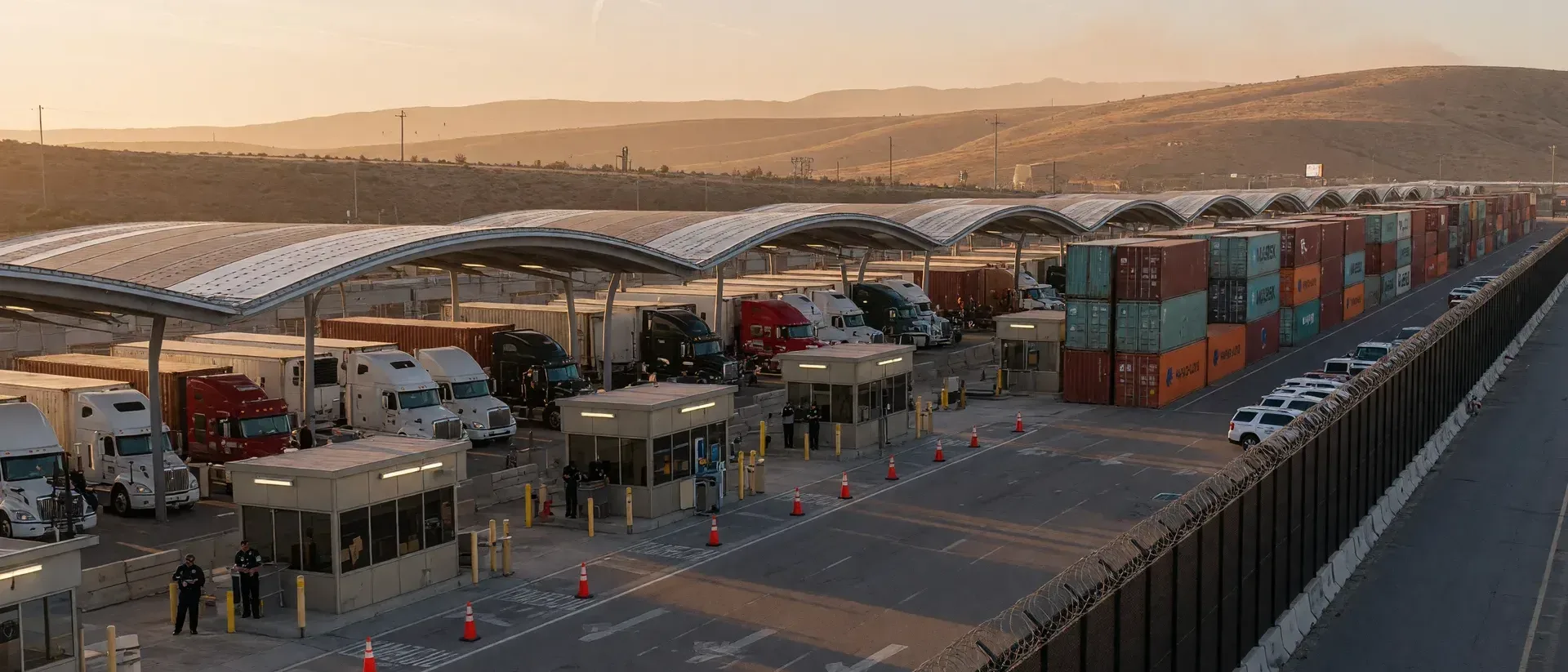
The Otay Mesa freight corridor carries the cross-border trade that anchors the South Bay's logistics and workforce-housing demand.
How the border crossing is reshaping the corridor.
The largest infrastructure investment in the region is not downtown. It is at the border, and it is the reason the South Bay's demand story is structural rather than cyclical.
The tolled border crossing under construction east of the existing Otay Mesa facility, with U.S. ground broken in fall 2025 and opening expected late 2027 to early 2028.
Seven passenger-vehicle and five commercial lanes with variable congestion pricing, designed to cap average border wait times and keep freight moving.
The largest industrial project in San Diego, at 119 acres, with its first 612,240 square feet delivered in 2026.
The Siempre Viva Bridge and a new one-mile SR-11 segment opened in August 2025, completing the surface access that will feed the new crossing.
Where do investors position for the crossing?
Logistics & Industrial
1031-friendly industrial and logistics product near the crossing absorbs the distribution demand the new port of entry will pull. Otay Mesa's newest warehouses have leased before completion even through tariff cycles.
Workforce Housing
Trade, logistics, and border employment anchor a durable renter base across National City, San Ysidro, and the 92154 corridor. The infrastructure buildout adds jobs first, and housing demand follows.
Ground Leases & Development
Long-horizon positions on parcels near the crossing and the SR-11 corridor carry the highest ceiling and the most entitlement and environmental risk. Suits experienced capital with a multi-year runway.
A balanced view: infrastructure timelines slip. The Otay Mesa East opening has already moved from early estimates toward late 2027 or early 2028, and the Pangaea sports complex on the bayfront remains a proposal with no construction timeline. Underwrite the corridor on its current cash flow and rental demand, and treat the infrastructure as upside, not as the basis of the deal.
How do you evaluate a South Bay investment market?
Border-corridor underwriting runs on six factors that matter more here than anywhere else in the county. Use them to evaluate any South Bay neighborhood before you invest.
Rent-to-Price Ratio
National City at roughly 0.5% of price per month leads the corridor, with San Ysidro close behind. Chula Vista and Bonita sit closer to 0.35%–0.4%. Decide income versus equity before you look at listings.
Border & Trade Infrastructure Exposure
The Otay Mesa East crossing, SR-11, and the freight corridor are the region's structural demand drivers. Properties near the infrastructure gain access value; properties far from it do not. Map the projects and their timelines before underwriting.
Block-by-Block Granularity
South County micro-markets vary more than city medians suggest. The same ZIP can hold a stable family block and a high-turnover rental street. Drive the block, review tenant history, and verify comps before any offer.
Workforce Tenant Base & Turnover
Border and logistics employment anchors a durable renter base, but turnover runs higher than in coastal markets. Factor vacancy between tenancies and management cost into every yield.
Rent Regulation Compliance
AB 1482 caps annual increases at 8.2% for 2026, and local tenant protections add requirements. Underwrite rent-cap math and compliance cost on every unit in the corridor.
Insurance & Environmental Review
South County carries wildfire-adjacent and flood considerations near the bay, the Tijuana River Valley, and the border. Confirm coverage reflects the actual use and review environmental conditions before closing.
Frequently asked questions.
Which South Bay market delivers the strongest cash flow?
National City leads the corridor at 6.0%–7.0% directional cap rates with typical values near $625K and rents of $1,800–$2,500, the strongest rent-to-price ratios in the county. San Ysidro runs 5.0%–6.3% on 92173 entries near $650K. Chula Vista and Bonita are appreciation and rent-stability plays, with Chula Vista's appeal coming from the county's strongest rental demand rather than from immediate cash flow.
Is Chula Vista a cash-flow market or an appreciation market?
Chula Vista is a growth and rent-demand market. New multifamily rents of $2,100–$3,200 and Otay Ranch single-family rents near $4,200 show strong demand, but entry prices near $800K compress directional caps to 4.0%–5.2%, and most financed single-family deals run negative cash flow at 7.28% rates. The winning plays are two-to-four unit properties near Millenia and the Eastlake and Otay Ranch corridors, underwritten for appreciation and demand rather than first-year yield.
How will the Otay Mesa East crossing change the corridor?
The roughly $1.3 billion tolled crossing is under construction east of the existing Otay Mesa facility, with U.S. ground broken in fall 2025 and opening expected late 2027 to early 2028. It adds seven passenger and five commercial lanes with variable congestion pricing, built to cap border wait times. For investors, the effects are structural and long-horizon: more reliable freight access supports logistics and industrial demand, the buildout adds border and trade jobs that feed workforce housing, and access value rises for properties near the crossing and the SR-11 corridor.
Are border-corridor markets riskier than the rest of the county?
Some risks are real: trade cycles and tariffs move the industrial and logistics side, sales volume is thin so medians swing, and block-level quality varies widely. Those risks are the reason the corridor trades $300K–$450K below the county median. The compensation is cap rates of 5%–7% and entries from $625K to $650K that simply do not exist elsewhere in San Diego. A disciplined investor treats the discount as risk-adjusted reward, not as a bargain to buy sight unseen.
How do South Bay prices compare with the rest of San Diego County?
The county detached median sits near $1.09M and the attached median near $660K in 2026. The South Bay border corridor undercuts both: National City at roughly $625K typical, San Ysidro near $650K, and Chula Vista citywide near $800K. That $300K–$450K gap, plus the corridor's higher directional cap rates, is what makes the South Bay the value and cash-flow corner of the county for investors.
What should first-time investors watch in the South Bay?
Start with the entry math and the rules. AB 1482 caps annual increases at 8.2% for 2026, local tenant protections add requirements, and professional management is close to mandatory in National City and San Ysidro given workforce tenant turnover. Verify recent closed comps on the exact block, budget for deferred maintenance on older stock, and underwrite at today's 7.28% rates rather than a hoped-for refinance. Our first-time investing guide and the neighborhood spotlight series cover the full playbook.
Go deeper on the San Diego neighborhood playbook.
Central & Urban Q4 Spotlights
The fourth edition covers the urban core: City Heights, North Park, Logan Heights, Clairemont, and the county's highest cap-rate corridor.
Coastal & South Bay Spotlights
The third edition profiles Encinitas to Imperial Beach, including the STR permit rules for every coastal jurisdiction.
The Flagship Spotlights Guide
The first edition covers City Heights, Chula Vista, El Cajon, North Park, and National City with the full 2026 market framework.
Let's find your
South Bay property.
Whether you're evaluating a National City duplex, a San Ysidro entry, a Chula Vista growth-corridor play, or a 1031 into Bonita or the Otay Mesa corridor, our team knows how these border-corridor submarkets price and trade. We can help you identify properties that match your strategy.