
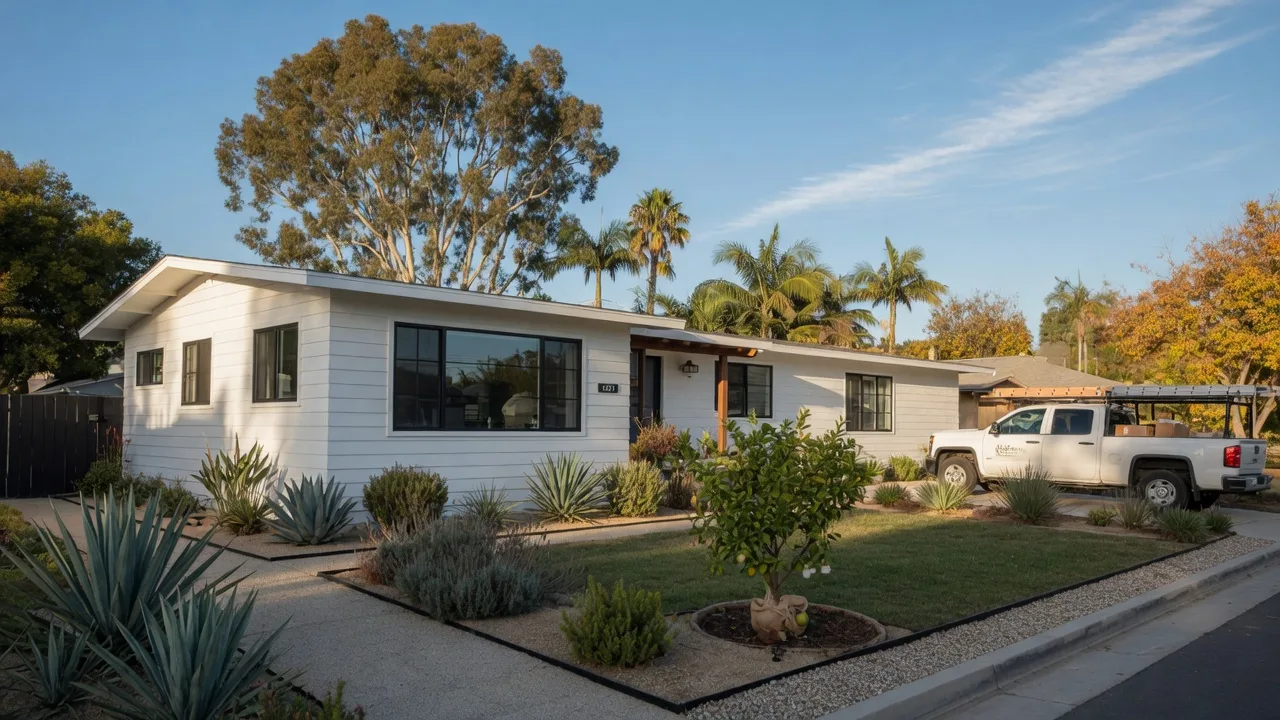
Fix-and-flip in a 7.32% market: the high-rate playbook for San Diego investors.
San Diego flipped roughly $154,844 of gross profit per home in the latest annual data, the lowest returns of any big metro, with 61.3% of flips bought on borrowed money. This guide shows when the strategy still works at 7%+ rates, where it breaks, and how to model it honestly.
San Diego metro gross flip ROI in ATTOM’s year-end 2025 report
Gross return on a typical flip, among the lowest of any large U.S. metro. Net of financing, holding, and selling costs, the pocketed return is much thinner.
Gross profit per San Diego flip in 2025
Down from roughly $175,000 in 2024. The trend is narrower margins, which makes purchase price the whole game.
Share of San Diego flips bought with financing in 2025
The highest of any U.S. metro, per ATTOM. San Diego flippers carry debt, so the rate level moves the math more than almost anywhere else.
Average 30-year fixed rate, week ending October 22, 2026
Freddie Mac. Median hard-money note rates ran near 9.99% in federal HMDA data, and California hard money commonly quotes 9% to 13% interest-only.
Fix-and-flip still works in San Diego, but only for buyers who treat the 70% rule as a ceiling, budget for 7%+ money, and sell into corridors with real demand underneath.
The most recent complete annual data, ATTOM’s year-end 2025 U.S. Home Flipping Report, put San Diego metro gross profit per flip at about $154,844 with a 19.3% gross return on investment, among the lowest of any large metro in the country, and down from roughly $175,000 a year earlier. San Diego also led the nation with 61.3% of flips bought using financing, which is why the rate environment matters more here than almost anywhere else.
That environment, as of late October 2026, is the 30-year fixed averaging 7.32% per Freddie Mac, median hard-money note rates near 9.99% in federal HMDA data, and a San Diego market where closed sales fell 14% year over year and expected market time reached 123 days. Every flip model has to clear those numbers twice, once to buy and once to sell.
This guide is the counterpart to our BRRRR method guide: where BRRRR keeps the asset and refinances into a rental, the flip converts equity to cash at resale. It covers what the data says about San Diego flipping, how to run the numbers with two real scenarios, what hard money costs at these rates, the full cost stack, where flips still make sense, the flip-versus-hold decision, and the year-end 2026 checklist that applies to every strategy.
If you read one thing, read the two modeled scenarios in the math section. They show the difference between paying today’s market price for a fixer and buying to the 70% rule, and that difference, at 7%+ money, is the difference between a loss and a profit.
San Diego flips profit, but thinly.
The headline numbers look healthy until you remember they are gross, before financing, points, holding, and selling costs. Four figures from the latest annual report frame the real picture.
ATTOM’s year-end 2025 U.S. Home Flipping Report, down from about $175,000 in 2024. Gross profit is before financing, rehab overruns, holding, and selling costs.
Gross return on invested capital in 2025, among the lowest of any large metro in the report. The Union-Tribune’s earlier county analysis put gross ROI near 20% before expenses, down from 26.1% a year before.
San Diego led the nation in financed flips in 2025. More debt in the model means more rate sensitivity, which is exactly the environment 2026 delivered.
Flips were 7.4% of all U.S. home sales in 2025 and 8.0% in Q1 2026 per ATTOM, with national gross profits at the lowest level since 2008 and the median flip running about 160 to 165 days purchase to resale.
The metro-to-county read: ATTOM’s metro data and earlier San Diego Union-Tribune analysis of county MLS data both land near a 19% to 20% gross ROI before expenses, with the Union-Tribune’s Q3 2024 county snapshot showing 554 flips at a $760,000 median purchase and $915,000 median resale. Those resale prices sit right around today’s $910,000 county median, which is precisely the problem: entry prices have caught up to resale values, and the spread has to be created by buying well below market, not by appreciation between contracts.
The same house, two entry prices, opposite outcomes.
Model both scenarios on a San Diego value corridor: renovation budget of $90,000, after-repair value of $800,000, hard money at 10.5% interest-only with 2 points, six months of holding, and selling at 8% of resale. The only variable that changes is the purchase price.
The retail-entrance flip
Loss before income tax. Paying today’s asking price for a fixer at 10.5% money leaves no room for the 30% cost stack.
The disciplined flip
Roughly an 18.9% return on the ~$673,000 committed. Buying $180,000 below market buys the profit.
Assumptions to replace, not memorize: these are round numbers for illustration. Every line, points, rate, days on market, repair allowance, commission, and concession, should be replaced with actual quotes before an offer. Note that 6 months of interest at 10.5% on the financed costs is about $20,000 to $30,000 depending on the loan balance, and a 123-day expected market time means the 6-month window is optimistic in some submarkets. Add a month of carry and a 2% price adjustment and Scenario B’s profit nearly halves.
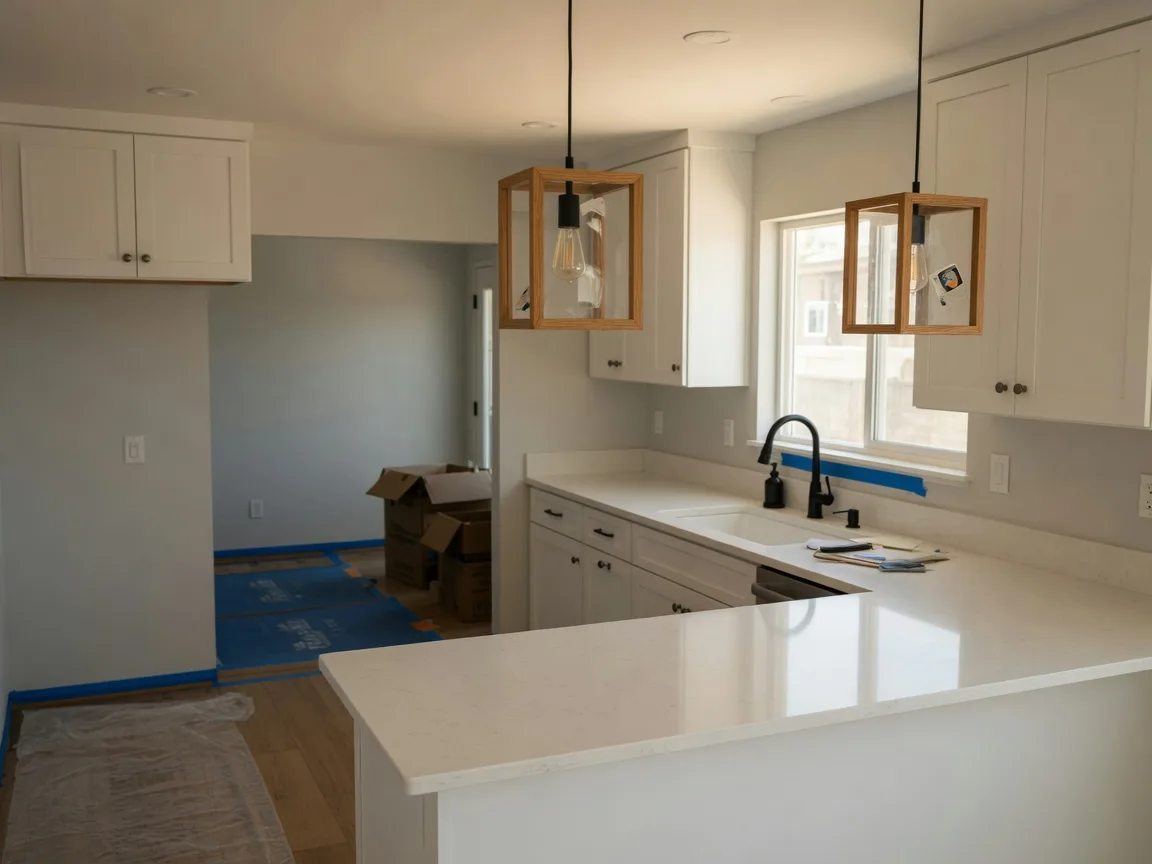
Renovation scope is where flip budgets live or die. A tight, well-specified $90,000 kitchen-and-bath refresh beats a drifting $140,000 "while we are in here" remodel every time.
What hard money really costs at these rates.
San Diego led the country with 61.3% of flips bought on financing in 2025, so the financing terms are not a footnote, they are the deal. Four things to understand before signing a hard-money note.
California hard-money first-position loans commonly quote 9% to 13%, typically 9.5% to 12%, interest-only. The site’s own read of federal HMDA data put the median hard-money note rate near 9.99%. Second-position money runs higher, roughly 12% to 14%.
Origination commonly runs 1 to 3 points of the loan amount at closing, with underwriting, appraisal, and title costs adding roughly $1,000 to $2,500. Two points on a $400,000 loan is $8,000 before a single invoice is paid.
Most flip lenders cap the loan at 65% to 75% of the as-is value or 70% to 75% of after-repair value, sometimes higher for experienced borrowers. That means the lender underwrites the exit, not the purchase.
Typical terms run 6 to 24 months with an interest-only payment and a balloon at maturity. The clock forces a sale or a refinance out, so the exit timeline is part of the loan, not a suggestion.
Hard-money terms per current California lending market reports; the 9.99% median note rate is from federal HMDA data analyzed in our Q4 2026 funding guide. Cash buyers skip the interest line entirely but still carry the opportunity cost of 7.32% money parked in a renovation.
Entry corridors, not trophy streets.
With the county median at $910,000 and detached homes at $1,079,000, an eight-figure flip only works where a fixer can be sourced well below market. The corridors below are the ones our neighborhood spotlights keep flagging for exactly this reason.
City Heights & National City
Roughly $600,000 to $650,000 entry points with the county’s highest directional cap rates underneath. Fixer supply comes from older post-war housing stock, and the rental floor means a flip that fails to sell can convert rather than bleed. This is the classic 70%-rule submarket.
East County: El Cajon, La Mesa, Spring Valley, Santee
These submarkets sit $200,000 to $300,000 below the county detached median, and La Mesa sold medians were up 5.8% year over year in the latest spotlight data. Detached lots with dated interiors are the flip inventory, and the buyer pool includes both first-time owners and military families moving on a schedule.
Inland North County: Escondido & Vista
Sub-$700,000 entries in the 5% to 6% directional cap band. Longer commutes keep prices off the coastal peaks while demand stays steady, and the rental fallback is viable if a resale stalls into winter market time.
Attached product at the $670,000 median
Condos and townhouses support cheaper cosmetic flips at the county’s attached median, with lower dollar rehab and faster turnover. The catches are HOA board approval for renovations, CCR restrictions on resale and rentals, and financing rules that some investor-friendly condo products trip on. Small-scale, well-run, and not for beginners.
When to flip, when to rent, and when to wait.
The same renovated house can exit four different ways, and the right one depends on your cash, your tax position, and how long you can wait for the rate cycle to turn.
Realizes equity at today’s prices, no landlord exposure, and no refinance risk at 7%+ money. The catch: profit is taxed as ordinary income, selling costs eat 7% to 9% of the resale, and the model only works if you buy to the 70% rule.
Keeps the asset and builds equity through rent and appreciation. Inland San Diego corridors still show 5% to 6% directional caps, but the refinance leg refinances into 7.32% money, which crushes cash flow unless rents are strong. See the full BRRRR guide for the numbers.
Renovate, place a tenant for 6 to 12 months, then sell as a seasoned income property or refinance into a DSCR loan when rates cooperate. This is the strategy for sellers who cannot get the flip price they want in a 123-day expected market time.
With closed sales down 14% year over year and market time stretching, some owners are better off keeping cash flow than realizing today’s price. The decision turns on what the property nets as a rental versus what it nets at auction speed.
The flip checklist for the weeks ahead.
None of these are exotic. Each one protects you from closing a December deal with October assumptions.
File Prop 8 appeals by November 30
If a holding is worth less than its assessed value, the November 30, 2026 deadline for a decline-in-value appeal with the County Assessor is the lever that cuts next year’s taxes. It applies to rentals and held assets, not flip inventory, so run your portfolio before the deadline.
Understand why 1031 does not cover flip inventory
A property bought and sold for resale is generally inventory, not investment property, so a 1031 exchange does not apply to a straight flip. If a flip converts to a longer-term rental, the analysis changes at final disposition and a tax professional should map the 45-day and 180-day clocks.
Lock insurance before you own the property
Vacant-dwelling and builders risk coverage costs more and takes longer in California’s hard insurance market. Confirming coverage before closing, not after, is the difference between a covered rehab and a six-week delay chasing a policy.
Plan for ordinary-income treatment
Gains from properties held for resale are generally taxed as ordinary income, not at capital gains rates, and dealer status rules can apply to frequent flippers. Cost segregation and bonus depreciation are rental-property tools; flips do not get them. Run the year-end tax picture with a CPA before December 31 closings.
Underwrite the exit against December 9
The final FOMC decision of 2026 lands December 9 with a fresh dot plot. If a flip must close by year-end, price it to today’s payment math and a longer market time, and budget a contingency for a second price adjustment in a market where homes entering escrow are down 19%.
Calendar anchors: November 30, 2026 is the deadline for a Prop 8 decline-in-value appeal, December 9 is the final FOMC decision of the year with a fresh dot plot, and December 31 closings settle into the 2026 tax year. Our year-end investor playbook covers the full calendar, and the property tax guide walks through the Prop 8 process.
The guides behind this playbook.
BRRRR Method for San Diego Investors
The buy-renovate-rent-refinance alternative to flipping, with the 70% rule, renovation budgeting, and California-specific challenges in one guide.
Funding Your Next San Diego Deal in Q4 2026
Matching hard money, DSCR loans, seller carrybacks, and private capital to the deal at 7.28% to 7.32% money, with the 9.99% hard-money median in context.
Selling Investment Properties in Q4 2026
When to sell a rental in a high-rate market, which exit strategy fits, and the year-end deadlines that shape every closing.
San Diego Neighborhood Investment Spotlights
Entry corridors, medians, and rental benchmarks for the submarkets where an $800,000 after-repair value flip can actually be sourced.
Flipping at 7%+, answered.
Does fix-and-flip still work in San Diego in late 2026?
Yes, for disciplined buyers in the right corridors, but the margin for error is gone. ATTOM’s year-end 2025 report put San Diego metro gross flip profit at about $154,844 with a 19.3% gross ROI, among the lowest of any large metro, and the 30-year fixed was averaging 7.32% in late October 2026 with median hard money near 9.99%. Gross numbers are before financing, holding, and selling costs, so a flip only works when you buy well below market (typically to the 70% rule), renovate to a tight budget, and sell into a submarket with real demand. Paying today’s asking price for a fixer and hoping appreciation bails you out is the fastest way to lose money in this market.
How does the 70% rule work in San Diego dollars?
The 70% rule caps your maximum allowable offer at 70% of the after-repair value minus repair costs: MAO = (ARV x 0.70) minus repairs. Example on a San Diego entry corridor: an $800,000 ARV with $90,000 in repairs supports a maximum offer of (800,000 x 0.70) minus 90,000, which is $470,000. The 30% discount has to cover acquisition closing, points, interest, holding costs, and selling costs, which at 7%+ money and 8% selling costs can approach 25% to 30% of the deal by themselves. It is a screening tool, not a guarantee, and every line should be replaced with real quotes before you write an offer.
What does hard money actually cost in California right now?
First-position hard-money loans commonly quote 9% to 13%, typically 9.5% to 12%, interest-only, with 1 to 3 origination points and roughly $1,000 to $2,500 in underwriting and third-party fees. Federal HMDA data analyzed for this site puts the median hard-money note rate near 9.99%. Loan-to-value is typically capped at 65% to 75% of as-is value or 70% to 75% of after-repair value, and terms run 6 to 24 months with a balloon. On a $400,000 loan at 10.5% interest-only, the monthly payment is about $3,500, and two points add $8,000 at closing.
How long does a San Diego flip take?
Nationally, the median flip runs about 160 to 165 days from purchase to resale, and San Diego deals in this market should budget for the top of that range or longer. With SDAR expected market time at 123 days as of October 13, 2026, the sale leg alone can take three months, so a 60 to 90 day renovation followed by a 90 day marketing window is a realistic 5 to 7 month plan. Interest-only hard money means every extra month costs roughly 0.9% of the balance, which is why speed and price discipline are the same thing.
How are flip profits taxed in California?
Gains on property bought and sold for resale are generally treated as ordinary income, not capital gains, because the property is held for sale rather than as a long-term investment. Frequent flippers can face dealer status rules that push all of their real estate activity into ordinary income treatment. A 1031 exchange does not apply to flip inventory. Any flip that converts to a long-term rental changes the analysis, so talk to a CPA before closing, especially on December closings that settle into the 2026 tax year.
Where in San Diego do flips still make sense?
The same value corridors our neighborhood spotlights keep flagging: City Heights and National City at roughly $600,000 to $650,000 entry points, East County markets like El Cajon, La Mesa, Spring Valley, and Santee sitting $200,000 to $300,000 below the county’s $1,079,000 detached median, and inland North County entries in Escondido and Vista. Attached product at the $670,000 county median supports cheaper cosmetic flips but adds HOA board review and resale restrictions. The common thread is buying below the 70% rule ceiling in submarkets with 5% to 6% rental demand underneath, so the property still has value if the sale slips into a rental.
Should I flip or buy-and-hold (BRRRR) in a 7.32% market?
The fork is really about your exit. A flip converts equity to cash now and avoids refinancing into 7.32% money, but it is taxed as ordinary income and depends on selling into a cooling market where closed sales are down 14% year over year. BRRRR keeps the asset and rides appreciation, but the refinance leg has to cash flow at 7%+ rates, which only inland corridors with 5% to 6% directional caps do reliably. The hybrid structure, renovate, rent for 6 to 12 months, then sell or refinance when the rate cycle turns, is increasingly the middle path for San Diego investors in the year-end playbook.
Run the numbers with a team that flips by the math.
Whether you are sourcing a first flip in City Heights, structuring hard-money or private capital for a renovation, or deciding between a resale and a rental exit in a 7.32% market, our team can model the deal at current rates and map the year-end deadlines around your closing.