
This is the sixth edition in our neighborhood spotlight series, focused on the northeast and inland corridor: Mira Mesa, Rancho Bernardo, Scripps Ranch, Poway, Tierrasanta, and Ramona, with quick takes on Alpine and Lakeside. It completes the series's sweep of San Diego County: the flagship edition covered central and South Bay, edition two covered North County and East County, edition three covered the coast, edition four covered the urban core, and edition five covered the South Bay and border corridor. Together the six guides span every major investing corridor in the county.
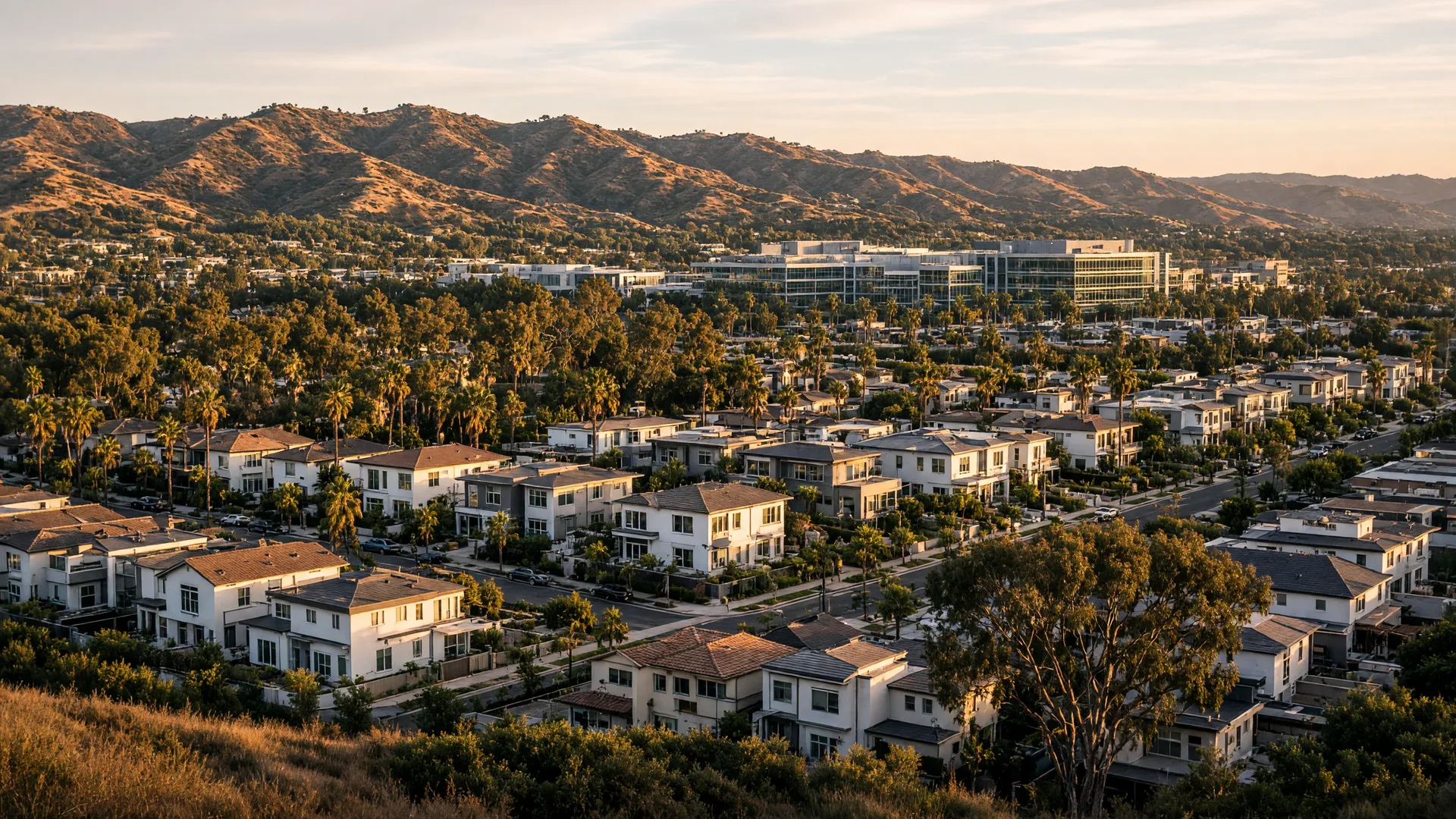
Northeast & inland corridor investment spotlights.
A data-driven guide to the biotech and defense corridor north of the 52: Mira Mesa, Rancho Bernardo, Scripps Ranch, Poway, Tierrasanta, and Ramona, and where each fits a 2026 San Diego investment strategy.
Mira Mesa apartment rents year over year per Zumper (October 2026), the strongest rental momentum in this edition and one of the strongest in the county.
Attached entry points in Rancho Bernardo condos and Scripps Ranch townhouses, the middle ring's most accessible investor doors.
Directional cap rates in Tierrasanta and Ramona, the cash-flow corners of this edition, at the higher end of the county's middle-ring range.
The northeast is San Diego's employment corridor: biotech campuses, defense primes, and the Marine Corps Air Station at Miramar sit minutes from master-planned housing, which is why rents here keep climbing even as countywide sales soften. This edition maps the six markets where that demand shows up in 2026 prices, rents, and cap rates, from the ~$1.0M median in Mira Mesa to the ~$745K foothill entry in Ramona.
San Diego's 30-year fixed averaged 7.32% for the week ending October 22, 2026, and the September countywide median came in near $910K with closed sales down about 14% year over year. Into that cooling market, the northeast corridor brings something most of the county lacks: a tenant pool tied to expanding employment. Mira Mesa apartment rents average about $3,200 per month, up roughly 12% year over year, on ~0.6 months of for-sale inventory.
The middle ring north of the 52 splits into two investment identities. Income markets, Tierrasanta and Ramona, trade at 5.0%–6.0% directional caps with entry values of $745K–$937K. Equity markets, Scripps Ranch, Poway, and Rancho Bernardo, trade higher per door but hold school-driven demand, master-planned stability, and attached doors from $580K in Rancho Bernardo and ~$692K in Scripps Ranch.
Pricing is not uniform. Mira Mesa is the only market in this edition with a rising sales median (+3.4% year over year per Redfin). Scripps Ranch sits down about 7.4% at its ~$1.32M median, Poway's Redfin series is roughly flat to slightly lower near $1.2M, and Tierrasanta reads $849K–$937K depending on the month and source. Markets moving at different speeds create the entry windows in this corridor.
At the foothills, the split is sharp: Ramona holds near $745K–$800K with modest appreciation, while Alpine trades near $1.1M, up roughly 17%–21% year over year. Countywide multifamily vacancy measured 5.0% in Q3 per Kidder Mathews, down from 5.5% in Q2, and almost none of the new supply is landing in the northeast, which keeps the corridor's existing stock competitive.
San Diego investment market snapshot.
Ramona anchors the low end near $745K–$800K; Scripps Ranch tops the range near $1.32M. Attached entry points in Rancho Bernardo and Scripps Ranch run $580K–$692K.
Higher inland in Tierrasanta and Ramona (5.0%–6.0%), lower in the school-driven premium markets of Poway and Scripps Ranch (4.0%–5.0%).
The 30-year fixed averaged 7.32% per Freddie Mac, the money every 2026 northeast deal is underwritten against. Conforming purchase power is roughly $100K lower per $100K down than a year ago.
Kidder Mathews measured county apartment vacancy at 5.0% in Q3 2026, down from 5.5% in Q2, with nearly all new supply concentrated in urban submarkets rather than the northeast middle ring.
What the data shows right now.
The northeast corridor's defining late-2026 signal is the split between employment-driven rental strength and repricing at the top end. Here are the key numbers shaping investment decisions this season.
Apartment rents average about $3,200 per month per Zumper (October 2026), up ~12% year over year, with the median rent up about 21%. The strongest rental momentum in this edition.
Median sale near $1.0M per Redfin, the only rising sales measure among the six spotlight markets, with for-sale inventory at a very tight ~0.6 months.
Median sale near $1.32M per Redfin (June 2026), down 7.4% year over year. The top end of the corridor is repricing while rents hold.
Condos in the master-planned community run $580K–$625K per Houzeo and June 2026 closings, the middle ring's most accessible Class-B rental entry.
Up about 1.2% year over year per Redfin, with Zillow's average value near $813K, versus Alpine at ~$1.1M, up 17%–21%. The foothills split into an entry market and an appreciation market.
3-bedroom homes near $4,052 and 4-bedroom homes near $5,080 per Rentometer, with overall single-family rents of $4,500–$5,000+, among the strongest in the county for family homes.
Data compiled from Redfin, Zillow, Zumper, RentCafe, Homes.com, Rentometer, Houzeo, RealtyTrac, ApartmentHomeliving, Kidder Mathews, Freddie Mac, and team analysis. All figures reflect late-2026 conditions unless otherwise noted. Individual properties vary based on location, condition, and market dynamics.
Understanding cash flow vs. appreciation zones in the northeast corridor.
Inland Value & Foothill Markets
Tierrasanta and Ramona deliver directional cap rates of 5.0%–6.0% on entry values of $745K–$937K, the highest yields in this edition, supported by the Miramar defense economy and foothill land dynamics.
Employment Core & School-Premium Markets
Scripps Ranch, Poway, and Rancho Bernardo trade 4.0%–5.0% caps on school quality, master-planned stability, and the biotech commute, with Rancho Bernardo condos at $580K–$625K as the attached entry door.
Six northeast & inland corridor markets worth watching.
Each market profiled below represents a distinct investment thesis. Choose based on your capital, risk tolerance, and whether you prioritize immediate cash flow or long-term appreciation.
Mira Mesa
Biotech Corridor Cash Flow
- Median sale price near $1.0M per Redfin (up ~3.4% year over year), the only rising sales measure among our six spotlight markets
- Apartment rents average about $3,200 per month per Zumper (October 2026), up roughly 12% year over year, with the median rent up about 21%
- The heart of San Diego's telecom and life-science cluster: Qualcomm and neighboring biotech and defense employers anchor a deep, well-paid tenant pool
- For-sale supply is extremely tight at roughly 0.6 months of inventory per Redfin
- Attached condos and townhomes near the $500K mark offer the corridor's most accessible entry point
- Zillow's average value is down about 3.3% year over year even as rents climb, so underwrite cash flow rather than near-term appreciation
- Biotech hiring cycles can soften abruptly; employment concentration is the market's main structural risk
- Planned mixed-use and housing growth along the Mira Mesa Boulevard corridor will add supply over time, so watch the delivery pipeline
Mira Mesa is the clearest cash-flow thesis in the northeast corridor: rents up ~12% year over year on top of a deep biotech and defense employer base, with near-record-tight for-sale inventory. Target attached condos and townhomes under $700K within a short drive of the employment core, plus two-to-four-unit properties in the older 92126 pockets. Use ZIP-level rent comps rather than citywide medians, because the premium decays quickly with commute distance from the campus corridor.
Rancho Bernardo
Master-Planned Workforce & Move-Down Play
- Overall median near $902K on June 2026 closings, with single-family homes averaging $1.0M–$1.1M and condos roughly $580K–$625K per Houzeo
- The condo stock is among the most affordable Class-B rental entries in the northeast middle ring
- Poway Unified schools, including Rancho Bernardo High, drive durable owner-occupant and family demand
- Master-planned amenities (RB Plaza, golf courses, trail systems) and the 15/56 corridor link the community to downtown San Diego, North County, and the biotech campuses
- Apartment rents of about $2,500–$3,200 (RentCafe ~$2,789; Zumper ~$3,234) reward updated units
- The condo-heavy sales mix depresses headline medians; always compare detached to detached
- Age-restricted pockets such as Oaks North limit a property's tenant and buyer pool, so verify deed restrictions before purchase
- HOA fees and Mello-Roos obligations must be underwritten into every attached deal, alongside periodic balcony inspection requirements (SB 326)
Rancho Bernardo is the northeast's workforce and move-down market. Investors should focus on updated condos near the Bernardo Center corridor, where $580K–$625K entry pricing and $2,500–$3,200 rents support directional cap rates of 4.5%–5.5% with low vacancy in a master-planned setting. Verify HOA budgets and reserve health before offering, since fees directly determine whether an attached deal cash flows.
Scripps Ranch
Premium Appreciation with School-Driven Demand
- Median sale near $1.32M per Redfin (tracking Scripps Miramar Ranch, June 2026), with single-family homes averaging about $1.64M per Homes.com
- Townhouses near $692K provide the community's only meaningful entry point for investors
- Scripps Ranch High (San Diego Unified) and the master-planned area's low-turnover profile keep vacancy minimal and tenant quality high
- Apartment rents run $2,900–$3,600 per month (Zumper ~$3,247; RentCafe ~$3,631)
- Proximity to UTC, Sorrento Valley, and the 15/52 junction puts the community minutes from the region's top employers
- Median sales are down about 7.4% year over year at the top end; buying at peak pricing is a long-hold proposition
- Premium pricing compresses cap rates toward the low end of the middle-ring range (4.0%–5.0%)
- Inventory is thin and turnover low, so acquisition windows are short when they open
Scripps Ranch is an equity and stability play rather than a cash-flow play. For investors, the smartest structure is a townhouse or condo near the $692K mark rented to a professional tenant, holding for school-driven demand and long-term appreciation. Detached single-family entry near $1.64M rarely underwrites to positive cash flow at 2026 rate levels, so treat it as an equity hold with patient capital.
Poway
Family Market with Town Center Momentum
- Median sale near $1.2M per Redfin (down ~2.9% year over year), while the 12-month SDMLS median sits near $1.23M, up about 4% from a year earlier
- Poway Unified is consistently ranked among the top school districts in San Diego County, anchoring family and educator demand
- Single-family rents run roughly $4,500–$5,000+ per month, with 3-bedroom homes near $4,052 and 4-bedroom homes near $5,080 per Rentometer
- The revitalized Poway Town Center, Old Poway retail district, and Lake Poway amenities support a self-contained rental market
- Larger lots and hillside settings leave room for ADU additions and light value-add
- The Redfin series points modestly lower year over year, so do not buy for short-term appreciation
- Hillside properties carry brush and wildfire-zone considerations plus, in some cases, grading and drainage scope
- Premium single-family pricing means substantial entry capital, with cap rates running 4.0%–5.0%
Poway rewards investors who bring capital for a high-quality family asset. The play is a well-located single-family home near top-feeder schools with an attached or detached ADU, pushing gross yield above the standard whole-house number. With rents of $4,500–$5,000+ on a ~$1.2M entry, total yield depends on the ADU; without one, treat Poway as a stable equity hold in a family market.
Tierrasanta
The Inland Middle-Ring Value Play
- Median sale near $849K per Redfin (December 2025, down ~7.9% year over year), with mid-2026 measures near $937K per Homes.com
- The most affordable single-family entry point of our six spotlight markets, sitting $300K or more below its neighbors
- MCAS Miramar and the surrounding defense economy anchor stable, security-clearance-friendly tenant demand
- Central location at the 15/52 junction, minutes from Mission Trails, Scripps Ranch, and the biotech corridor
- Apartment rents of $2,568–$2,920 (RentCafe ~$2,920; Apartments.com ~$2,568), with two-bedrooms near $3,092
- Several 2025–26 measures point down year over year; negotiate on condition and days on market
- Flight-path noise near Miramar matters to some tenants, even as the same proximity keeps military demand strong
- Much of the 1970s-era housing stock needs renovation budgets to reach top-of-market rents
Tierrasanta is the value corner of the northeast corridor. Directional cap rates of 5.0%–6.0% make it one of the highest-yielding middle-ring markets in the county, supported by the 15/52 corridor and the Miramar defense economy. Buy the dated single-family or condo stock below peak listing levels, budget $20K–$40K for renovation, and rent to military-adjacent professionals who value the commute to Miramar and the urban core.
Ramona
Foothills Entry with Land Value
- Median sale near $800K per Redfin (up ~1.2% year over year), with Zillow's average value near $813K
- The most affordable single-family market in this edition, roughly $400K below Scripps Ranch
- Acreage, horse properties, and the winery-country lifestyle attract a distinct owner-occupant and tenant base
- Single-family rents of about $3,375–$3,550 per month (Homes.com ~$3,375; Zumper ~$3,550)
- Directional cap rates of 5.0%–6.0%, among the highest in the county's inland ring
- Wildfire exposure and higher insurance costs are central underwriting inputs; budget for brush clearance and FAIR Plan scenarios
- Wells and septic systems add inspection scope and replacement liabilities
- Rental demand is thinner than in the coastal core, so underwrite longer vacancy in shoulder seasons
Ramona is for investors who want land and income together. The typical deal is a single-family home on a larger lot with a rental, or a small multifamily near the downtown core, underwritten for 5.0%–6.0% directional caps and land appreciation rather than near-term price growth. Confirm well, septic, and insurance costs before making an offer, because those line items decide whether the foothill math works.
Two more foothill markets, one screen.
Alpine and Lakeside round out the northeast picture. They are thinner markets with wider data spreads, so treat every figure as directional.
Alpine
Median sale near $1.1M per Redfin (mid-2026), up roughly 17%–21% year over year, with Zillow's average value near $971K. Alpine is a ranch-lifestyle appreciation market, not an entry market: move-in-ready single-family homes are priced well above the county median. Investor access comes through older fixers, larger-lot parcels, and the manufactured-home and condo sub-markets, each of which carries serious wildfire, well, and septic scrutiny. The +17%–21% appreciation is real but concentrated in a thin, lifestyle-driven pool of buyers.
Lakeside
Median sale near $752K–$760K per Redfin in 2026, with Zillow's average value near $818K. Lakeside is the East County value corridor that borders Santee, offering similar rent-to-price math to Ramona at a slightly more accessible price. Investors should verify flood-zone exposure along the San Diego River corridor and wildfire-zone boundaries before purchase, then underwrite the same way they would in Santee: cash flow first, appreciation second.
The northeast corridor pairs master-planned housing with San Diego's biotech, defense, and military employment base.
Why this corner of San Diego leases like it does.
The northeast is not one market, it is a commute shed: a cluster of employment anchors surrounded by master-planned housing. That structure explains the rental premium, the vacancy resilience, and the concentration risk. Here is how to underwrite it.
The employment base, briefly
Qualcomm anchors the Mira Mesa and Sorrento Valley cluster, surrounded by an expanding life-science and defense ecosystem that includes specialty pharmaceutical, biotech, and contracting employers spread along the 15 and 56 corridors. MCAS Miramar brings one of the largest military employment bases in the county, and the University City research corridor anchors the southern edge. Households tied to these employers carry the rents, the occupancy, and the appreciation profile of the whole region.
The rental data shows the pull: Mira Mesa apartment rents average about $3,200 per month with ~12% year-over-year growth per Zumper, while Tierrasanta and Rancho Bernardo trade $2,500–$2,920 for a similar unit on the edge of the shed. Proximity to the campuses is the single biggest rent variable in this edition.
The counterweight is concentration. Biotech funding cycles and defense budgets move together, and both feed the same tenant pool. That is why this guide stresses diversification across the corridor: an income market and an equity market ride the same wave, so hold both only if the structure of each deal survives a down-cycle stress test.
Underwriting the corridor, step by step
Map the Anchors
The corridor's demand is built on three pillars: Qualcomm and the Mira Mesa and Sorrento Valley life-science cluster, MCAS Miramar and the surrounding defense economy, and the University City research corridor anchored by UCSD. Rent every property against the specific employer set within a 15-minute drive, not against a citywide average.
Price the Proximity Premium
Rents in the northeast fall in steps as you move away from the employment core. Mira Mesa apartments average about $3,200 per month and are up ~12% year over year, while Tierrasanta and Rancho Bernardo trade $400–$700 lower. Use ZIP-level comps for the exact submarket, and verify the premium holds at the unit level before you pay for it.
Model Concentration Risk
Biotech funding cycles and defense budget swings move together, and both feed the same tenant pool. Stress-test every underwriting model with a 90-plus-day vacancy and a 5%–10% rent concession scenario. If the deal only works at full occupancy with zero concessions, the corridor concentration is not priced in.
Diversify Across the Corridor
A resilient northeast portfolio pairs income and equity markets: a Mira Mesa or Tierrasanta cash-flow unit with a Rancho Bernardo condo or a Poway family home held for appreciation. That spread smooths the employment-cycle risk that neither submarket can avoid on its own.
How do you evaluate a northeast corridor investment market?
The difference between a good deal and a great deal in this corridor comes down to location fundamentals: employers, schools, insurance, and the HOA picture. Use these six factors to evaluate any northeast market before you invest.
Employment Anchors
The northeast economy is biotech, defense, and military. Map Qualcomm and neighboring life-science campuses, MCAS Miramar, and the University City corridor, then verify which anchors sit within a 15-minute commute of the property. Vacancy follows employers before it follows prices.
School Boundaries
Poway Unified and Scripps Ranch High command the biggest premiums in this edition. Verify the actual school assignment for the parcel, not a district reputation check, because boundary lines shift and nearby addresses can fall into different schools entirely.
Wildfire & Insurance
Brush zones touch Ramona, Alpine, Lakeside, and the hillside pockets of Poway and Tierrasanta. Underwrite the FAIR Plan scenario, brush-clearance obligations, and insurance cost as a percentage of rent. In 2026, insurance can decide whether an inland deal cash flows at all.
HOA & Mello-Roos
Rancho Bernardo, Scripps Ranch, and parts of Poway are master-planned communities with HOA fees, Mello-Roos bonds, and periodic balcony or elevated-element inspection obligations (SB 326 for HOAs, SB 721 for multifamily). Read the budgets and reserves before offering on any attached unit.
Inventory & Supply
Mira Mesa runs roughly 0.6 months of for-sale inventory, and Scripps Ranch turnover is chronically thin. Tight supply keeps pricing firm but shortens decision windows: be ready to move, and track the planned mixed-use and residential pipeline along Mira Mesa Boulevard for future supply.
Cap Rate vs. Appreciation
The middle ring trades 4.0%–6.0% directional caps: higher in Tierrasanta and Ramona (5.0%–6.0%), lower in the school-premium markets of Poway and Scripps Ranch (4.0%–5.0%). Decide which end of that trade fits your capital before you shop, and underwrite at 7.3% money.
Frequently asked questions.
Which northeast or inland market offers the best cash flow in 2026?
Tierrasanta and Ramona offer the strongest directional cap rates in this edition at 5.0%–6.0%, with entry values of roughly $849K–$937K and $745K–$800K respectively. Mira Mesa delivers the best rental momentum (apartment rents up ~12% year over year per Zumper) but its single-family pricing sits near $1.0M, so the cash-flow structure works best through attached units and smaller properties. Rancho Bernardo condos at $580K–$625K are the middle ring's most accessible attached cash-flow entry.
Is Mira Mesa's rental strength durable in a cooling market?
The rental data in 2026 points up: Zumper shows apartment rents averaging about $3,200, up roughly 12% year over year with the median up about 21%, and for-sale inventory near 0.6 months. The durability rests on the Qualcomm and life-science employment base and on the fact that virtually all new county supply is being delivered downtown, not in the northeast. The counterweight is concentration risk: biotech funding cycles and defense budget swings feed the same tenant pool, so stress-test vacancy and concessions before you rely on the momentum.
Where are the entry points below $700K in this corridor?
Rancho Bernardo condos at roughly $580K–$625K, Scripps Ranch townhouses near $692K, and Mira Mesa attached units near the $500K mark are the practical sub-$700K doors. Each carries HOA fees and, in many cases, Mello-Roos obligations, so underwrite the full monthly cost of ownership rather than the purchase price. Unit-level cash flow in these markets is thin but positive when acquired below peak 2025 levels and renovated to top rents.
Do HOA fees and Mello-Roos make these master-planned markets unprofitable?
Not inherently, but they decide whether an attached deal works. A $580K Rancho Bernardo condo with $400–$600 in monthly HOA fees can still underwrite at a 4.5%–5.5% directional cap when rents run $2,700–$3,200. The failure mode is buying without reading the HOA budget: special assessments for deferred maintenance, thin reserves, and SB 326 balcony inspection obligations can erase years of cash flow. Request the reserve study and financials before the offer, and verify whether Mello-Roos taxes transfer for the lot.
Ramona, Alpine, or Lakeside: which foothill market should an investor pick?
Ramona and Lakeside are the entry and cash-flow choices, with median sales near $745K–$800K and $752K–$760K respectively, single-family rents of roughly $3,375–$3,550 in Ramona, and directional cap rates of 5.0%–6.0%. Alpine is the appreciation market: the median sits near $1.1M, up roughly 17%–21% year over year, which makes it a ranch-lifestyle equity hold rather than an income property. In all three, wildfire, insurance, well, and septic costs are the line items that decide whether the deal works, so verify them before making an offer.
How should investors underwrite wildfire and insurance risk in these markets?
Start with the property's wildfire hazard zone and the insurance quote, not the FAIR Plan as a default. For hillside and foothill properties in Tierrasanta, Poway, Ramona, Alpine, and Lakeside, budget brush clearance, defensible space work, and insurance cost as a percentage of gross rent. If insurance exceeds roughly 12%–15% of gross rent in the 2026 market, the yield math usually breaks on these cap rates. Re-quote coverage annually, because carrier appetite in California has been tightening since the 2024–25 wildfire seasons.
Go deeper on the San Diego neighborhood playbook.
South Bay & Border Corridor
The fifth edition covers the county's value and cash-flow corner: Chula Vista, National City, San Ysidro, Bonita, and Otay Mesa.
Central & Urban Q4 Spotlights
The fourth edition covers the urban core: City Heights, North Park, Logan Heights, Clairemont, and the county's highest cap-rate corridor.
North & East County Spotlights
The second edition profiles Oceanside, Escondido, Vista, San Marcos, La Mesa, and Santee with inland cash-flow data.
Let's find your
northeast corridor property.
Whether you're looking for rental momentum in Mira Mesa, attached entry points in Rancho Bernardo, or foothill cash flow in Tierrasanta and Ramona, our team understands how these submarkets work and can help you identify properties that match your strategy.