
Property management in Q4 2026: record vacancy, 2027 law changes, and your year-end checklist.
San Diego’s rental market enters the fourth quarter at a quarter-century high in vacancy, with asking rents starting to cool and three new California landlord laws arriving January 1, 2027. Here is what the numbers mean and what to do before year-end.
County apartment vacancy at the end of June 2026
CoStar pegged vacancy at the highest level in more than 25 years of data. Kidder Mathews measured 5.5% for Q2, up from 4.9% a year earlier. Luxury buildings carry most of the pain.
Average asking rent in September 2026
Down 0.2% month over month per CoStar, the first dip after eight straight months of growth, but still up about 1.4% year over year.
Vacancy among Class A (4 and 5 star) apartments in Q3
Class B and C buildings run roughly 2.5% to 4%. The supply wave is hitting the top of the market hardest.
California landlord laws effective January 1, 2027
AB 2025 digital ad image disclosure, the SPARE Act service of process rules, and the new SUM-130 eviction summons. Planning starts in Q4 2026.
San Diego’s rental market enters the fourth quarter at record vacancy, with asking rents starting to cool and three new California landlord laws taking effect on January 1, 2027. This guide covers what the market data means for owners, the compliance changes to plan for now, and the year-end tax, insurance, and fire-safety deadlines that determine how the quarter finishes.
The supply wave that built for two years is peaking right as rates sit near 7.28%. CoStar put county apartment vacancy at 6.2% at the end of June, the highest in more than 25 years of data, and September asking rents fell 0.2% month over month, ending eight straight months of growth even while staying about 1.4% above a year ago. Class A buildings carry the worst of it, running around 11.4% vacant in Q3.
Beneath the headline numbers, demand is genuinely improving: net absorption through the first half of 2026 ran 3,827 units, up 39.2% from the same period in 2025. The problem is supply, roughly 6,927 units delivered last year and another 4,000 to 6,000 expected in 2026, the biggest construction wave in about 25 years.
At the same time, three California laws land on January 1, 2027: AB 2025 requires disclosure of digitally altered images in rental ads, the SPARE Act overhauls how evictions are served, and a new SUM-130 summons becomes mandatory in unlawful detainer cases. None of them wait for the spring; preparation starts in Q4.
This guide walks through the current market in four numbers, the 2027 compliance changes item by item, the year-end deadlines on every landlord’s calendar, a strategy playbook by ownership scenario, and an eight-step checklist to run before January 1.
The Q4 rental market in four numbers.
Record vacancy, cooling asking rents, improving absorption, and persistent concessions. Each of these reads differently for a single-family landlord in City Heights versus a Class A owner in Mission Valley, so it pays to separate the countywide signal from your submarket.
CoStar put San Diego County apartment vacancy at 6.2% at the end of June 2026, the highest reading in over 25 years of data, and monthly vacancy reports since have stayed elevated. Kidder Mathews measured Q2 at 5.5%, up from 4.9% a year earlier. The pressure is concentrated in luxury product: 4 and 5 star buildings ran about 11.4% vacant in Q3, while Class B and C buildings held around 2.5% to 4%.
CoStar reported September asking rents of about $2,597, down 0.2% month over month, ending eight straight months of positive growth, but still up about $35, or 1.4%, year over year. Effective rents, what tenants actually pay after concessions, are under more pressure. Moody's forecast effective rent growth of about 1.2% for 2026, following a roughly 2% decline in 2025.
Net absorption totaled 3,827 units through the first half of 2026, up 39.2% from 2,749 units in the same period of 2025, and CoStar noted in September that demand was showing signs of improvement. The problem is supply: roughly 6,927 units delivered in 2025 and another 4,000 to 6,000 are projected for 2026, the largest construction wave in about 25 years. Completions outpaced absorption by more than 40% over the past year.
Landlords of newer stock are offering free rent, waived fees, and amenity credits to fill units, and CoStar expects concession pressure to persist while vacancy stays high. That compresses effective rents even where asking rents hold. For investors, underwriting should assume concessions in Class A and a slower path to full rent for any property competing with new deliveries.
Vacancy, rent, and absorption data per CoStar San Diego reports (July through October 2026) and the Kidder Mathews San Diego Multifamily Market Report for Q2 2026. Moody’s effective-rent forecast as reported in 2026 market commentary.
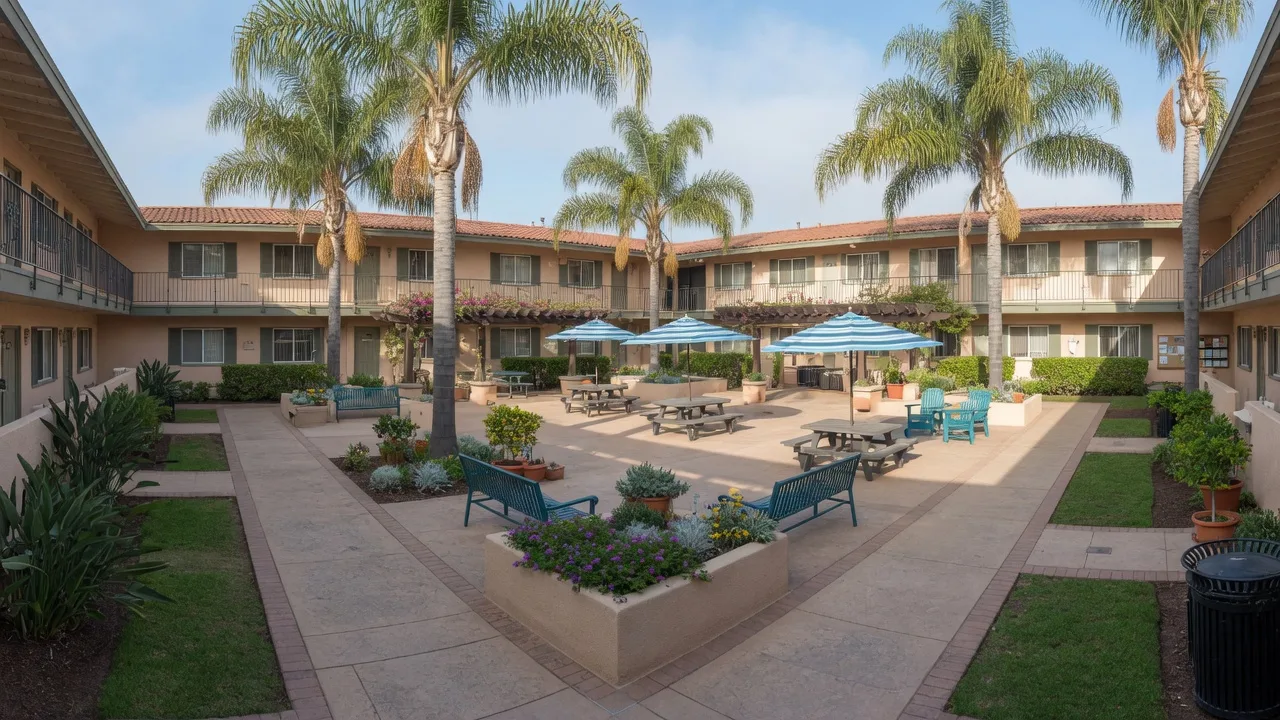
With vacancy at a record high, the amenity and condition standard of the building, not just the rent, is what fills units in Q4 2026.
What cooling asking rents mean for your pricing.
When asking rents flatten and concessions spread, the cheapest way to grow net operating income is to keep the tenant you have. Turnover in a cooling market means reletting at or below today’s rate, plus vacancy cost, plus refresh spend. Three moves protect income this quarter.
Price renewals defensibly
A small, defensible renewal increase beats a vacancy. San Diego’s AB 1482 cap for the current period is 8.2%, but a 3% to 5% renewal with a minor refresh typically retains tenants at lower total cost. For individual-owner single-family homes outside AB 1482 coverage, market-rate renewals still deserve the same discipline.
Use concessions as a lever, not a habit
Time-limited concessions: one month free on a 13-month lease, waived application fees, or a parking credit. Newer buildings are already giving away rent, so stabilized product competes on conditions and location. Keep concessions short enough that the effective rent recovers within a lease term.
Refresh between tenancies
Paint, flooring, and appliance condition decide how much rent a vacant unit commands when vacancy is high. Budget for turnover refreshes before listing, price the unit against comparable buildings with concessions, and photograph the actual unit, since AB 2025 will require disclosure of any altered imagery next year.
Three law changes every San Diego landlord should plan for now.
The 2027 compliance calendar is set before the holidays. AB 2025 changes how you advertise, the SPARE Act changes how evictions are served, and the new summons form changes how unlawful detainer cases start. None of the work is hard; all of it is easier to do in Q4 than in late January.
AB 2025: Digitally altered rental ad disclosures
Signed in September 2026, AB 2025 requires any housing provider, property manager, or advertiser who uses a digitally altered image in rental housing advertising to disclose clearly, on or next to the image, that it was altered. A digitally altered image includes AI-generated images, virtual staging, and photo editing that adds, removes, or changes furniture, appliances, fixtures, flooring, walls, landscaping, or views. Routine photo corrections are exempt. When the altered image is based on an actual photo of the unit, the original unaltered image must be accessible by link, URL, or QR code, and on an advertiser-controlled website the unaltered image must be included. Willful violations draw penalties under the Real Estate Law. Licensed agents and brokers already carry a similar duty under AB 723, which took effect January 1, 2026.
SPARE Act (AB 747): Service of process reform
The SPARE Act targets fraudulent sewer service in evictions. Proofs of service must now document the due diligence behind each attempt with the specific date, time, and location, commonly supported by photos, timestamps, and GPS coordinates. Substituted service, leaving papers with another person and mailing a copy, must meet a clear diligence standard. County clerks must publish process server registers starting January 1, 2027, and courts must take evidence on the lawfulness of service when a default judgment is challenged.
New SUM-130 summons in unlawful detainer cases
A new approved summons form is required in residential unlawful detainer actions starting January 1, 2027. It carries the warnings tied to the reformed service rules, and tenants can check the bottom-left corner of the form to verify the landlord filed with the approved version. Landlords and their counsel should adopt the new form before any eviction filing next year.
Compliance bottom line: Marketing teams should audit every rental photo for alteration before January 1, eviction counsel should adopt the SUM-130 form and the SPARE Act service standards, and any landlord advertising directly should plan disclosure language now. The cost of compliance is small compared with a violated Real Estate Law penalty or a set-aside default judgment.
The rest of 2026 is a calendar exercise.
Tax appeals, 1099 filings, insurance renewals, and fire-safety work all have fixed windows. Five deadlines shape every remaining management decision of the year.
Proposition 8 decline-in-value assessment appeal deadline
Properties that lost market value can be reassessed down for the 2026-27 assessment year. San Diego County runs the extended July 2 to November 30 filing window and charges no upfront filing fee. Find the assessed value on your tax bill, compare it to current market value, and appeal before the hard deadline if the property qualifies.
Year-end books close and 2026 tax reporting begins
Reconcile rents, expenses, and capital improvements for the 2026 tax year before January. Confirm every contractor paid $2,000 or more has a W-9 on file, and pull the depreciation and cost segregation schedules you will hand to your CPA.
Start the insurance renewal process
California carriers keep tightening wildfire exposure. State Farm alone non-renewed roughly 2,293 San Diego County policies in 2024. Start shopping three to four months before renewal, confirm dwelling coverage tracks today's rebuild cost rather than purchase price, and know that the state's 85% rule requires large insurers to maintain their pre-2022 policy volume in high-risk ZIP codes.
Form 1099-NEC and 1099-MISC deadlines
Under the One Big Beautiful Bill Act, the reporting threshold rises from $600 to $2,000 for tax year 2026. Issue 1099-NEC to recipients and the IRS by January 31. 1099-MISC goes to recipients by January 31 and to the IRS by February 28 on paper or March 31 electronically. Late penalties run $60 to $680 per form.
Defensible space, Zone 0, and SB 610 disaster duties
Maintain the statewide 100-foot defensible space under PRC 4291 and prepare for the Zone 0 rules phasing in for the 0-to-5-foot band. San Diego's fire-safety ordinance requires compliance for new construction by February 2026 and existing homes by February 2027, with rental properties on an accelerated timeline. Under SB 610, rent stops during a mandatory evacuation, landlords must remediate debris with licensed contractors, prepaid rent returns within 10 calendar days, and tenants keep the right to return at the pre-disaster rent.
What to do this quarter, by who you are.
A single-family owner, a multifamily portfolio, a self-managing landlord, and a short-term operator face the same market and four very different quarter-end decisions.
Retention pays more than repricing in this market. Renew good tenants with small, defensible increases or a refreshed unit, and time turnovers into the late-winter lull when supply competition is thinnest. With vacancy at a record high, an empty unit is a bigger bet than it was two years ago.
Underwrite concessions explicitly in Class A and any building near new deliveries, and look to Class B and C workforce product, where vacancy still runs 2.5% to 4%. Demand is improving, so a stabilized, amenity-complete asset bought at a realistic rent is a better bet than a trophy building still absorbing.
The three 2027 laws raise the documentation bar for do-it-yourself owners: marketing images need alteration disclosures, eviction service needs a paper trail, and the new summons form is mandatory. Budget time for records you did not keep before, or hand the compliance layer to a professional manager before January 1.
Q4 is the booking window for holiday demand and winter travel nurses. Push the 30-plus-night mid-term channel for winter stability, verify your marketing photos for image-alteration compliance, and complete fire-safety items before the holiday season, since SB 610 removes rent during a mandated evacuation.
Eight moves before January 1.
None of these is exotic; all of them protect you from a missed deadline, a non-renewed policy, or a 2027 compliance surprise.
File Proposition 8 decline-in-value appeals by November 30 for any holding whose market value sits below its assessed value.
Start insurance shopping 90 to 120 days before each renewal and confirm replacement-cost dwelling coverage, not purchase-price coverage.
Audit every rental ad before January 1: flag virtual staging or digitally altered photos for AB 2025 disclosure, and prepare unaltered originals.
Confirm your eviction attorney and process server are ready for the SUM-130 summons, the SPARE Act diligence documentation, and the service set-aside rules.
Collect W-9s from every unincorporated contractor paid $2,000 or more in 2026 so 1099s file on time by January 31, 2027.
Re-price units against September's cooling asking rents: keep concessions optional and time-limited, never permanent, in stabilized buildings.
Complete defensible-space and Zone 0 fire-safety work now, especially for rentals on San Diego's accelerated ordinance timeline.
Walk through your SB 610 disaster playbook: evacuation rent suspension, licensed remediation vendors, and the 10-day prepaid-rent return clock.
The guides behind this outlook.
Property Management Best Practices for San Diego Investors
Tenant screening, fee structures, AB 1482 compliance, and maintenance strategy, updated with the 2026 California landlord laws.
California Landlord-Tenant Laws 2026: A Mid-Year Compliance Guide
The seven laws that took effect January 1, 2026, including AB 628 appliance requirements, AB 414 deposit returns, and AB 747 fee transparency.
San Diego Multifamily in 2026: Record Supply, Stabilizing Rents & the Buying Window
The 11,800-unit pipeline, the 4.7% median cap rate, and where the supply wave is creating acquisition windows.
Real Estate Insurance in San Diego: What Investors Need to Know in 2026
Premium trends, FAIR Plan limits, coverage requirements, and renewal strategies for San Diego investment portfolios.
California Property Tax Strategies: Prop 13, Prop 8 & Prop 19
The November 30 Prop 8 appeal deadline, the assessment appeal process, and real investor scenarios.
The Q4 management market, answered.
What is San Diego's rental vacancy rate in late 2026?
CoStar put county apartment vacancy at 6.2% at the end of June 2026, the highest in more than 25 years of data, with reports since then staying elevated. Kidder Mathews measured Q2 at 5.5%, up from 4.9% a year earlier. The heaviest pressure is in Class A: 4 and 5 star buildings ran about 11.4% vacant in Q3, while Class B and C buildings held around 2.5% to 4%.
Why did asking rents dip in September 2026, and will they keep falling?
CoStar reported September asking rents of about $2,597, down 0.2% month over month, the first decline after eight straight months of growth, though still up about 1.4% year over year. The dip reflects the largest construction wave in about 25 years, with roughly 6,927 units delivered in 2025 and another 4,000 to 6,000 projected for 2026. Forecasts point to modest effective rent growth near 1.2% for the year, with concession pressure persisting while vacancy stays high.
What three California landlord laws take effect on January 1, 2027?
AB 2025 requires clear disclosure when rental ads use digitally altered images, with the unaltered original accessible alongside any image based on an actual photo. The SPARE Act (AB 747) overhauls eviction service of process, demanding documented diligence for every serving attempt and public process server registers. A new SUM-130 summons form becomes mandatory in residential unlawful detainer actions. All three need preparation before year-end.
What exactly does the AB 2025 digitally altered ad law require?
Any housing provider, property manager, or advertiser who uses a digitally altered image in rental advertising must disclose on or next to the image that it was altered. The law covers AI-generated images, virtual staging, and photo editing that adds, removes, or changes furniture, appliances, fixtures, flooring, walls, landscaping, or views. Routine corrections are exempt. If the altered image is based on an actual photo of the unit, the original unaltered image must be reachable by link, URL, or QR code, and on advertiser-controlled websites the unaltered image must be included. Willful violations carry penalties under the Real Estate Law.
What is the 1099 threshold for landlords and property managers in 2026?
Under the One Big Beautiful Bill Act, the reporting threshold for Forms 1099-NEC and 1099-MISC rises from $600 to $2,000 for tax year 2026. Pay a plumber, electrician, landscaper, or unincorporated vendor $2,000 or more and you must issue a 1099-NEC by January 31, 2027 to both the recipient and the IRS. 1099-MISC goes to recipients by January 31 and to the IRS by February 28 on paper or March 31 electronically. Late filing penalties run $60 to $680 per form.
When should San Diego landlords start working on 2027 insurance renewals?
Start 90 to 120 days before each renewal date. Carriers continue to tighten wildfire exposure, and State Farm alone non-renewed roughly 2,293 San Diego County policies in 2024. Confirm dwelling coverage equals today's rebuild cost rather than purchase price, and remember the California Department of Insurance 85% rule requires large insurers to keep their pre-2022 policy volume in high-risk ZIP codes. Early shopping is the main protection against a forced transition to the FAIR Plan.
What fire-safety and disaster duties apply to San Diego landlords this winter?
Maintain the statewide 100-foot defensible space under PRC 4291 and prepare for Zone 0 rules in the 0-to-5-foot band. San Diego's fire-safety ordinance applies to new construction by February 2026 and existing homes by February 2027, with rental properties on an accelerated timeline. Under SB 610, during a declared disaster tenants are not charged rent for a mandatory evacuation, landlords must remediate debris and hazards with licensed contractors, prepaid rent returns within 10 calendar days, and tenants keep the right to return at the pre-disaster rent.
Let’s get your properties ready for 2027.
Whether you own one rental or a full portfolio, our team handles tenant screening, placement, maintenance, compliance, and reporting, and we can help you close out the Q4 deadlines before they close on you.